Kalshi Halts Trump Mention Markets After CFTC Order and Insider Trading Scandal
Kalshi must answer the CFTC by Dec. 11 over its Trump mention-market certification, while other politicians’ and executives’ mention markets remain available.
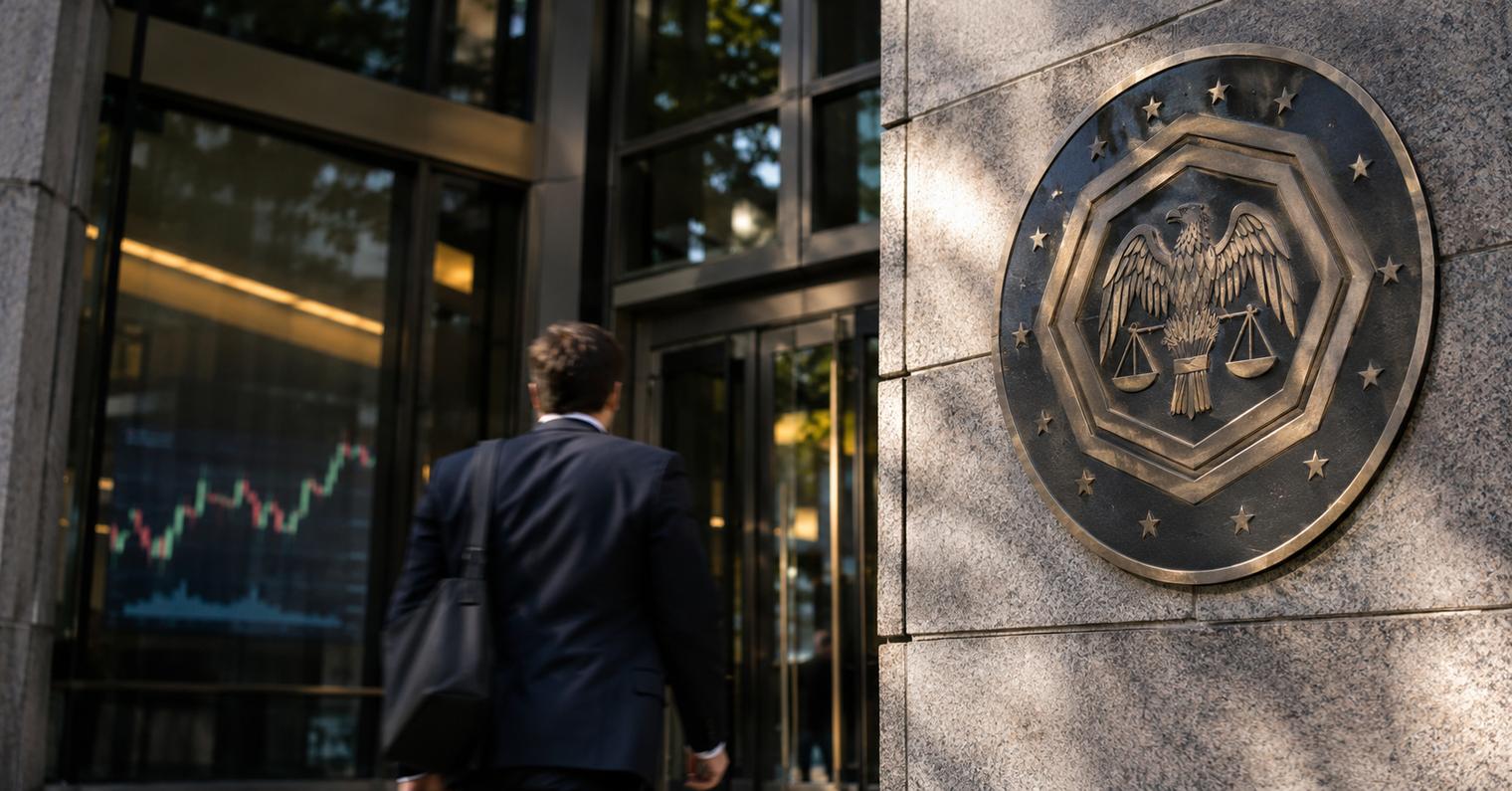
Dek: The regulator is examining whether Kalshi properly certified that the contracts resist manipulation. The pause follows a White House teleprompter operator’s $172,539 settlement and an earlier withdrawal of sports mention markets.
Kalshi has halted President Donald Trump mention markets at the Commodity Futures Trading Commission’s (CFTC) direction, pulling contracts on the president’s words after months of scrutiny over insider trading and outcomes that a single speaker can control.
The action covers the “What nicknames will Trump say before 2027?” market and the TRUMPSAY contract series. A published CFTC order institutes proceedings to determine whether Kalshi falsely certified that the contracts comply with federal law and stays their listing while the review proceeds. Kalshi must answer by Dec. 11.
The pause follows an enforcement case involving Trump’s former teleprompter operator, a separate manipulation settlement involving former U.S. Rep. George Santos and Kalshi’s earlier removal of sports announcer mention markets. Those episodes expose different vulnerabilities within a category built around what identifiable people say or do.
Trump contracts paused, but other mention markets remain
Mention markets allow traders to take positions on whether someone will say a particular word or phrase within a specified period or event. Under the Trump series described in the CFTC order, a contract resolves Yes if the president uses the covered language by the deadline and No otherwise, subject to the contract’s voiding provisions.
Markets reported as paused include contracts asking which nicknames Trump would use before 2027, what he would say in November, and which countries or companies he would mention before the end of the month.
That is not the same as removing every Trump-related market or every contract involving his administration. Other categories of administration contracts remain available, and Kalshi continued listing mention markets involving other politicians and corporate executives. A market on Vice President JD Vance’s remarks at the New York Times DealBook Summit remained active as of Wednesday afternoon.
CFTC says Kalshi did not meet a heightened standard
The published order provides a more specific explanation than a general concern about political betting.
Kalshi originally self-certified the Trump word-mention series in February 2025. In September 2026, CFTC staff issued an advisory warning that individual mention, attendance and interaction contracts may be “presumptively readily susceptible to manipulation.” The advisory called for a heightened showing that such contracts comply with federal requirements.
The commission says Kalshi listed the current nickname contract Oct. 1, roughly a week after that advisory, without amending the series certification or submitting a new one to provide the heightened analysis. An earlier July amendment addressed multi-word phrases, not the subsequent manipulation guidance.
“On the present record, Kalshi has not adequately demonstrated that the Contracts are not readily susceptible to manipulation,” the order states.
The agency is relying on Core Principle 3, which prohibits designated contract markets from listing contracts that are readily susceptible to manipulation. Its proceeding asks whether Kalshi’s compliance certification was false, not whether regulators have already proved that someone manipulated every affected market.
The order also leaves room for compliant products.
Trump’s teleprompter operator traded with advance access
The most direct scandal involved Gabriel Perez, a White House teleprompter operator with access to Trump’s prepared speeches before they became public.
As DeFi Rate reported when the trading first surfaced, Kalshi said its surveillance team flagged the activity, investigated it, and referred the evidence to the CFTC.
The matter later became a settled federal enforcement case. On Aug. 28, the CFTC ordered Perez to return $107,539.02 in trading profits, pay a $65,000 civil monetary penalty, and comply with a three-year trading ban. The agency said the penalty reflected a substantial cooperation discount.
The consent order describes an advantage far beyond studying Trump’s speaking habits. Perez generally received the speech text about an hour before delivery. He bought Yes contracts when a covered word appeared in the prepared remarks and No contracts when it did not.
On one occasion, he changed his position after observing that Trump had deviated from or skipped part of the prepared speech. Perez traded profitably in 39 of 43 contracts across 14 Trump mention markets, according to the order.
The CFTC found that Perez misappropriated confidential information in breach of his duty of trust and confidence.
The case demonstrates both an insider-information vulnerability in the product and an instance in which the exchange says its surveillance identified suspicious trading.
Santos showed how a participant could move his own market
A separate case involved former Santos and a contract on whether he would attend the 2026 State of the Union.
That was an attendance contract, not a Trump speech-word market. But the CFTC’s September advisory groups mention attendance and interaction contracts together because their outcomes can depend on the actions of an identifiable individual or a small group.
The agency’s July 31 settlement found that Santos traded Yes and No positions on his own attendance while posting misleading statements and omissions about his plans. Those posts moved prices in directions favorable to his positions.
Santos was ordered to disgorge $17,569.98 in profits, pay a $17,500 penalty, and observe a three-year trading ban.
Brian Armstrong demonstrated the speaker-controlled problem
Not every controversial episode resulted in an enforcement finding.
As DeFi Rate reported during the withdrawal of sports mention markets, Coinbase CEO Brian Armstrong deliberately read several traded terms at the end of an October 2025 earnings call:
“I just want to add here the words Bitcoin, Ethereum, blockchain, staking and Web3.”
The remarks determined the outcomes of contracts carrying $80,933 in volume on Kalshi and roughly $4,000 on Polymarket.
The episode illustrated the structural problem: The person being observed can become aware of a market and deliberately determine its result. That does not, by itself, establish unlawful trading or manipulation by the speaker.
Sports mention markets had already been withdrawn
Kalshi removed its sports-related mention markets in August amid a reported CFTC review of whether the products were too easy to manipulate. Those contracts let traders bet on words used by announcers and analysts during broadcasts.
Their removal did not extend to ordinary sports outcome contracts. Nor did it eliminate political and earnings-call mention markets, which continued trading afterward.
The Trump pause is therefore another restriction within an existing product review, not the beginning of scrutiny over speech-based contracts.
The CFTC’s concern is that these markets turn on “the discrete conduct of a person that may be neither independently generated nor externally verifiable.” Its advisory nevertheless calls for contract-specific analysis rather than declaring every mention market automatically unlawful.
December 11 is Kalshi’s next deadline, not a reopening date
Kalshi must now explain why its certification should not be found false and demonstrate compliance with the Commodity Exchange Act and the agency’s core principles. After reviewing that answer, the commission will decide whether further action or proceedings are warranted.
Dec. 11 is the response deadline, not a promised date for trading to resume. The order stays the affected listings during the proceedings.
For traders, the immediate consequence is a pause in the covered Trump contracts, with the treatment of unresolved positions not yet publicly explained in the reporting reviewed. For Kalshi, the issue is broader than removing controversial listings: It must substantiate its claim that the contracts can resist the very risks earlier scandals made concrete.
 CFTC Nominees Avoid Sports Betting Verdict as Democrats Press for Guardrails
 Novig Sues Ohio, Arguing New CFTC Rules Change the Sports Contract Fight
 Fourth Circuit Panel Affirms Maryland District Court's Kalshi Preliminary Injunction Denial
 Opinion: Courts and Congress Remembered That They Have Jurisdiction Over CFTC Chair Michael Selig. It's Long Overdue.