
Find a bridge for your route
Which bridge is best depends on where you are going. Pick your starting chain and destination below and the table ranks every tracked bridge by how much volume it actually handles on both of those chains, so you can see which options are genuinely liquid for your transfer instead of just large overall.
| Bridge | Volume | 24h Change | Txs (24h) | Chains | Route depth | Action |
|---|---|---|---|---|---|---|

Circle CCTP
Native | $696.1M | +24.9% | 26,027 | 16 | — | Visit ↗ |

Across
Intent | $368.8M | +29.8% | 66,484 | 25 | — | Visit ↗ |

Relay
Intent | $333.2M | -14.3% | 883,558 | 46 | — | Visit ↗ |

LayerZero
Messaging | $265.1M | -20.0% | 16,768 | 115 | — | Visit ↗ |

USDT0 | $102.0M | -12.3% | 783 | 22 | — | Visit ↗ |

Chainlink CCIP | $68.3M | +4.6% | 1,788 | 81 | — | Visit ↗ |

Hyperliquid | $63.8M | +123.9% | 2,102 | 2 | — | Visit ↗ |

Wormhole | $61.7M | +17.1% | 19,742 | 27 | — | Visit ↗ |

Stargate
Liquidity | $30.1M | +16.3% | 50,919 | 49 | — | Visit ↗ |
|
Circle Gateway
Native | $27.5M | -8.8% | 754 | 11 | — | Visit ↗ |

Mayan | $22.2M | +2.0% | 14,126 | 14 | — | Visit ↗ |

Lighter | $17.1M | +26.3% | 692 | 2 | — | Visit ↗ |

IBC | $13.5M | +330.5% | 9,193 | 108 | — | Visit ↗ |

Polygon PoS Bridge | $11.4M | +22.5% | 284 | 2 | — | Visit ↗ |

rhino.fi | $7.1M | -2.6% | 4,053 | 29 | — | Visit ↗ |

deBridge
Intent | $5.9M | +5.9% | 1,358 | 14 | — | Visit ↗ |

Optimism Gateway | $5.2M | +136.8% | 114 | 2 | — | Visit ↗ |

Butter Network | $5.0M | +31.7% | 2,024 | 15 | — | |

Hyperlane | $4.4M | +193.8% | 3,443 | 66 | — | Visit ↗ |

Gnosis Bridge | $4.1M | -61.7% | 114 | 2 | — | Visit ↗ |

Layerswap | $3.1M | +29.0% | 5,394 | 68 | — | Visit ↗ |

Symbiosis | $2.9M | -14.1% | 1,279 | 49 | — | Visit ↗ |

Robinhood Chain Bridge | $2.4M | -80.7% | 65 | 2 | — | Visit ↗ |

Clementine | $1.5M | — | 4 | 2 | — | Visit ↗ |

Mantle Bridge | $1.2M | +1,527,201.8% | 5 | 2 | — | Visit ↗ |

Meson | $1.2M | +24.0% | 1,234 | 26 | — | Visit ↗ |

Teleswap | $1.0M | +8.1% | 842 | 8 | — | Visit ↗ |

Arbitrum Bridge | $947.1K | -93.1% | 65 | 2 | — | Visit ↗ |

Avalanche Bridge | $926.1K | +107.7% | 18 | 2 | — | Visit ↗ |

Base Bridge | $677.0K | +70.3% | 151 | 2 | — | Visit ↗ |

Squid | $506.0K | +42.7% | — | 25 | — | Visit ↗ |

ZKsync Era Bridge | $473.6K | +730.2% | — | 2 | — | Visit ↗ |

Axelar | $419.9K | +20.6% | — | 20 | — | Visit ↗ |

StarkGate | $244.0K | +1.5% | — | 2 | — | Visit ↗ |

Sui Bridge | $235.6K | -7.2% | — | 2 | — | Visit ↗ |

Aori | $199.6K | +45.1% | — | 9 | — | Visit ↗ |

Eclipse Canonical Bridge | $194.1K | — | — | 2 | — | Visit ↗ |

Celer cBridge | $170.7K | -7.8% | — | 15 | — | Visit ↗ |
|
Core Bitcoin Bridge | $164.4K | +1.2% | — | 2 | — | Visit ↗ |

Wan Bridge | $150.0K | +44.8% | — | 40 | — | Visit ↗ |
Where money is moving across chains
Net flow shows which chains gained deposits and which saw outflows over the last complete day, along with the assets being bridged most.
| Chain | In (24h) | Out (24h) | Net | 7d trend |
|---|---|---|---|---|
Arbitrum | $393.0M | $310.4M | +$82.7M | |
Hyperliquid | $240.9M | $241.3M | -$352.0K | |
Ethereum | $526.9M | $528.0M | -$1.1M | |
Polygon | $141.4M | $136.5M | +$4.9M | |
Solana | $155.0M | $145.8M | +$9.1M | |
Robinhood Chain | $143.7M | $132.1M | +$11.5M | |
Monad | $50.2M | $70.8M | -$20.7M | |
BSC | $40.4M | $40.0M | +$442.0K | |
Avalanche | $18.3M | $14.2M | +$4.2M | |
Sonic | $4.8M | $5.9M | -$1.2M |
A DeFi bridge is a tool that moves crypto from one blockchain to another.
That matters because crypto doesn’t live on one chain anymore. You might have USDC on Ethereum, ETH on Arbitrum, SOL on Solana, and an app you want to use on Base.
With a bridge, you can move funds via your self-custody wallet and use them on almost any chain – all without going through a centralized exchange or messy workaround.
What is a DeFi bridge?
A normal decentralized exchange (DEX) usually swaps tokens on the same chain. For example, swapping ETH for USDC on Ethereum.
A bridge is different – it usually helps move the same asset from one chain to another. For example, moving ETH from Ethereum to Base, or USDC from Solana to Arbitrum.
Some bridges are built for speed, some focus on stablecoins, and others compare routes across multiple bridges for you. Some only move the same asset between chains, while others let you swap into a different token on another chain.
That’s the real point of bridges: to move assets across chains, instead of being stuck inside singular ecosystems.
Without bridges, users would constantly need centralized exchanges, manual transfers, or clunky multi-step routes to move between ecosystems.
Bridges make it easier to do, directly from your wallet.
Best DeFi bridges and cross-chain swap apps in 2026
There isn’t a single best DeFi bridge for every user.
The best bridge depends on what you’re moving, where you’re moving it, and how much risk you’re comfortable with.
Here are the main DeFi bridge apps worth knowing.
| Protocol name | Chains supported | Type of bridge | Fees | Hacks | Unique features |
| Jumper | 63+ | Aggregator | 0.25% LI.FI service fee | Li.Fi exploit lost $11.6M in July 2024 | Best default route finder |
| Across Protocol | 26+ EVM | Intent-based | Variable, route-based | None | Very fast L2 transfers |
| Relay | 85+ mostly EVM | Intent-based | 0% same-token bridging, up to 0.15% for swaps | None | Fast wallet/app integrations |
| Stargate | 80+ | Liquidity pools | Variable, route-based | None | Broad LayerZero routes |
| deBridge | 26+ including Solana | Intent-based | Variable, route-based | None | Solana-to-EVM swaps |
| Circle USDC Bridge / CCTP | 23+ | Burn-and-mint | 0% standard, up to 0.14% fast transfers | None | Native USDC only |
| Rango | 73+ | Aggregator | 0.15% | None | Best for unusual routes |
| Bungee | 33+ EVM, Solana, Tron | Aggregator | No Bungee protocol fee | Socket/Bungee exploit in Jan 2024, around $3.3M | Refuel gas top-ups |
| THORSwap | 9 core chains + more integrations | Native asset swaps via liquidity pools | 0.5% on swaps over $100 | THORChain exploits in 2021, around $16M | Native BTC-style swaps |
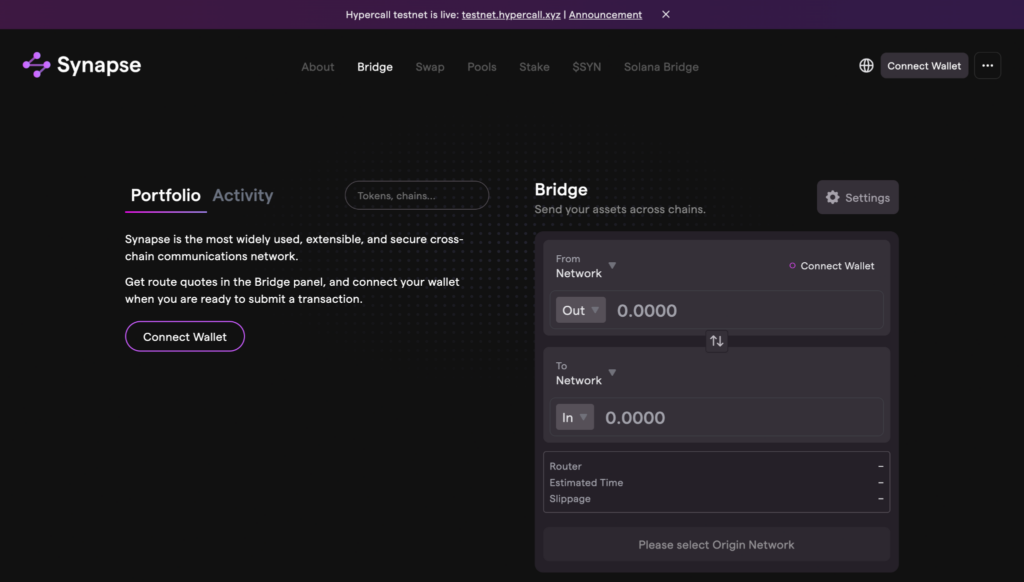
| Synapse | 27+ | Liquidity pools | Variable, route-based | 2021 attempted $8M+ exploit blocked | Stablecoin-heavy routes |
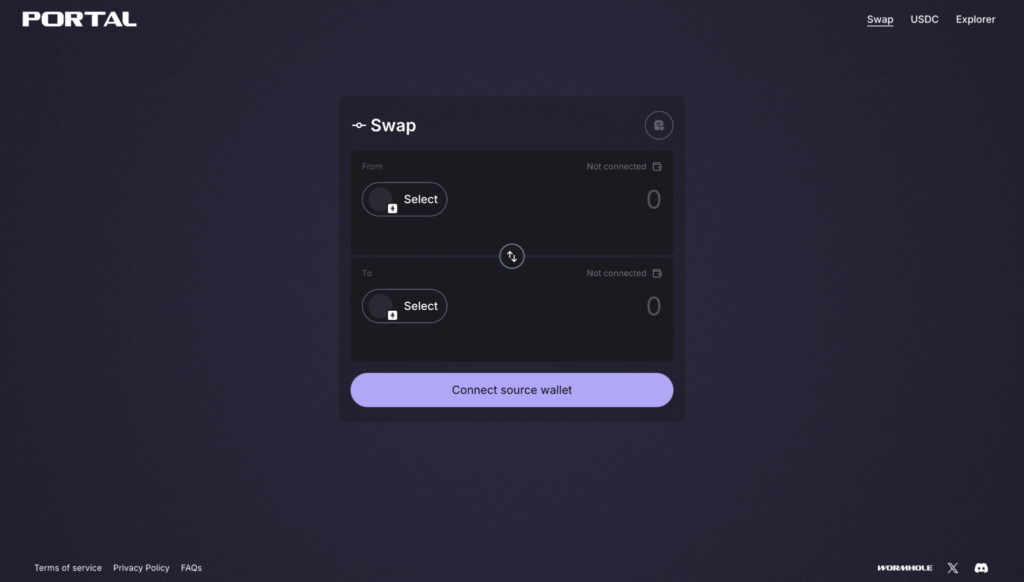
| Portal Bridge | 40+ including Solana | Lock-and-mint | Variable, route-based | Wormhole exploit in 2022, $320M covered by Jump Crypto | Token and NFT bridging |
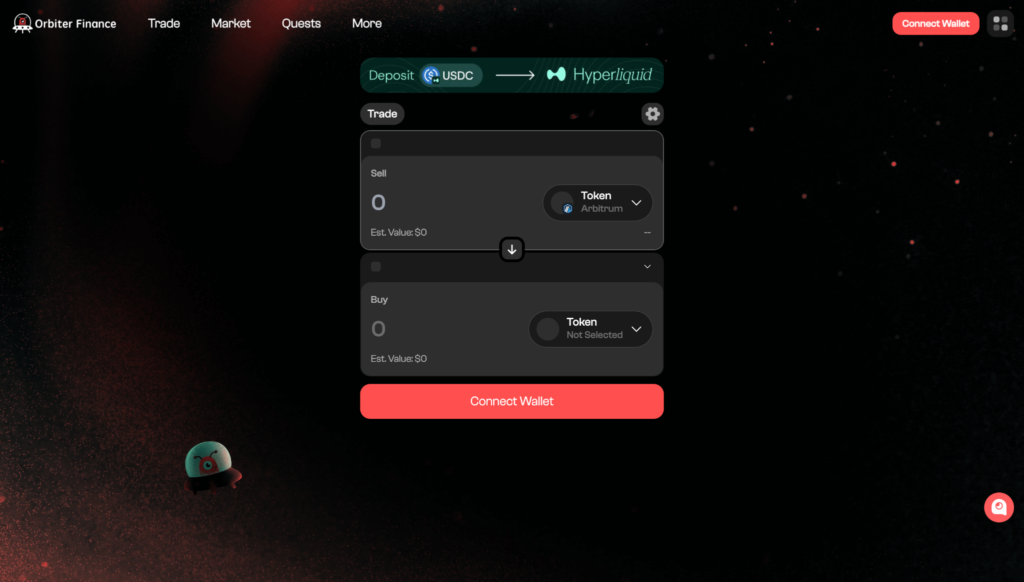
| Orbiter | 74+ EVM and non-EVM | Makers + liquidity pools | 0.03% to 0.3% + withholding fee | None | L2-first transfers |
| Everclear | 20+ EVM | Clearing & settlement layer | Around 0.01% to 0.02% | None | Backend bridge infrastructure |
Best DeFi bridge aggregators
1. Jumper
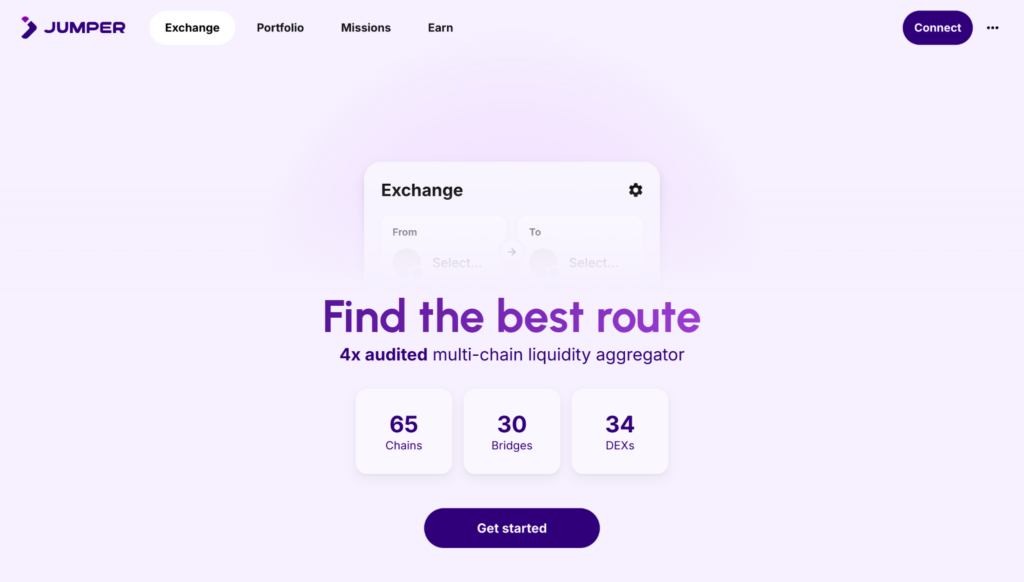
Key features:
- Great default option for bridging
- Compare routes easily
- Swap to different tokens on 63+ different chains
- Useful for checking final output before proceeding
Best known for: Easily finding the best route to swap across many chains.
Jumper is a great starting point if you don’t already know which bridge to use.
You choose what asset you have, the chain you hold it on, and where you want it to go.
As an aggregator, Jumper then compares routes across bridges, DEXs, and liquidity sources – and clearly shows you which one’s the best deal or the fastest before you confirm.
That’s useful because the “best” bridge changes by route. A bridge that works well from Base to Arbitrum, might not be the best choice from Solana to Ethereum.
Jumper is powered by LI.FI, the underlying tech that finds the best path for a cross-chain move. It combines steps like swapping, bridging, and swapping again on the new chain, so you don’t have to do each part manually.
| Chains supported | 63+ |
| Type | Aggregator |
| Protocol fee | 0.25% LI.FI service fee |
| Hacks | LI.FI exploits in 2022 and 2024. $11.6M lost in July 2024 |
| Funding | LI.FI raised $17.5M Series A and later $29M |
2. Bungee
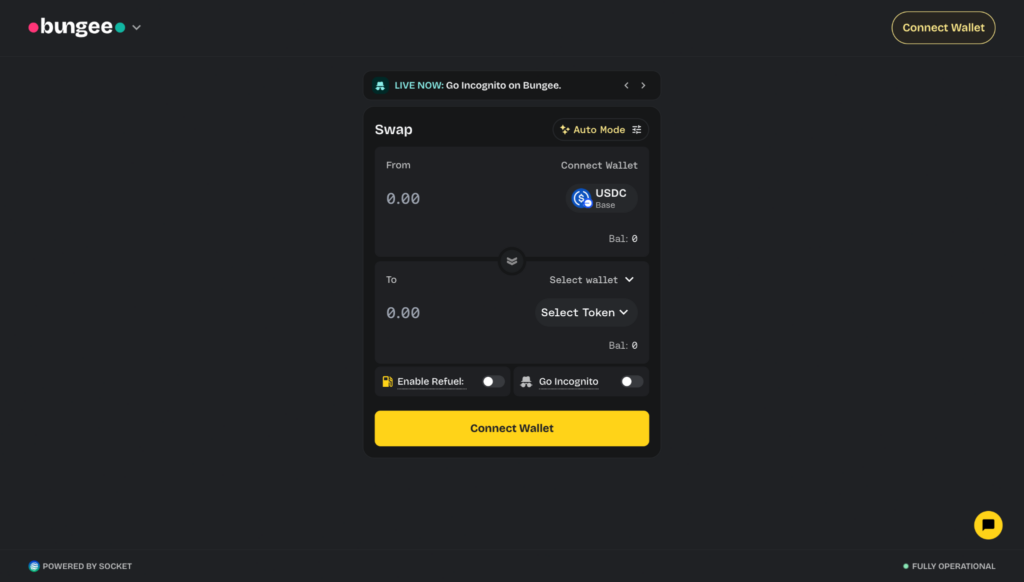
Key features:
- EVM-focused, with Solana and Tron support
- Route comparison across bridges and DEXs
- No Bungee protocol fee
- Refuel for destination-chain gas
- Auto Mode for easier execution
Best known for: Bridging without getting stuck with no gas.
Bungee is a bridge and swap aggregator built by the Socket team. It focuses mostly on EVM chains, but also supports Solana and Tron.
Socket is the routing layer underneath it, which helps move assets across chains by combining bridges, DEXs, and execution steps into one route.
Bungee’s biggest edge is that it doesn’t add its own protocol fee. It also has a few practical features that make it more useful than a basic bridge.
Its Refuel feature lets you send a small amount of native gas to the destination chain, so users don’t end up with funds they can’t move. It also has an “Auto Mode” that lets users sign once and have Bungee handle the route execution, instead of choosing it manually every time.
Socket had a $3.3M exploit in 2024, but the team recovered a large amount of the stolen ETH and made affected users whole.
| Chains supported | 33+ EVM, Solana, Tron |
| Type | Aggregator |
| Protocol fee | No fees added |
| Hacks | Socket/Bungee-related exploit in January 2024, around $3.3M reported |
| Funding | $10M total from Coinbase Ventures and Framework Ventures |
3. Rango
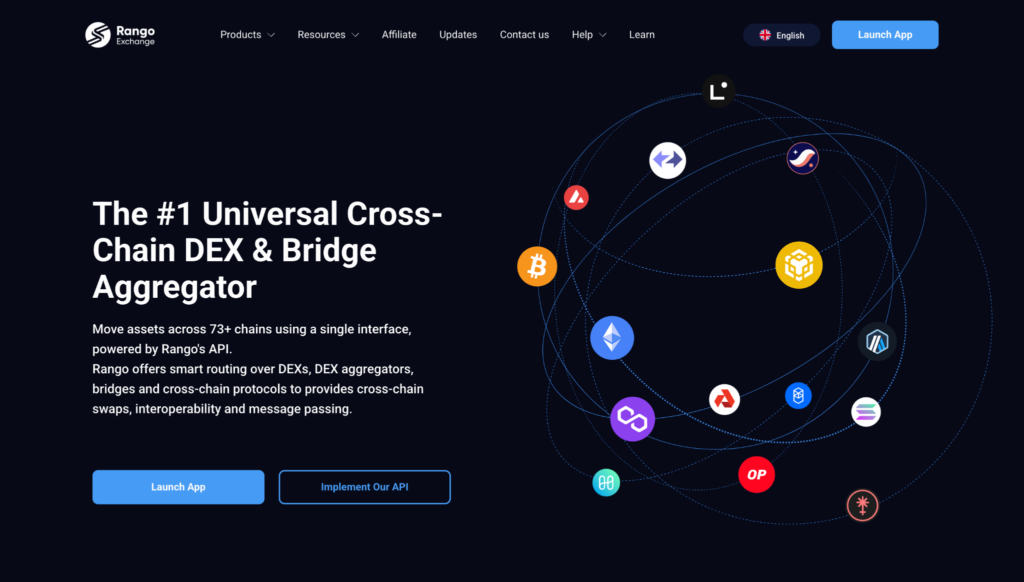
Key features:
- Great for unusual routes
- Extremely wide ecosystem coverage
- Good route discovery across several bridges
- Supports Cosmos ecosystem, UTXO chains, and more
Best known for: Bridging unusual routes including Cosmos ecosystem, Bitcoin-style chains, and niche chains.
Rango is useful when your route is awkward, especially when its two chains that don’t typically mix.
As a bridge aggregator like Jumper, Rango’s main strength is route discovery. Just tell Rango what you want to move and where to move it, and it will search across bridges, DEXs, and cross-chain protocols.
If you’re just moving between major Ethereum L2s, you might not need Rango.
But if you’re moving across less standard routes across EVM, Solana, Tron, Starknet, Cosmos-based chains, or Bitcoin-style chains like Bitcoin Cash, Litecoin, Dogecoin, and Zcash – Rango becomes a lot more useful.
Its biggest edge is how broad its ecosystem support is. Rango covers more of the smaller and niche blockchain ecosystems than most bridges and aggregators miss.
| Chains supported | 73+ |
| Type | Aggregator |
| Protocol fee | 0.15% |
| Hacks | None |
| Funding | 2024 investment round led by Binance Labs (amount undisclosed) |
Best fast direct bridges
1. Across
Key features:
- Average fill time of about 1.2 seconds
- Competitive live quotes
- Never hacked
- Integrated into Uniswap, MetaMask, and other major apps
Best known for: Super-fast Ethereum L2 transfers.
Across is built for fast, low-cost bridging across Ethereum and major EVM L2s.
It also uses an intent-based design, which means you choose what asset you want to move and where it should land – then relayers compete to deliver it.
Instead of making you wait for the bridge to release or mint funds, relayers front the money on the destination chain, then get repaid after the transfer is verified.
That’s why Across can feel much faster than older bridges, with most transfers landing in seconds.
It’s also used by major crypto apps like Uniswap, MetaMask, Coinbase, and PancakeSwap to power in-app bridging.
Across has moved over $34 billion for 5 million users, with an average fill time of about 1.2 seconds.
| Chains supported | 26+ EVM chains |
| Type | Intent-based |
| Protocol fee | Variable, built into the route spread |
| Hacks | None |
| Funding | $51M total, including $41M round led by Paradigm |
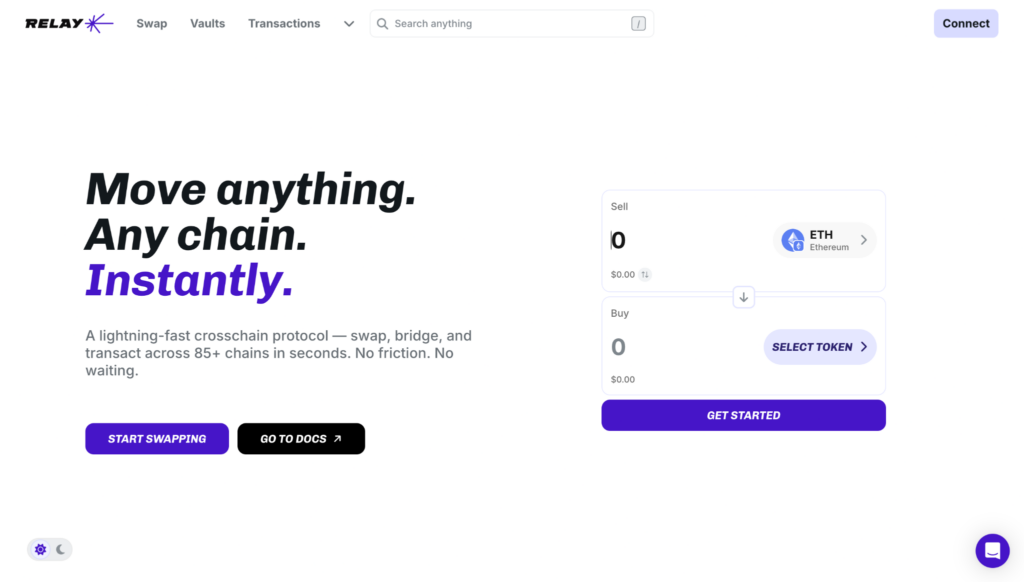
2. Relay
Key features:
- Mostly EVM chain support
- Most transactions complete in under 2 seconds
- Used by Phantom, MetaMask, Rainbow, and OKX
- Turns bridging, swapping, gas, and routing into one transaction
- 99.9% uptime and $20B+ in settled transactions
Best known for: Fast transfers that don’t feel like bridging + wallet integrations.
Relay is built to make cross-chain transfers feel quick and easy, with most transactions completing in under 2 seconds.
You can use it to swap, bridge, or move assets across 85+ mostly EVM-compatible chains without dealing with lots of manual steps.
Relay uses an intent-based design. In simple terms, you tell Relay what you want to happen – and relayers help complete that transfer quickly on the destination chain.
Instead of making users think through bridges, gas, route logic, and chain switching, Relay simplifies the process into one transaction.
That makes it especially useful for wallets and apps. It’s already integrated into popular wallets like Phantom, MetaMask, Rainbow, and OKX wallet, to let users move funds across many chains from those apps.
| Chains supported | 85+ mainly EVM-compatible chains |
| Type | Intent-based |
| Protocol fee | 0% for same-token bridging, up to 0.15% for swaps |
| Hacks | None |
| Funding | $17M Series B in 2026, led by Archetype and USV |
Best ecosystem-specific bridges
1. USDC Bridge (by Circle)
Key features:
- Native USDC only
- No liquidity pool slippage
- Free standard transfers (excl. network fees)
- Built by Circle
Best known for: Native USDC, no wrapped-token mess.
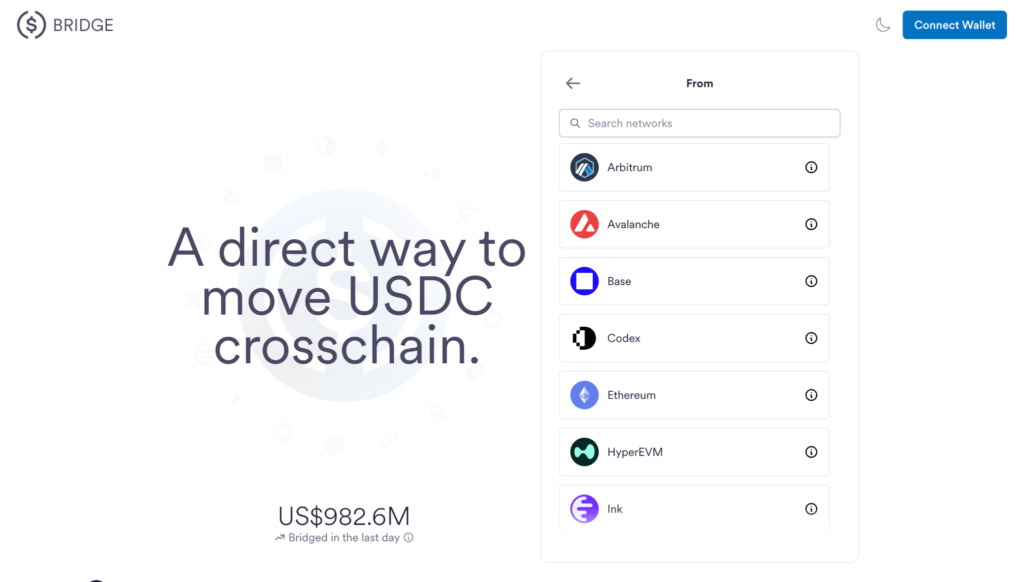
USDC Bridge is Circle’s own bridge app for moving native USDC between supported chains. It runs on CCTP, Circle’s behind-the-scenes system for cross-chain USDC transfers.
The main difference is that it doesn’t use wrapped USDC or liquidity pools.
It burns USDC on the chain you’re sending from, gets approval from Circle, then mints native USDC on the chain you’re sending to. So you receive real Circle-issued USDC, not a bridge-wrapped version.
Users get smoother USDC transfers, upfront fees, and no liquidity-pool slippage. Standard transfers come with no CCTP fees, while Fast Transfers can cost 0% to 0.14%.
As you could imagine, USDC Bridge is more limited than most bridges because it only works for USDC. But if you’re moving USDC, it’s perfect for avoiding the wrapped-token mess and uses Circle’s own infrastructure.
| Chains supported | 23+ |
| Type | Burn-and-mint |
| Protocol fee | 0% standard, but up to 0.14% for fast transfers |
| Hacks | None |
| Funding | Built by Circle, public on NYSE under CRCL |
2. Stargate
Key features:
- Covers chains that many other bridges don’t
- Strong stablecoin support
- Built on LayerZero
- Direct bridge, not an aggregator
- Useful for omnichain assets
Best known for: Moving major assets across rarely-supported chains.
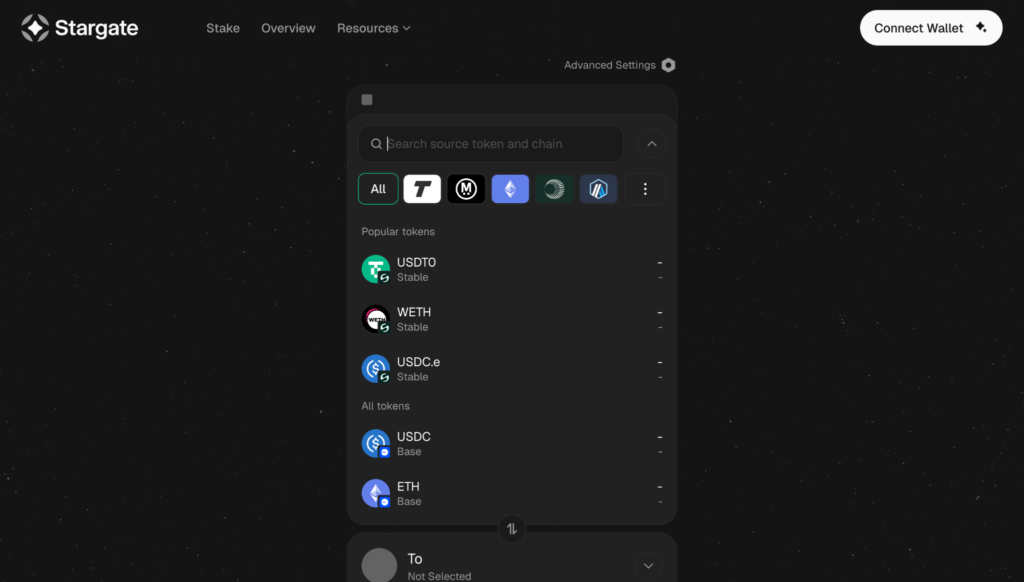
Stargate is a popular bridge that reaches a wider mix of major EVM chains, non-EVM networks, and alternative L1s.
Think niche ecosystems like Aptos, Sui, TON, Starknet, IOTA, Hedera, XDC, and Flare – in addition to the usual assets like stablecoins, ETH, wrapped BTC, LayerZero “omnichain” tokens.
Stargate is built on LayerZero, a cross-chain messaging protocol that helps different blockchains communicate data with each other.
Just remember that the final experience still depends on the route. Fees, liquidity, speed, and final output can change depending on the asset and the chains involved.
Stargate is now closely tied to LayerZero, after LayerZero acquired the project in August 2025.
| Chains supported | 80+, including rare networks and alternative L1s |
| Type | Liquidity pools |
| Protocol fee | Variable, built into the route spread |
| Hacks | None, but another LayerZero-related bridge was hacked in 2026 |
| Funding | Raised $25M in 2022 via STG token auction. Acquired in 2025 by LayerZero Foundation for $110M |
3. deBridge

Key features:
- Strong Solana↔EVM support
- Integrated into top wallets and dApps
- Cross-chain swaps, not just bridging
- Supports limit orders and P2P swaps
Best known for: Fast Solana-to-EVM swaps, limit orders, and cross-chain app actions.
deBridge is a great option when you’re moving between Solana and EVM chains.
But it’s not just for bridging single assets across networks. deBridge also supports swaps, messaging, and execution, meaning apps can build more advanced cross-chain actions.
That’s why it’s integrated across major wallets and dApps such as MetaMask, Phantom, and Jupiter.
One unique feature is that deBridge supports limit orders and even a P2P market – meaning you can set orders to be filled at a certain price level later, instead of taking whatever the market rate is at the time.
It has an average settlement time of under 2 seconds, $21B in settled volume, and its own token, DBR, which is tied to the wider deBridge ecosystem.
| Chains supported | 26+ including Solana |
| Type | Intent-based |
| Protocol fee | Variable, route-based |
| Hacks | None |
| Funding | $5.5M seed round in 2021, led by ParaFi Capital |
4. THORSwap
Key features:
- Supports native assets like BTC, LTC, and more
- No wrapped assets required
- Go-to for swapping non-EVM assets
- Best for advanced users
Best known for: Native asset swaps on Bitcoin-style chains.
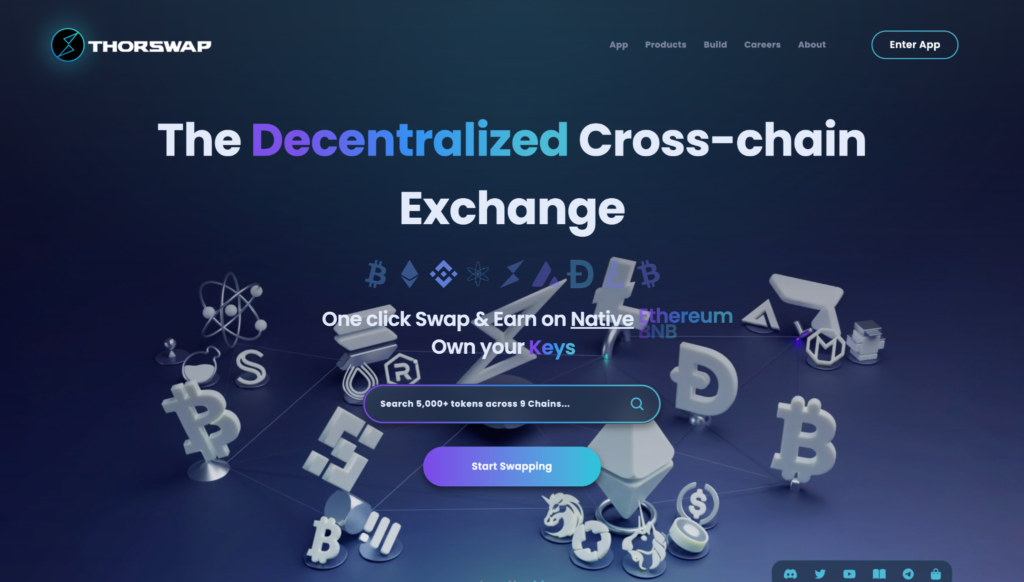
THORSwap is different from most bridges because it focuses on native cross-chain swaps.
That means you can swap assets like native BTC, without relying on wrapped BTC or a centralized exchange.
Most bridge apps are heavily EVM-focused, but THORSwap is the go-to option when the asset is outside that EVM world. Think assets like BTC, LTC, or DOGE – important coins, but super neglected by most cross-chain platforms.
You can think of THORSwap more as a cross-chain DEX than a regular bridge. It’s usually used to swap one asset for another across chains, rather than same-asset transfers (but it can do this when the route supports it).
THORSwap uses THORChain, a protocol built specifically for native cross-chain liquidity, but it can also route through other protocols through integrations.
THORChain was exploited in 2021, with router bugs letting attackers drain about $16M across three attacks. Its lending platform THORFi had a safety halt and insolvency concerns in 2025, unrelated to the bridge.
| Chains supported | 9 core chains, more via integrations |
| Type | Native asset swaps (via liquidity pools) |
| Protocol fee | 0.5% fee on swaps over $100 |
| Hacks | THORChain exploits in 2021, losing $16M |
| Funding | $3.75M token sale in 2021, led by IDEO CoLab Ventures |
5. Portal Bridge
Key features:
- Strong Solana support
- Useful for EVM-to-non-EVM routes
- Built on Wormhole’s 19-Guardian messaging system
- Supports token and NFT bridging
Best known for: Classic Solana bridging across Wormhole-supported chains.
Portal Bridge is the main bridge app built on Wormhole, a cross-chain messaging protocol best known for connecting Solana with other ecosystems.
It locks or verifies assets on one chain, then uses Wormhole’s 19-Guardian network to confirm the transfer and release or mint the matching asset on the destination chain.
Portal is useful for moving tokens and NFTs across 40+ Wormhole-supported chains, including Solana, major EVM chains, and other non-EVM ecosystems.
Wormhole also does more than simple bridging, with its infrastructure supporting cross-chain messaging and app-level communication. More than 200 apps have integrated Wormhole.
It was struck by a $320M hack in 2022 – but investors Jump Crypto covered 100% of those losses for users, and the bug was fixed.
| Chains supported | 40+ including Solana |
| Type | Lock-and-mint |
| Protocol fee | Variable, route-dependent |
| Hacks | Wormhole exploit in 2022, $320M in losses covered by Jump Crypto |
| Funding | Built by Wormhole, which raised $225M in 2023 |
Other useful bridges
1. Synapse
Key features:
- $50B+ settled volume
- Good for EVM chains and L2s
- Supports major assets plus some niche route-specific tokens
- Uses liquidity pools, swaps, CCTP, and RFQ-style routing
Best known for: Established stablecoin routes.
Synapse is a long-running bridge that’s mostly useful for moving assets like USDC, USDT, ETH, and SYN between supported chains.
It can handle both same-asset transfers and cross-chain swaps. Depending on the route, Synapse may use its own liquidity pools, token swaps, Circle CCTP for native USDC, or RFQ-style relayers to get funds to the destination chain.
Synapse doesn’t support as many chains as some other bridges, but also supports some very niche chains. It has handled more than $50 billion in settled volume to date with over 2 million users.
In 2021 someone tried to exploit Synapse for more than $8M, but the transaction was blocked before user funds were lost.
| Chains supported | 27+ |
| Type | Liquidity pools |
| Protocol fee | Variable, route-based |
| Hacks | 2021 attempted $8M+ exploit was blocked by validators |
| Funding | Originated from Nerve Finance, which raised $2M |
2. Orbiter Finance
Key features:
- L2-focused bridge
- Good for rollup users
- Fast Maker-based transfers
- $15B+ volume and 30M+ transactions to date
Best known for: Fast L2 bridging, (but growing support for new/non-EVM chains).
Orbiter is a good fit if you mostly move funds between Ethereum L2s and rollup-style networks.
Rather than being an “any chain to any chain” bridge, it started as an L2-first bridge and has grown into more ecosystems over time.
Orbiter uses relayers called Makers, with pooled liquidity behind the scenes. When you send funds from one chain, a Maker helps send the matching funds to the destination chain, while Orbiter’s liquidity pools and OPool contracts help keep funds available across supported chains.
Although it started with standard Ethereum L2s, it now supports some non-EVM and unusual networks including Solana, Sui, TON, Tron, and Rootstock.
It raised a $3.2M seed round in 2022, with Tiger Global as a notable backer, and later received a strategic investment led by OKX Ventures.
| Chains supported | 74+ EVM and non-EVM chains |
| Type | Relayers (“makers”) + liquidity pools |
| Protocol fee | 0.03% to 0.3% + withholding fee |
| Hacks | None |
| Funding | $3.2M seed round, later strategic backing from OKX Ventures |
3. Everclear, formerly Connext
Key features:
- Cuts costs by balancing opposite transfers first
- Moves less money between chains, in a good way
- Useful infrastructure for other bridge apps
- Governed by the CLEAR token
Best known for: Helping bridge apps move money between chains more efficiently in the background.
Everclear, formerly Connext, has rebranded itself to become more of a background clearing layer for cross-chain apps, rather than a consumer-facing bridge.
It focuses on efficiency, settling only leftover differences from asset flows rather than every individual transaction. Everclear matches opposite flows, cancels out what balances, and only settles the remaining imbalance.
This can make rebalancing much cheaper for bridges, solvers, market makers, and intent-based protocols.
It has its own bridge at bridge.everclear.org, but most users will likely interact with Everclear through partner apps. It works behind the scenes for systems like Across, Relay, LI.FI, and other chain abstraction protocols.
Everclear is governed by the Everclear DAO, using the CLEAR token for governance, incentives, and distributing fees.
| Chains supported | 20+ EVM chains |
| Type | Clearing & settlement layer |
| Protocol fee | Extremely low (0.01–0.02%) |
| Hacks | None |
| Funding | $5M Pantera investment in 2024. Also backed by Consensys and Ethereum Foundation |
Which DeFi bridge should I use?
The easiest way to choose a bridge is to start with what you’re trying to do. Below is a summary of what your go-to should be for a handful of scenarios:
| User need | Best starting point |
| I want the simplest option | Jumper |
| I want a very fast transfer | Relay or Across |
| I’m moving between Ethereum L2s | Across or Orbiter |
| I’m moving stablecoins across major chains | Stargate |
| I need broad chain coverage | Rango |
| I’m moving between Solana and EVM chains | deBridge, Rango, or Portal |
| I want native swaps on Bitcoin-style chains | THORSwap |
| I want to compare lots of routes | Jumper or Rango |
For most users, a bridge aggregator is the easiest starting point.
Jumper, Rango, and Bungee are helpful because they show possible routes instead of forcing you to know the best bridge in advance.
Only worry about the others if you’re going into a more specialized swap, or you’re looking to minimize fees and slippage for really big trades.
How DeFi bridges work
For users, bridging usually feels simple: you put assets in on one chain, and receive assets out on another chain.
But behind the scenes, the bridge has to make that happen safely – and there are several ways to go about it.
Here are the main ways different bridges do this behind the scenes:
- Wrapped asset transfers: The bridge locks the asset on one chain and creates a wrapped version on another. Depending on the specific method, it might be called “lock-and-mint” or “mint-and-burn.”
- Liquidity-pool transfers: The bridge already has funds sitting on both chains. You send tokens into the bridge on one chain, and it pays you from its available funds on the other chain.
- Intent-based transfers: You state the result you want, like moving ETH from Arbitrum to Base. Relayers, fillers, or solvers compete to complete it for you.
- Aggregator routes: The app compares routes across bridges and DEXs. It’s basically route shopping for the cheapest, fastest, or most available path – no matter the underlying mechanics.
Decentralization varies
There’s also a difference in how bridges are powered and how decentralized they are.
They can either depend on smart contracts entirely, or partially rely on a handful of parties called “validators.”
- Validator-based systems depend on a handful of trusted parties (like blockchain bank tellers) who check and approve transfers.
- Completely trustless systems use smart contracts and cryptographic proofs (like zero-knowledge) to verify transactions, minimizing reliance on anyone in between.
In general, the more secure, the slower a bridge is – so it’s up to the developers to find a functional middleground.
DeFi bridge risks
Bridges are useful, but they’re also one of the riskiest parts of DeFi.
That doesn’t mean you should never use them – it just means you should know what can go wrong before you move serious money.
Bridges hold or coordinate a lot of value across chains, which makes them attractive targets.
In April 2026, Kelp DAO’s LayerZero-powered bridge was drained for about $292 million in rsETH – and that’s just one example of several 9-figure bridge hacks.
What makes bridges vulnerable?
The main issue with bridges is that they sit between chains.
They need to confirm that something happened on one chain, then make something happen on another chain. If that verification system fails, gets exploited, or is controlled by too few parties, users can lose money.
When using a bridge, there are some key things you can check to minimize your risks:
- Route risk: If you use an aggregator, check which bridge or app it’s actually using. The route might go through Across, Stargate, a DEX, a solver, or several steps at once.
- Approval risk: Bridges often ask for permission to spend your tokens. Be careful with unlimited approvals, especially on apps you haven’t used before.
- Wrong-address risk: Double-check the receiving address before confirming. If you send funds to the wrong address, recovery isn’t always possible.
- Liquidity risk: Make sure the bridge has enough funds on the destination chain. Low liquidity can mean worse rates, higher slippage, delays, or no route at all.
- Delay risk: Some bridges are fast. Others take longer. Delays can come from network congestion, confirmations, relayers, bridge design, or low liquidity.
- Wrapped-asset risk: Wrapped tokens rely on the bridge or issuer behind them. If that system has problems, the wrapped token can lose trust or become harder to redeem.
- Large-transfer risk: A route that works well for $100 may not work well for $50,000. For larger transfers, check the final output, fees, slippage, and route quality. Always test with a small amount first.
How to use a DeFi bridge
Before you use a bridge, you’ll need a connected wallet, funds on the source chain, and enough gas to pay for the transaction.
In some cases, you may also need a small amount of gas on the destination chain to use the funds after they arrive.
Here’s how the process usually looks:
- Open the official bridge app: Use the real bridge website, not a random ad, DM, comment, or search result.
- Connect the source wallet: Connect the wallet that holds the funds you want to move.
- Select the source and destination chains: Choose where the funds are now, then choose where you want them to arrive.
- Select the token and amount: Pick the asset you want to bridge and enter the amount.
- Review the route, fees, and output: Check which route the bridge is using, how long it may take, what fees apply, and how much you’ll receive.
- Approve and confirm in your wallet: Approve token access if needed, then confirm the bridge transaction.
- Check the destination chain: Switch your wallet to the destination chain and confirm the funds arrived.
What went wrong with old bridges?
Bridge failures are a good reminder that popularity doesn’t always mean safety.
Some bridges handled huge volumes, supported lots of chains, and looked like solid DeFi infrastructure right up until they broke.
In many cases, the issue wasn’t just bad code. It was weak controls, poor key management, low liquidity, team problems, or too much trust placed in one system.
Here are some major bridge collapses:
| Bridge | What happened | Status now |
| Multichain / Anyswap | Multichain used to be one of the biggest cross-chain routers. In 2023, the project collapsed after its CEO was reportedly detained, the team lost access to key systems, and more than $125M was drained. | Shut down. |
| Poly Network / Poly Bridge | Poly Network was once a major bridge and became infamous after a $611M exploit in 2021. It later shut down Poly Bridge services in 2024 and then fully ended Poly Network services. | Shut down. |
| Nomad Bridge | Nomad was hit for around $190M in 2022 after a contract bug made the exploit easy to copy. It tried to relaunch, but never really regained trust or relevance. | Effectively inactive. |
| Terra Shuttle Bridge | Terra Shuttle was tied to the old Terra/Luna ecosystem. It was permanently closed as Terraform Labs wound down after bankruptcy proceedings. | Shut down. |
| Harmony Horizon Bridge | Horizon was hacked for about $100M in 2022. Harmony continued, but the bridge never returned as a serious mainstream option. | Legacy bridge, mostly inactive. |
| Hop Protocol | Hop used to be a useful Ethereum L2 bridge. Its core developer stepped back in 2026, usage fell heavily, and the official interface no longer appears to load properly. | Legacy bridge, official interface unavailable. |
Multichain (formerly Anyswap)
Multichain, formerly Anyswap, used to be one of the biggest cross-chain routers in crypto.
But in 2023, the project collapsed after its CEO was reportedly detained, the team lost access to key systems, and more than $125M was drained from the protocol.
Multichain later said it would cease operations.
Poly Network/Poly Bridge
Poly Network was once a major cross-chain bridge, but it became best known for the huge 2021 exploit where more than $600M was taken.
The project continued for a while after that, but Poly Bridge services were later suspended in 2024. Poly Network then announced that it would fully terminate its services.
Nomad Bridge

Nomad was hit for around $190M in 2022 after a contract bug made the exploit easy for others to copy.
The project tried to relaunch after the hack, but it never really regained the same trust, usage, or relevance. For regular users, Nomad is best treated as effectively inactive.
Terra Shuttle Bridge

Terra Shuttle was tied to the old Terra/Luna ecosystem and was used for moving Terra-related wrapped assets.
After Terra’s collapse and Terraform Labs’ later wind-down, the Shuttle Bridge was permanently closed.
Harmony Horizon Bridge

Harmony Horizon was once a notable bridge for the Harmony ecosystem. In 2022, it was hacked for about $100M.
Harmony continued as a network, but Horizon never returned as a serious mainstream bridge option. It’s now better treated as a legacy bridge, not something users should rely on today.
Hop Protocol
Hop used to be a useful Ethereum L2 bridge for moving funds between networks like Ethereum, Arbitrum, Optimism, Polygon, Gnosis, Base, Linea, and Polygon zkEVM.
Over time, usage and liquidity fell, and its core developer, Authereum Labs, stepped back in 2026 after struggling to ship Hop Rails and compete with better-funded bridge projects. The official bridge interface also appears to no longer load properly.
Hop isn’t dead in the same way as Multichain or Terra Shuttle, but it’s no longer a leading bridge option. In 2026, it’s better viewed as a legacy Ethereum L2 bridge.
The future of DeFi bridges
The long-term goal is that users won’t think about bridges much at all.
Right now, users still have to think about too many things: which chain they’re on, which chain they’re moving to, what route to use, how much gas they need, and more.
It’s clunky, and often takes several transactions.
The better version is that bridges fade into the background, and users just complete the action they came to do. This is already beginning with tools like aggregators, abstraction, and relayers.
1. Bridging will happen in the background
Today, bridging still feels like a separate task.
You choose chains, compare routes, approve tokens, check gas, wait for the transfer, then make sure the funds have arrived.
The better version is that you just do what you came to do, and the app handles the bridge in the background.
2. Aggregators already make this easier
Apps like Jumper, Rango, and Bungee already point in this direction. Instead of making users pick one bridge manually, they compare routes across bridges, DEXs, and liquidity sources.
That means users can see the expected output, fees, and route before confirming, instead of guessing which bridge is best.
3. Less steps with intent-based bridges
Intent-based systems like Across and Relay also make bridging feel simpler.
Instead of manually thinking through every route, the user says what they want to happen. Then relayers, fillers, or solvers help complete the transfer on the destination chain.
In a nutshell, the app handles more of the work, and the user sees fewer steps.
4. Gas will become less annoying
Gas is one of the clunkiest parts of bridging. You can move funds to a new chain, then often realize you don’t have gas there to use them.
Some bridges and aggregators already offer gas top-ups or refuel features, so users can arrive on a new chain with enough gas to keep going.
The end goal: “Normal” transactions
The future of bridging will likely involve much fewer clicks, fewer approvals, less manual chain switching, and less obvious “bridging.”
Users will still move assets across chains. The main difference is that the best apps will make it feel like one normal transaction – not a separate DeFi chore.
Final takeaway
The trickiest part about DeFi bridges is that “bridge” doesn’t mean one single thing anymore.
Some bridges lock and mint assets, some use liquidity pools, some rely on relayers or solvers, and others focus on native cross-chain swaps.
Aggregators have made this easier by comparing routes for you, instead of forcing you to know which bridge is best before you start.
For beginners, that’s usually the best starting point: use an aggregator, check the route it gives you, review the fees and final output, then start with a small test transaction.
Over time, bridging will most likely become much less visible, as abstraction advances and DeFi starts to feel just like using a regular Web 2 app. Instead of opening a separate bridge app, you’ll just use a wallet, exchange, or DeFi app, and the cross-chain part will happen in the background.
Until then, bridges are useful but still risky. Check the route, watch approvals, test first, and don’t assume every bridge is automatically safe.
FAQ
An optimistic rollup is an Ethereum L2 that processes transactions cheaply off mainnet, then posts key data back to Ethereum.
It’s “optimistic” because transactions are assumed valid, unless challenged later.
Usually, yes.
They’re designed to give you Ethereum-style apps with much lower fees.
Official withdrawals leave time for challenges, so moving funds back to Ethereum can take days.
Faster bridges exist, but they add extra risk.
They can be, but it depends on the network.
Look at the bridge, sequencer setup, proof system, upgrade controls, and how mature the ecosystem is.
Optimistic rollups check for fraud after the fact.
ZK rollups prove transactions are correct before accepting them.
It depends what you’re doing.
Use the network that has the apps, liquidity, bridges, and security setup you’re comfortable with.