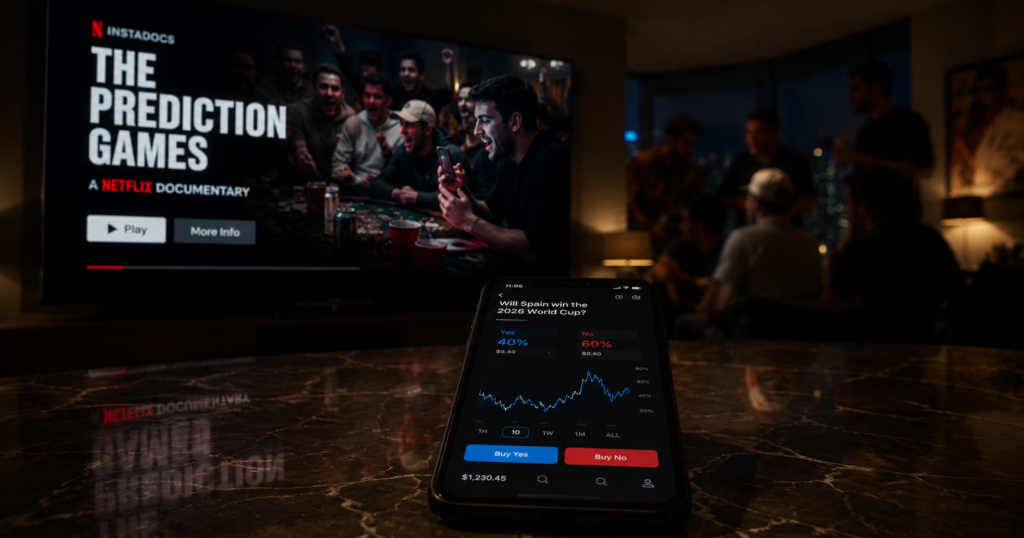
Coinbase Races to Become the ‘Everything App’ for Crypto Trading

Coinbase confirmed plans to unveil prediction markets and tokenized equities at a December 17 showcase event while launching direct trading of all Solana tokens through an integrated DEX. The company also joined the Coalition for Prediction Markets alongside Kalshi, Crypto.com, Robinhood, and Underdog.

Coinbase made two major moves this week, confirming plans to unveil prediction markets at an upcoming showcase event while opening its platform to millions of unvetted Solana tokens.

The dual announcements position Coinbase to compete across multiple fronts: against traditional crypto exchanges on blockchain access, against Kalshi and Polymarket on prediction markets, and against Robinhood and MetaMask on platform consolidation.

Two major expansions coming

The Solana integration, announced at the Breakpoint conference in Abu Dhabi, enables direct trading of all Solana tokens through an integrated decentralized exchange, eliminating the traditional listing process. The move gives the platform’s more than 100 million users immediate access to tokens the moment they launch.

“Millions of assets are launching on chain every day,” Andrew Allen, Coinbase’s senior protocol specialist, told attendees. “This allows you to trade any token on Solana the moment they become available on chain.”

Separately, Bloomberg reported that Coinbase plans to unveil prediction markets and tokenized equities at a showcase event scheduled for December 17.

The plans were already suspected after a November leak revealed screenshots of a Coinbase-branded prediction product operating through a partnership with Kalshi. Coinbase declined to confirm the product, but pointed to the December 17 event.

Breaking down barriers to blockchain access

Coinbase’s Solana integration represents a fundamental shift in how centralized exchanges operate. The platform’s new decentralized exchange feature routes trades directly to on-chain liquidity pools, eliminating weeks-long review processes that have historically limited which projects could reach mainstream investors.

The integration builds on Coinbase’s November acquisition of Vector, a Solana-based trading platform that enhances speed, liquidity, and asset variety by connecting directly with Coinbase’s decentralized trading system.

The strategy mirrors moves across the industry. MetaMask recently launched event contracts through an exclusive partnership with Polymarket as parent company Consensys prepares for an IPO.

Similarly, Robinhood has layered event contracts onto its stock, crypto, and derivatives business. The company traded 2.5 billion contracts in October alone as CEO Vlad Tenev pursues the same consolidation strategy, recently acquiring an exchange and clearinghouse to operate its own prediction markets infrastructure.

Industry alliance forms for prediction markets

On the same day, the Coalition for Prediction Markets launched with Coinbase, Kalshi, Crypto.com, Robinhood, and sports gaming platform Underdog as founding members.

“At Coinbase, our mission is to deliver financial freedom to the world – and prediction markets by nature democratize fact finding and the seeking of truth,” said Faryar Shizad, Chief Policy Officer at Coinbase. “We’re proud to join the Coalition for Prediction Markets as they work with policymakers to ensure these markets develop and remain accessible to the American people.”

Sara Slane, Kalshi’s head of corporate development and a coalition executive, emphasized the regulatory focus: “We spent years working with the CFTC because prediction markets must operate with strong federal safeguards that prevent insider trading, protect consumers, and ensure these markets remain transparent and corruption-free.”

The coalition’s formation comes as prediction platforms face increasing pressure from state gambling regulators and the American Gaming Association, which argues that event contracts circumvent established gambling laws.

Macquarie analyst Chad Beynon projects the U.S. prediction markets industry could reach $5 billion in annual volume, split between $4.4 billion in sports-only contracts and $600 million in non-sports derivatives.

This race to become the “everything app” reflects a broader bet that traders prefer consolidated platforms over specialized services.

Kalshi and Crypto.com Form Trade Group Amid Regulatory Battles

Five major prediction market operators—Kalshi, Crypto.com, Robinhood, Coinbase and Underdog—launched the Coalition for Prediction Markets on Thursday.

Kalshi announced the Coalition for Prediction Markets today with backing from five companies: Kalshi, Crypto.com, Robinhood, Coinbase and Underdog. The new trade group aims to defend federal regulation through the Commodity Futures Trading Commission and resist state gaming regulators attempting to block their services.

The formation marks an escalation in a brewing conflict over whether prediction markets—which allow users to trade contracts on the outcomes of elections, sporting events and economic indicators—constitute gambling under state law.

At least 10 states have issued cease-and-desist orders or filed complaints against prediction market platforms, arguing they require gambling licenses to operate legally. California Attorney General Rob Bonta is preparing to join the fight, planning to sign onto an amicus brief supporting Maryland’s case against Kalshi and considering filing the state’s own lawsuit, per InGame reporting.

The “is it gambling” debate

At the heart of the dispute is a fundamental disagreement over what prediction markets actually are. Operators insist they offer commodity contracts regulated by the CFTC, not gambling. State regulators counter that putting money on a basketball game looks identical whether done through Kalshi or a traditional sportsbook.

“I just don’t really know what this has to do with gambling,” Kalshi CEO Tarek Mansour told Axios earlier this year. “If we are gambling, then I think you’re basically calling the entire financial market gambling.”

The distinction matters legally. Kalshi argues users trade contracts peer-to-peer rather than betting against a house, with the platform earning money from transaction fees like a broker rather than from losing wagers. The company argues the Commodity Exchange Act preempts state gambling laws.

State regulators reject this framing. “The purchase of the contract is indistinguishable from the act of placing a sports wager,” Maryland gaming officials wrote in an April cease-and-desist letter. Connecticut regulators similarly argued the platforms are “conducting unlicensed online gambling, more specifically sports wagering.”

The debate has spilled onto social media, with heated exchanges between Kalshi executives and industry critics. When questioned about Kalshi’s market-making practices, Sara Slane defended the company’s model while industry veterans have alerted the platform of being “condescending” and making overblown claims about its importance to financial markets.

Academic Zephyr Teachout flatly called Kalshi “a gambling company operating an illegal sports betting platform,” prompting sharp pushback from company representatives. A similar tweet from gaming consultant Dustin Gouker has reached nearly a million views.

Federal courts have delivered mixed results. While Kalshi won preliminary injunctions in New Jersey and initially in Nevada in April, a Nevada judge reversed that decision in November, ruling the company’s interpretation “upsets decades of federalism regarding gaming regulation.” Maryland courts denied Kalshi’s request for a preliminary injunction in August. Multiple cases remain under appeal and the issue could eventually reach the Supreme Court.

“Americans deserve clarity, not 50 conflicting interpretations,” said Sara Slane, an executive board member of the coalition and head of corporate development at Kalshi. She added that Kalshi spent years working with the CFTC to establish federal safeguards for prediction markets.

The dispute has fractured the broader gambling industry. The American Gaming Association, whose members include casino operators like MGM and Caesars, has launched an advertising campaign attacking prediction markets as unlawful sports betting. Recently, three major sports betting companies—DraftKings, FanDuel and Fanatics—recently left the trade group to launch a prediction markets platform.

Matt David, president of North America and Chief Corporate Affairs Officer at Crypto.com and a coalition board member, described prediction markets as civic infrastructure that democratizes financial participation. The coalition will focus on establishing nationwide integrity standards to prevent insider trading while defending against what it calls state overreach into federally regulated markets.

Additional companies are in talks to join the coalition, according to the announcement.

Prediction markets have grown rapidly in recent months. The coalition claims nearly half of Americans under 45 have used an online financial or prediction market, though this figure has not been independently verified. Kalshi recently raised $1 billion at an $11 billion valuation despite ongoing regulatory challenges.

Matchbook Begins UK Rollout as It Positions for a US Prediction Market Entry

Matchbook is entering the prediction-market arena with a U.K. debut slated for 2026, positioning the exchange for a U.S. push soon after.

Kalshi and Polymarket will soon have to make room for a new player in the prediction marketspace.

Matchbook, a sports betting exchange, will debut its prediction market in January 2026, according to Bloomberg. Ronan McDonagh, the company’s interim chief executive officer, said that Matchbook plans to “road test” its technology in the United Kingdom before expanding to the US in March.

As a “betting exchange,” Matchbook functions by matching buyers and sellers. Typically, sportsbooks take the opposite side of the customer’s bet; betting exchanges set two customers betting against each other. The house (in this case, the platform) takes a small fee for the exchange, and the vig (i.e., the vigorish, or the cut) is usually smaller for each bet.

Because Matchbook is a betting exchange, it is already set to dive into the prediction markets space. Instead of displaying the contracts in fractional odds (e.g., 2:1), it will shift to a percentage of probability for a “yes” or “no” outcome.

“It’s not new in the sense that it works on the same engine as an exchange,” McDonagh told Bloomberg. “It should be more understandable, so I think we’re hopeful that it captures a new audience or it intrigues people to have a look.”

Matchbook (Triplebet Ltd., registered in the British dependency of Guernsey) has been operating as a sports exchange for 20 years. It’s currently majority-owned by Zeljko Ranogajec, a mysterious professional gambler originally from Australia.

Ranogajec was in the news recently. In April, the Wall Street Journal named him as one of the key players in a 2023 operation that netted a 57 million dollar Texas Lottery jackpot. Ranogajec has a reputation as a “Joker” in the betting world for his ability to “pull off this kind of stunt in far-flung casinos and at racetracks around the world,” according to the WSJ.

Matchbook’s U.S. partner, RSBIX LLC, filed the paperwork with the CFTC back in September. RSBIX is currently led by Jeff Ifrah, one of President Donald Trump’s former defense attorneys.

Kalshi and Polymarket have not been cleared to operate in the U.K., so the launch of Matchbook’s new platform will gauge the temperature and see whether American enthusiasm for prediction markets has hit Britain.

McDonagh said that the company is willing to partner with a recognized brand when it launches in the States. “We’re not sentimental about going in as Matchbook,” he told Bloomberg. “We’ve been in the exchange business so long, and we’ve got a really strong tech platform. We’ve got strong market-making partners, liquidity and a great product. We’ll be able to compete on day one in the US.”

$65M+ on Prediction Markets Backed the December Rate Cut

Over $65M poured into Kalshi and Polymarket as traders backed a December rate cut with near certainty. The Fed delivered its third consecutive drop, matching prediction-market expectations.

In a move that everyone on Kalshi and Polymarket saw coming, the U.S. Federal Reserve cut interest rates for the third time in a row. 

On Wednesday, the Fed lowered the benchmark rate by a quarter of a point, down to the 3.50%-3.75% range. Though the decision wasn’t unanimous–Fed Governor Stephen Miran, Kansas City Fed President Jeffrey Schmid and Chicago Fed President Austan Goolsbee dissented–the prediction markets were in lockstep going into the decision. 

Earlier in the week, both Polymarket and Kalshi had a likelihood of a cut at 94% odds. By close, the odds had increased to 97%. Polymarket had $54.06M in volume on the 25 bps decrease. Meanwhile, Kalshi had $11.2m in volume on the feds cutting the rate. 

Slowing markets expected to continue

The market wasn’t always so sure about the Fed cut, partly because the Fed has provided little information in recent months. The Bureau of Labor Statistics canceled its October 2025 jobs report, and the November report is delayed (it arrives on December 16, two days before the report on November’s inflation data drops, per NBC News).

Federal Reserve Chair Jerome Powell cited the U.S. government shutdown as the reason for the silence. “Although important federal government data for the past couple of months have yet to be released, available public and private sector data suggest that is the outlook for employment and inflation has not changed,” said Powell, per CNN.

On top of that, ADP released a report in early December stating that the United States shed 120,000 jobs, resulting in a net loss of 32k. And the Fed’s favorite measure of inflation, personal consumption expenditures—better known as consumer spending—showed that spending was only up 0.2% (after taking out food and energy costs). As of September, the U.S. inflation rate is 3.0%, well above the Fed’s 2.0% target.

 So, when considering these factors—and how the October Federal Open Market Committee’s minutes said the committee had “strong differing views” on a third consecutive rate cut, Polymarket’s initial prediction leaned heavily to “no change.”

However, when New York Fed President John Williams delivered a speech at the Central Bank of Chile Centennial Conference in late November, he said that he saw “a further adjustment in the near term to the target range for the federal funds rate.” This caused a surge in the odds favoring a cut, going from 40% to 70%. 

Adding to the odds, Federal Reserve Board of Governors Christopher Waller, Michelle Bowman and Stephen Miran have also openly pushed for a rate cut, per CNN (Miran wanted a half-point cut, explaining why he dissented to the .25 decrease).

Thus, this is why there were 97% odds for a cut going into Wednesday’s decision. 

Last cut for a while? Traders seem to think so

The term “hawkish cut” has become a buzzword in recent weeks, meaning they would go through with the reduction but make it clear this is the last one for a while. 

CNBC noted that the Federal Open Market Committee is split between members who favor cuts as “a way to head off further weakness in the labor market” and members who think that cutting interest rates threatens to aggravate inflation. Thus, this third cut is a compromise.

Bill English, the Fed’s former director of monetary affairs, told CNBC that he expected the message to get the point across, that “they’ve made an adjustment and they’re comfortable where they are, and they don’t see a need to do anything more in the near term, as long as things play out more or less as they expect.”

With this decision, the markets has begun speculation on a Fed decision in January. So far, early predictions on Kalshi and Polymarket have 85% that the fed maintains the rate. 

You can trade Polymarket in MetaMask now. But should you?

You can trade Polymarket in MetaMask now—but at 4% per trade, that convenience comes at a price

MetaMask launched prediction markets this week through an exclusive partnership with Polymarket. But the integration is just one piece of a larger transformation.

Over the past two months, MetaMask has added perpetual futures trading powered by Hyperliquid, introduced trading on U.S. stocks including Nvidia and Tesla, launched a seasonal rewards program, and confirmed plans for a token. The wallet that once existed to sign transactions is positioning itself as an all-in-one trading platform.

The timing isn’t coincidental. Consensys, MetaMask’s parent company, is preparing for an IPO with JPMorgan Chase and Goldman Sachs as lead underwriters, according to Axios. Every new feature—prediction markets, perps, stocks, rewards—adds a revenue line and boosts engagement metrics ahead of the roadshow.

Trading predictions without leaving your wallet comes with a price

The Polymarket integration lets traders browse and trade event contracts directly in the MetaMask mobile app. Funding is streamlined: traders can deposit with any token on any EVM-compatible chain, and MetaMask handles the conversion. There’s no separate KYC process.

“Using prediction markets on mobile today is painful,” MetaMask’s senior director of product Mike Lwin said. The timing is notable, but Polymarket has already launched a mobile app.

MetaMask charges a 4% fee on every trade, split between MetaMask and Polymarket. No fees apply to deposits, cashouts, or withdrawals. Users also earn 2 points per dollar traded through MetaMask’s rewards program, which ties into the company’s planned token launch.

Ajay Mittal, MetaMask’s VP of product strategy, said the company “benchmarked pricing extensively against both prediction markets and the broader sports-betting industry.” A flat fee, he argued, is “one of the clearest and most predictable structures for users.”

The fee structure doesn’t add up for most traders

The 4% fee is the central question. Trading directly on Polymarket costs nothing beyond network fees. So who would want to pay a 4% premium?

People who don’t know they have a choice. MetaMask is counting on its 30 million users not realizing they can trade for free elsewhere.

Anyone with an existing Polymarket account has no reason to use MetaMask. The integration creates a separate account and the positions and history don’t transfer. You’d be paying 4% to start over.

“LOL you’re charging 4% fee on each prediction… you completely lost your mind,” one user replied in MetaMask’s announcement thread.

The only counterargument is the rewards program.

At 2 points per dollar traded, traders accumulate rewards tied to MetaMask’s planned token launch. But that’s not a benefit—it’s a speculation. Traders are betting that future token value will exceed the 4% they’re paying now. That’s a gamble on top of a gamble—or as one user put it, “Back in the days we had Red & Black + 0”

Prediction markets are just one piece of a bigger transformation

MetaMask’s ambition extends beyond prediction markets. The wallet now offers perpetual futures on over 150 tokens plus U.S. equities, with leverage up to 40x. It has a rewards program designed to incentivize trading activity across all products. And it’s preparing a token that will likely tie these elements together.

The strategy mirrors what Binance and Coinbase have done with centralized platforms: bundle as many financial products as possible to capture user attention and trading fees. MetaMask is attempting the same playbook with a non-custodial wallet, betting that self-custody and mobile convenience can compete with centralized exchanges.

“Consensys has quietly been positioning itself for public markets all year, trimming costs, tightening operations, and expanding MetaMask beyond a simple Ethereum wallet into a full financial platform,” Decrypt noted in October. “Consensys is about to position itself as crypto’s consumer super app to investors.”

For Consensys, the pitch to public market investors becomes clearer. MetaMask isn’t just infrastructure—it’s a trading platform with 30 million monthly active users, multiple revenue streams, and a product roadmap that keeps traders inside the app.

For Polymarket, it’s low-effort. For MetaMask and Consensys, it’s a win

Polymarket doesn’t need MetaMask for volume. The weekly notional volume is hitting 1.1B. It’s seeking additional funding at a valuation between $12 billion and $15 billion.

But the partnership offers low-effort distribution to crypto-native users with 2% upside. MetaMask’s audience already has wallets, understands on-chain trading, and doesn’t need education. If even a small percentage converts to active traders, Polymarket gains users it didn’t have to acquire.

The deal also fits Polymarket’s broader distribution strategy. It has signed partnerships with the UFC, the NHL, PrizePicks, Yahoo Finance, and Google.

MetaMask’s Polymarket integration is a convenience product, not a cost-saving one. Whether that’s worth it depends on how much you value your time, how often you trade, and how much faith you place in MetaMask’s future token.

For MetaMask and Consensys, the calculus is simpler. Every feature that keeps users inside the app strengthens the IPO narrative. Prediction markets are just the latest addition to a wallet that increasingly looks like a trading platform.

A Google Insider? The Polymarket Trader Who Turned $10K Into $1M Overnight

Alleged insider nets $1 million profit on Polymarket in 24 hours.

The prediction market world just had one of its most controversial market settlements. A Polymarket user known as AlphaRaccoon, walked away with over $1 million in profit in a single day. The source of the profits was all across markets on Google’s 2025 Year in Search rankings, including some very unlikely and obscure results. 

Across social media, the community’s consensus was immediate: AlphaRaccoon wasn’t lucky – the user was plugged in.

The perfect storm: Google leaks and predictions

Google reportedly published the Year in Search data early by mistake, then pulled it down within minutes. Right before, AlphaRaccoon placed enormous positions across dozens of hyper-specific markets. 

The red flag was that it wasn’t just on “Who will be #1?” but also whether other particular celebrities would place in the top five.

The trader went 22 for 23 on the bets.

Perhaps one of the most unlikely wins was loading up on “YES” on singer/songwriter d4vd at shockingly unlikely odds, shortly before the singer unexpectedly appeared at the top of the global rankings.

He also bet nearly $1 million that Bianca Censori would not be #1 – and was right again.

The Polymarket community has generally agreed that predicting the entire search hierarchy weeks before release would have been near-impossible without internal data.

Not the first Google win

What sealed most people’s opinions was the fact that this wasn’t AlphaRacoon’s first hit on a Google-associated market. 

Just months ago, the same trader pocketed close to $150K by nailing the exact release date of Google’s Gemini 3.0 – before any public hints existed.

When the allegations surfaced, AlphaRacoon attempted to hide – changing his username – but to little effect, since all Polymarket activity is retained on-chain.

The trading history on the platform can still be viewed under the handle @0xafEe, at the time of writing.

The other side of the argument, ‘insider trading is good’

Not everyone thinks the alleged insider trading is a disaster. One camp argues this is exactly how prediction markets should work and likely why Polymarket celebrated the Spotify leak earlier this week.

The logic comes from this:

Prediction markets weren’t exactly designed to be casinos – they were imagined as crowdsourced information engines.  If someone knows the truth early, it’s the market’s job to reflect it. Profit is the incentive for revealing that information.

Under this view, AlphaRaccoon didn’t corrupt the market – he updated it.

The permissionless market problem

Of course, the counterpoint is just as compelling: trust is important. Polymarket is near-permissionless – anyone can submit a market idea without credentials, identity checks, or special status.  And that includes the resolution criteria, which can sometimes be flawed. 

The only walled part is the review layer, where Polymarket’s team decides which proposed markets actually get published. 

This leaves some holes in the process that can be exploited. If market titles and resolution criteria don’t align, users can be misled. 

The Google case has plenty of controversy in this regard, due to a number of factors:

  • Traders thought the market was resolved too early because the official data wasn’t out
  • Rankings didn’t match
  • d4vd was added as an option very late
  • Google Trends showed suspicious spikes in activity, suggesting potential manipulation

Altogether, it made the outcome look driven by insider influence rather than public information.

When traders believe insiders can front-run markets – or that resolutions can be manipulated – the entire idea of “fair odds” disappears.

Prediction markets are now mainstream enough that insider exploitation is both possible and extremely profitable. Whether that’s a feature or a fatal flaw depends on who you ask.

But one thing is clear: As long as these markets stay open, permissionless, and financially juicy, insiders won’t just be a possibility – they’ll be inevitable.

Coinbase Hides Prediction Markets Platform 24 Hours After Leak

Coinbase removed public access to its unreleased prediction markets platform within 24 hours of tech researcher Jane Manchun Wong leaking screenshots on November 18. This marks the second major leak since September.

Coinbase removed public access to an unreleased prediction markets platform on Wednesday, just 24 hours after tech researcher Jane Manchun Wong published screenshots revealing the company’s plans to allow users to trade on everything.

Wong, who posted her findings to X, shared what appeared to be a Coinbase-branded interface offering event contracts across politics, sports, science, economics, and technology. According to the screenshots, the service will be operated by Coinbase Financial Markets — the company’s derivatives arm — through a partnership with Kalshi, the CFTC-regulated prediction market platform.

Coinbase then removed public access:

Kalshi partnership provides direct path

Coinbase appears to be white-labeling Kalshi’s existing regulatory framework. Kalshi holds a Designated Contract Market license from the Commodity Futures Trading Commission, making it one of the few federally regulated prediction market platforms in the United States.

A recent partnership announcement confirmed that Coinbase Custody would hold USDC-backed Kalshi contracts, though neither company disclosed plans for a consumer-facing prediction market platform at that time. Coinbase declined to comment on Wong’s screenshots when contacted by multiple outlets including Protos.

Instead, a Coinbase spokesperson pointed to the company’s upcoming Dec. 17 event called “System Update,” telling Protos to “tune in to the livestream on Dec 17th to find out what new products we are shipping.”

DraftKings faced a similar leak two months earlier

The Coinbase leak follows a similar incident at DraftKings. Mike Dzikowski (@MikeDzikowski) posted to X that he discovered a live DraftKings prediction market URL — predictions.draftkings.com — using developer tools.

DraftKings responded cautiously: “DraftKings continues to monitor events surrounding federally regulated Prediction Markets. We value our relationships with industry stakeholders and policymakers and will work collaboratively as we evaluate next steps.”

DraftKings has since announced an upcoming launch in all 50 states.

The ‘Everything Exchange’ strategy

The prediction markets product aligns with Coinbase CEO Brian Armstrong’s stated ambition to transform the company into an “everything exchange.” In a July CNBC interview, Armstrong outlined plans to expand beyond cryptocurrency trading into stocks, options, and prediction markets.

Coinbase already has millions of verified users comfortable with trading, eliminating the cold-start problem that plagues new products. The platform processed over $1.2 trillion in trading volume in 2024, demonstrating substantial liquidity and user engagement. By integrating prediction markets, Coinbase could capture market share from standalone platforms while diversifying revenue beyond crypto trading fees.

The timing is notable: multiple states — including Massachusetts, Nevada, and New Jersey — have recently challenged prediction market operators, arguing that event contracts constitute illegal gambling under state law despite federal CFTC oversight. Adding prediction markets — which operate in a legally contested space between financial derivatives and gambling — could expose Coinbase to regulatory challenges on top of existing SEC scrutiny over its cryptocurrency offerings.

However, the political climate may shift in Coinbase’s favor if it decides to proceed. Trump’s CFTC nominee Mike Selig, could establish a framework more favorable to the merger of digital assets and prediction markets if confirmed.

Coinbase has positioned itself for regulatory influence, contributing over $68 million to Fairshake, a cryptocurrency-focused super PAC, during the 2024 election cycle. President and COO Emilie Choi recently acknowledged at Axios’ BFD Summit that the company also donated to Trump’s controversial White House ballroom renovation project to maintain “good relations” with the administration.

When asked directly whether the donation was intended “to keep good relations” with the White House, Choi paused briefly before answering, “Sure.”

Will there be a Coinbase prediction market?

Most likely. The leaked screenshots show that Coinbase is working on it. Key questions remain unanswered: whether the app will be available nationwide, how the company will handle state-by-state regulatory compliance, and what fee structure it plans to implement.

Whether the removed product represents a delayed launch or a more cautious approach remains to be seen, but the November partnership with Kalshi suggests Coinbase remains committed to the space and will be a competitor for the sportsbook operators entering the market.

Polymarket CEO Slams DraftKings and FanDuel, Calls Regulatory System a Scam

Polymarket Founder and CEO Shayne Coplan attacked sportsbooks on Tuesday, saying that regulated sports betting is a scam, and called DraftKings and FanDuel a “duopoly”.

Shayne Coplan, founder and chief executive officer of Polymarket, appeared on Tuesday at the Axios BFD Summit in New York City, saying that the traditional betting market is shifting away from sportsbooks toward prediction markets. Coplan didn’t spare his criticism of the current sports wagering market and its leading operators.   

In an interview with Axios business editor Dan Primack, Coplan spoke candidly about the sports betting regulatory system in the US and soon-to-be competitors, FanDuel, DraftKings and Fanatics.

He was quick to call out the framework is built on a “scam”, criticizing the market for its lack of alternatives, calling it a “duopoly” consisting mostly of DraftKings and FanDuel, which Coplan argued were “ripping off customers.” 

“There’s this patchwork state-based solution where every single state is like some sort of weird backdoor lobbying of the tribes get this, and the tax is this rate, and everything, it’s like a hodgepodge solution, and as a result, it’s so goddamn expensive that no new entrants can enter the market. … And if you look at all four of those products, they’re all identical. None of them innovative. They all rip off the consumer, respectfully,” Coplan blasted.

Will prediction markets see the Supreme Court?

In his response, the CEO said, “I think at some point,” and relayed that he expects the Supreme Court to make its own decision on whether to allow prediction markets to offer their own version of sports betting.

Following his comments on a Supreme Court decision, prediction markets have been progressively coming to the forefront in discussions surrounding legal issues. 

Many states, including Nevada, Maryland, and Massachusetts, have been attempting to restrict prediction markets within their borders, issuing cease-and-desist orders and lawsuits to platforms like Polymarket rival Kalshi for offering what they consider to be illegal sports betting.

Kalshi has since sued the states, attempting to bring cases to federal court. In Maryland, a judge opposed Kalshi’s injunction, siding with state regulators. For Nevada, a judge has said that he is “leaning” more towards siding with Nevada in the state’s ongoing case against Kalshi. 

However, not every state has seen legal victories against prediction markets. A judge in California ultimately sided with Kalshi after three tribes attempted to block the platform from offering sports event contracts on tribal grounds. 

Despite growing tensions between individual states and prediction markets, Coplan remained confident that event contracts were the way forward, compared to traditional sportsbooks. 

“And what I’m focused on is like, we are a prediction market company. We bought a derivatives exchange and a derivatives clearinghouse. That’s what we’re going to market with that. That is the infrastructure. And we’re focused on being compliant within that framework,” he said. 

Tarek Mansour Says Growth Outpacing Early Projections for Prediction Markets

Tarek Mansour, Kalshi’s Chief Executive Officer, said on Tuesday that he expected it would take a decade for prediction markets to reach the levels of stock trading, but it’s coming sooner, as Kalshi “created a whole new class of active traders”.

Kalshi CEO Tarek Mansour said on Tuesday at the Futures Industry Association’s Expo in Chicago that the sector is pushing towards a stock-exchange scale much sooner than he expected. 

Mansour views the prediction market space as a “trillion-dollar market.” According to Bloomberg, Mansour said he initially anticipated that prediction markets would take a decade to reach the trading levels of stock markets, but the growth is happening much faster, as his company has “created a whole class of active traders.” 

Mansour said more sports partnerships are coming and hinted at the company’s plans to enter mainstream media, saying he expects “very large news network partnerships coming out very soon,” without providing further detail. “I think prediction market is going to be embedded very smoothly, very effectively in the news,” he added.  

Mansour’s stance on sports betting

Kalshi’s key court win last year opened the door to trading on the US presidential election, sending interest soaring. Since then, the company and its rivals have leveraged their regulatory status to enter the sports betting market in states where traditional operators were restricted or prohibited.

Kalshi presents its event-contract model as distinct from gambling, with traders taking different sides of yes-or-no questions rather than playing against the house. Regulators have been divided. The Commodity Futures Trading Commission has allowed trading to continue, while several state gambling regulators have ordered Kalshi to halt, triggering legal fights that could shape the industry’s next stage.

Along his company’s lines, trying to differentiate itself from traditional sports betting, Mansour stated that Kalshi’s markets are very different from gambling, arguing that while the house always wins in gambling, prediction markets provide a more even playing field. 

“I don’t think there have been many instances of innovation in financial markets, especially in derivatives markets, that haven’t had this weird tension with gambling,” he added. 

Pressure, pushback, and new rivals

Meanwhile, heavyweight competitors are circling. ICE has agreed to invest up to $2 billion in Polymarket, and the CME Group is collaborating with Flutter on a predictions app that ties sports and economic indicators. Kalshi is pushing ahead regardless, offering contracts through its own platform and via Robinhood, and preparing an aggressive international rollout.

Robinhood CIO sees market dip as a needed cooldown

Prediction markets are already in mainstream media. In an interview with Bloomberg News, Stephanie Guild, Robinhood’s Chief Investment Officer, describes the recent equity slide as a long-overdue correction rather than a looming crisis. She told Bloomberg Businessweek Daily that markets usually see a pullback every year or two, but a long stretch of gains distorted expectations. Tech giants poured huge sums into artificial-intelligence projects without matching cash flow, she said, and investors finally paused to ask when those bets would pay off.

Guild pointed to a growing split within the AI sector. Enterprise-focused firms are starting to show firmer revenue, while consumer-oriented players are still chasing traction. She also cited new full-expensing provisions in US legislation, which could spur investment in both advanced tech and traditional infrastructure once results begin to appear.

Guild said the market’s rhythm has changed as retail investors gain influence. They spot opportunities early, trade ideas online, and often stay patient with smaller, volatile names. 

Their behavior has barely budged in the pullback: many trim when prices jump and add when they fall. As a result, today’s market reacts less to a single driver and more to a mix of forces, from AI spending cycles to policy shifts and geopolitics, all pulling on prices at once.

PrizePicks Adds Kalshi Deal To Just-Announced Polymarket Partnership

Just days after announcing a deal with Polymarket, PrizePicks has launched prediction markets through a partnership with Kalshi, Polymarket’s main adversary.

Kalshi prediction markets are now available on the PrizePicks app.

The move puts PrizePicks, dominant in the pick ‘em-style DFS space, closer to “sportsbook” territory. In some states, the PrizePicks app now includes “Team Picks”, allowing users to predict the winner of a game, a fight, or season-long futures, rather than just player-based markets.

Depending on the state, three types of play are now available on PrizePicks:

  • PLAYERS: Available in 45 states, these are the pick ‘em DFS markets PrizePicks is known for.
  • TEAMS: New to PrizePicks, “Team Picks” is available in 15 states, mostly where full mobile sports betting is not legal or is monopolized (see list below).
  • CULTURE: Available in 38 states, the “Culture Picks” category includes markets involving crypto, entertainment, music, politics, entertainment, economics, companies, financials and AI.

“Expanding into prediction markets delivers on what our customers want, innovative products with more ways to play,” PrizePicks CEO Mike Ybarra said in today’s press release announcing the Kalshi deal. “Together with Kalshi, we will welcome new customers across many states to the PrizePicks experience.”

Kalshi’s Tarek Mansour, whose company also has distribution deals with Robinhood and Webull, calls the joint venture with PrizePicks “a game-changing moment.”

What About PrizePicks’ Polymarket Partnership?

The PrizePicks/Kalshi news follows the announcement earlier this week that the DFS operator is launching prediction markets in tandem with Polymarket.

While the Polymarket deal is still on, the core components of the arrangements are similar.

“PrizePicks will integrate Polymarket’s event contracts, spanning a wide range of sports, entertainment, and cultural moments,” reads Tuesday’s press release.

PrizePicks will work with multiple DCMs to provide the “best possible experience” for users, a PrizePicks spokesperson told Dustin Gouker in The Event Horizon newsletter.

Teaming up with Kalshi expedites PrizePicks’ prediction markets entry, as Polymarket’s US relaunch is in beta.

It’s not the first time the rivals have partnered with the same entity. Google Finance last week announced deals to integrate both Polymarket and Kalshi data, and last month, the NHL unveiled simultaneous licensing deals with the two companies.

In What States Is PrizePicks Offering Sports Contracts?

Here’s the list of states where PrizePicks’ new Team Picks are being offered.

California, where the legal status of DFS has been clouded by Attorney General Rob Bonta declaring it illegal, is notably absent.

  • Hawaii
  • Alaska
  • Washington
  • Oregon
  • Idaho
  • Montana
  • South Dakota
  • Nebraska
  • Texas
  • Oklahoma
  • Arkansas
  • Mississippi
  • Alabama
  • Georgia
  • South Carolina