Optimistic rollups are a type of Layer 2 blockchain that make Ethereum faster and cheaper to use.
They handle most activity away from Ethereum mainnet, then post the important transaction data back to Ethereum. This lets people swap, bridge, lend, mint, and use apps with lower fees, while still staying connected to Ethereum’s security.
They’re called “optimistic” because transactions are assumed to be valid unless someone proves there’s a problem later.
Why do optimistic rollups matter now?
Optimistic rollups became much more practical after Ethereum’s Dencun upgrade in March 2024.
That upgrade introduced EIP-4844, which gave rollups a cheaper way to post data to Ethereum using “blobs.” Blobs are temporary data spaces made for rollups, and they helped bring L2 fees down sharply.
This made the original promise of rollups work better: cheaper Ethereum-style transactions, without moving completely away from Ethereum.
It also made competition between L2s more interesting.
If most major rollups are already much cheaper than Ethereum mainnet, then the difference between them comes down to apps, liquidity, security, ecosystem, and what each network’s actually built for.
How do optimistic rollups work?
Optimistic rollups use a mix of offchain processing, Ethereum data posting, challenge periods, and sequencers to make transactions cheaper without cutting Ethereum out completely.
- Offchain processing: Transactions happen on the layer 2 network, instead of directly on Ethereum. This is why optimistic rollups are usually faster and cheaper to use.
- Transaction batching: The rollup groups lots of transactions together into one batch, so that Ethereum does not need to process every small action one by one.
- Posting data to Ethereum: The rollup sends the important transaction data back to Ethereum. This lets others check what happened and helps keep the rollup connected to Ethereum’s security.
- Blobs after EIP-4844: Since Ethereum’s Dencun upgrade, rollups can use cheaper “blob” data when posting to Ethereum. That is one of the main reasons L2 fees became much cheaper.
- Optimistic assumption: The rollup assumes each batch is correct unless someone proves there is a problem.
- Challenge period: After a batch is posted, there is a window where people can challenge it. If a challenge proves the batch was wrong, the bad result can be rejected.
- Sequencers: Parties that collect, order, and submit transactions, to earn transaction fees.
Together, these pieces let rollups do the busy work cheaply, while Ethereum remains the place where the important records can be checked.
Top optimistic rollups in 2026
Base and Arbitrum currently dominate the rollup market – with about 75% of all value held in rollup smart contracts sitting across those two chains.
But they’re not the whole market. Other L2s are building around different angles – from DeFi and exchange onboarding to yield, identity, automation, and consumer apps.
Here’s how the major optimistic rollups and OP Stack L2s compare:
1. Arbitrum One
Key features:
- Large DeFi ecosystem
- Built for many types of apps, not just one use case
- Governed by the Arbitrum DAO
- Runs on Arbitrum Nitro, its current rollup system
- Supports Stylus, which lets developers build in more programming languages
Best known for: Being one of the strongest DeFi ecosystems on Ethereum L2.
Arbitrum is the DeFi-heavy L2 for users who want real liquidity, mature apps, and more advanced onchain tools.
It’s the second-largest Ethereum L2 by total value locked (TVL), after Base.
It was built by Offchain Labs and launched in 2021. It has a huge DeFi ecosystem, deep liquidity, and a longer track record than most other Ethereum L2s.
For users, Arbitrum is mainly known as a strong place to trade, lend, borrow, and use more advanced onchain tools without paying Ethereum mainnet fees.
For developers, it supports Ethereum-style apps, but also gives teams more flexibility through Stylus, an upgrade that lets them build smart contracts in languages like Rust, C, and C++, as well as Solidity.
The trade-off is that Arbitrum follows its own roadmap. It’s totally separate from Optimism’s OP Stack or Superchain family, so it’s less connected to that group of L2s.
| Year Launched | 2021 |
| Launched By | Offchain Labs |
| Core Role | Mature, general-purpose Ethereum L2 |
| Best Fit | DeFi, trading, lending, advanced users |
| Tradeoff | Less connected to the OP Stack/Superchain ecosystem |
2. Base
Key features:
- Huge user base via Coinbase
- Originally launched on the OP Stack
- Moving toward its own base/base stack
- Large app ecosystem across DeFi, social, NFTs, and consumer crypto
Best known for: Bringing Coinbase’s huge user base into onchain apps.
Base is the consumer-friendly L2 with Coinbase behind it.
It launched in 2023 and has become the biggest L2 by TVL, assisted by plugging directly into Coinbase’s millions of users and easy onramps.
For users, Base is a cheaper way to trade, use DeFi apps, collect NFTs, try onchain social apps, and move around crypto without paying Ethereum mainnet fees.
Base originally launched on Optimism’s OP Stack, but is now moving toward its own system called “base/base.” On the user end, not much changes. But for developers and node operators, it means Base can move on its own upgrade schedule.
Although Base has huge reach through Coinbase, that also means it’s a little centralized and becoming more segregated from Optimism.
| Year Launched | 2023 |
| Launched By | Coinbase |
| Core Role | Coinbase-linked Ethereum L2 |
| Best Fit | DeFi, trading, lending, advanced users |
| Tradeoff | Less connected to the OP Stack/Superchain ecosystem |
3. OP Mainnet
Key features:
- The original Optimism L2
- Works like Ethereum, but cheaper and faster
- Closely tied to the OP token and Optimism governance
- Connected to Optimism’s Retro Funding model
- Important to the Superchain roadmap
Best known for: Powering the Optimism ecosystem and Superchain roadmap.
OP Mainnet isn’t the flashiest user app chain, but it’s the anchor for the Optimism ecosystem.
It launched publicly in 2021, making it one of the earliest major optimistic rollups. It works a lot like Ethereum for users and developers, but with lower fees and faster transactions.
OP Mainnet is important because it sits at the center of the Optimism ecosystem. The OP token, Optimism governance, Retro Funding, and the wider Superchain roadmap are all tied to that ecosystem.
The OP Stack is the toolkit used to launch Ethereum-style L2s, while The Superchain is Optimism’s plan to connect many of those OP Stack chains over time. That includes networks like OP Mainnet, Unichain, Ink, Mode, World Chain, and Soneium.
The trade-off is that OP Mainnet might not feel as dominant for everyday users as Base or Arbitrum.
OP Mainnet’s real importance is its role inside the Optimism ecosystem, rather than being the obvious first stop for every user.
| Year Launched | 2021 |
| Launched By | Members of Ethereum scaling research team, Plasma Group |
| Core Role | Optimism’s flagship chain |
| Best Fit | Superchain-aligned apps and infrastructure |
| Tradeoff | Can feel less user-facing than Base or Arbitrum |
4. Unichain
Key features:
- Created by Uniswap Labs
- Built with the OP Stack
- Designed for DeFi, swaps, and liquidity
- Aims to make onchain trading cheaper and smoother
- Part of the Superchain ecosystem
Best known for: Giving Uniswap and DeFi apps their own dedicated L2.
Unichain is Uniswap’s attempt to make swaps, liquidity, and DeFi routing work better on its own chain.
It was launched by Uniswap Labs in 2025 and built with the OP Stack.
Uniswap is already one of the biggest names in decentralized trading, so its own L2 could become important for everything to do with onchain swaps.
For users, the goal is cheaper and faster DeFi activity. That could mean better swaps, smoother liquidity routing, and fewer issues caused by transaction ordering.
That matters because the order of transactions can affect the price users get on a trade. Unichain is partly designed to make that process more predictable and less exposed to MEV.
At this stage, Unichain is still new. It’s got a strong brand and purpose, but needs time to actually prove itself.
| Year Launched | 2025 |
| Launched By | Uniswap Labs |
| Core Role | Uniswap-linked DeFi L2 |
| Best Fit | Swaps, liquidity, DeFi routing |
| Tradeoff | Still new and proving long-term usage |
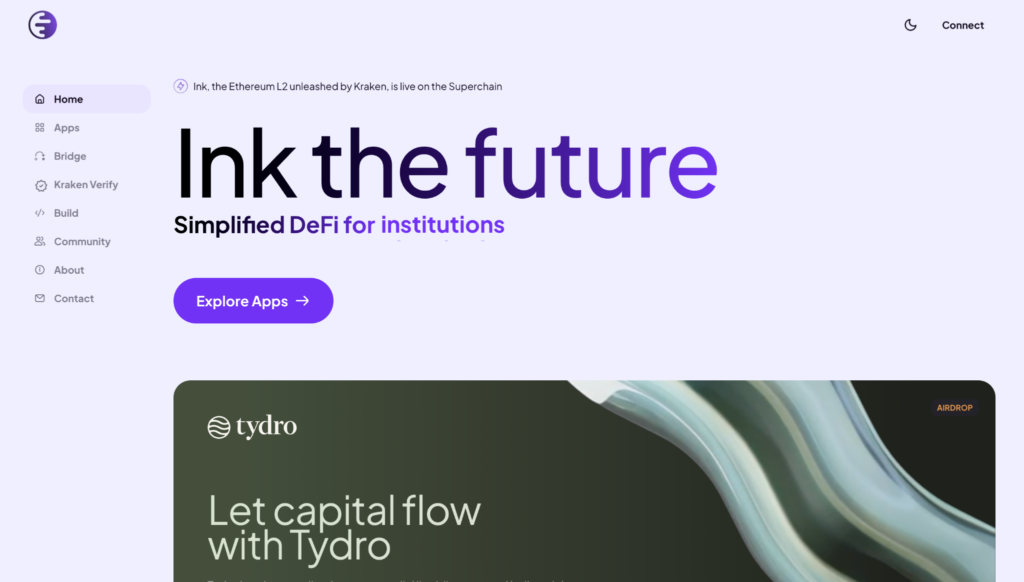
5. Ink
Key features:
- Built by Kraken
- Built on the Optimism Superchain
- Designed to connect Kraken users with DeFi
- General-purpose L2 for trading, DeFi, and onchain apps
- Useful for developers who want to build in Kraken’s ecosystem.
Best known for: Giving Kraken users a direct path into DeFi.
Ink is Kraken’s way of moving exchange users into DeFi without sending them straight into unfamiliar crypto infrastructure.
It launched in 2024 and was built on the Optimism Superchain. The easiest comparison is Base and Coinbase: Base is Coinbase’s L2, while Ink is Kraken’s L2.
Ink is designed to give Kraken users an easier path into DeFi, trading, and onchain apps.
Instead of sending users into crypto through random bridges and unfamiliar networks, Kraken can point them toward its own L2.
For developers, the appeal is Kraken’s distribution. If Kraken brings more users into Ink over time, apps built there could benefit from that exchange-linked user base.
Kraken gives Ink a strong name behind it, but Ink definitely hasn’t caught on quite like Coinbase’s Base has.
| Year Launched | 2024 |
| Launched By | Kraken |
| Core Role | Kraken-linked Ethereum L2 |
| Best Fit | CEX users moving into DeFi |
| Tradeoff | Ecosystem is still young |
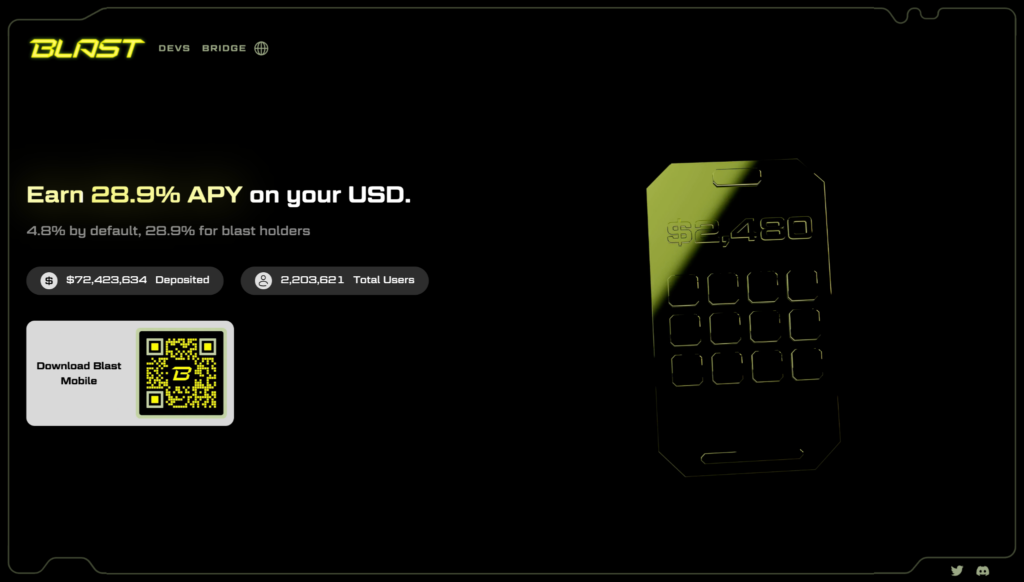
6. Blast
Key features:
- Built-in yield for ETH and stablecoins
- USDB, Blast’s yield-bearing stablecoin
- Designed for DeFi activity
- Focused on making idle assets productive
Best known for: Making ETH and stablecoins productive while they sit on the L2.
Blast is the L2 built around giving idle ETH and stablecoins the ability to earn yield.
It launched in 2024 and is designed so some ETH and stablecoins can earn yield while they sit on the network.
On most L2s, those assets don’t earn anything unless you put them into a DeFi app yourself.
Blast’s main idea is to make idle assets more productive. It says yield comes from sources like ETH staking and real-world asset protocols, then gets automatically passed back to users.
For users, the appeal’s pretty simple: Blast can make some assets earn while they are on the L2. For developers, it gives apps a way to build around yield-bearing ETH and stablecoins from the start.
Naturally, though, that built-in yield adds some extra risk and complexity. Users still need to understand where the yield comes from, which assets are involved, and what assumptions sit behind it.
| Year Launched | 2024 |
| Launched By | Tieshun “Pacman” Roquerre, founder of Blur |
| Core Role | Yield-focused Ethereum L2 |
| Best Fit | Productive ETH and stablecoin balances |
| Tradeoff | Yield adds extra risk and complexity |
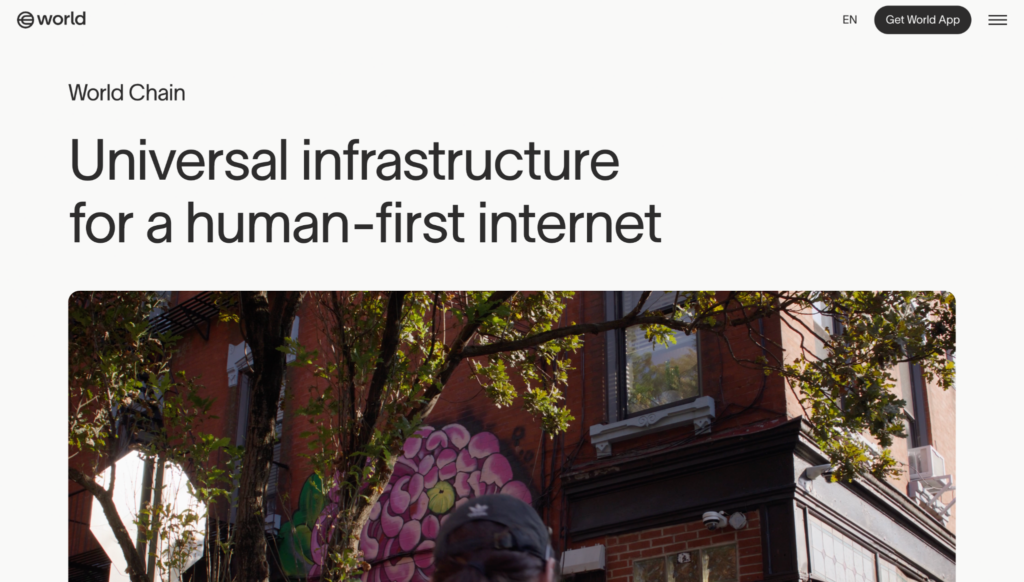
7. World Chain
Key features:
- Built around World ID
- Built with the OP Stack
- Gives verified users priority transaction access
- Useful for apps trying to reduce bots
Best known for: Giving verified human users priority over bots via World ID.
World Chain is an Ethereum L2 built around World ID.
World ID is the identity system from the World ecosystem. It’s used to show that a wallet belongs to a real person, not a bot or automated account.
That matters because most blockchains treat every wallet the same – and during busy periods, bots compete with real users for transaction space.
World Chain is designed to give verified humans better access when the network is busy. Its key feature is priority blockspace, which means verified users get preferred access instead of being pushed aside by bots.
This can be useful for apps that care about real users, such as airdrops, social apps, grants, voting, rewards, and consumer products.
World Chain is more specialized than general-purpose L2s like Arbitrum or Base, and its value depends heavily on whether users and apps actually want to build around World ID.
| Year Launched | 2024 |
| Launched By | World ecosystem |
| Core Role | Human-focused Ethereum L2 |
| Best Fit | Apps needing bot resistance or verified users |
| Tradeoff | Depends heavily on World ID adoption |
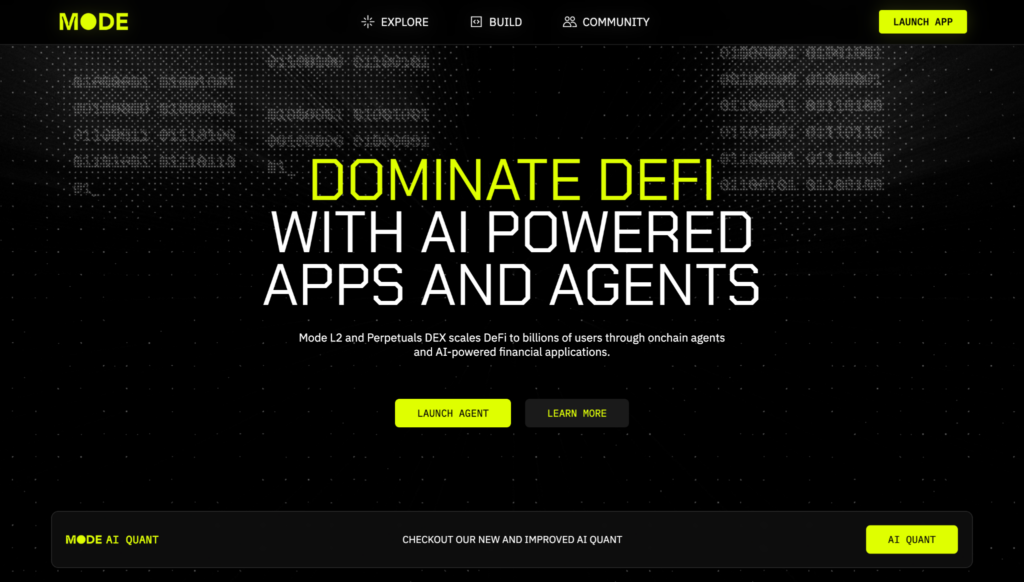
8. Mode
Key features:
- Focused on AI-assisted DeFi
- Supports onchain agent use cases
- Works with Ethereum-style apps and wallets
- Useful for automation-heavy crypto apps
- Built with the OP Stack
Best known for: Combining DeFi with AI agents and automation.
Mode is betting that DeFi will become more automated, with AI agents helping users trade, manage positions, and interact with apps.
Its main focus is AI-assisted DeFi. That includes apps that can automate trades, manage DeFi positions, run preset actions, or help users interact with onchain tools more easily.
These tools are often called “onchain agents” – software that can automatically carry out blockchain actions on behalf of a user or app.
Mode is still smaller than the major L2s. Its focus is clear, but it needs more liquidity, more apps, and more long-term activity to compete with larger networks.
| Year Launched | 2024 |
| Launched By | Mode Network |
| Core Role | AI and DeFi-focused L2 |
| Best Fit | Onchain agents and automated DeFi |
| Tradeoff | AI-agent demand is still early |
9. Soneium
Key features:
- Developed by Sony Block Solutions Labs
- Focused on creators, entertainment, gaming, and consumer apps
- Built with the OP Stack
- Strong brand potential
Best known for: Bringing creator, fan, and entertainment apps onchain.
Soneium is an Ethereum L2 built for creator, entertainment, and consumer apps.
It launched in 2025 and was developed by Sony Block Solutions Labs, a joint venture connected to Sony Group and Startale Group.
Soneium’s main angle is fan and creator engagement. That could include NFT campaigns, digital collectibles, gated fan experiences, loyalty rewards, games, music projects, and other consumer-facing apps.
Its early ecosystem already points in that direction. Soneium has highlighted fan marketing tools, creator campaigns, and gaming-focused builder support as core parts of the network.
Soneium is still early, and it’s not yet clear how heavily Sony is going to lean into and invest in the ecosystem.
| Year Launched | 2025 |
| Launched By | Sony Block Solutions Labs |
| Core Role | Sony-linked consumer L2 |
| Best Fit | Creators, gaming, entertainment, NFTs |
| Tradeoff | Needs real app and user adoption |
10. Mantle
Key features:
- Built for onchain finance
- Adds ZK proof technology
- Focused on liquidity, yield, and RWAs
- Ecosystem includes MNT, mETH, cmETH, and FBTC
- Uses OP Succinct
Best known for: Building a liquidity-focused L2 for DeFi, yield, and tokenized assets.
Mantle is an onchain finance L2 also worth mentioning, but no longer fits neatly into the standard optimistic rollup category.
It now uses OP Succinct, which adds ZK proofs so transactions can be checked upfront – not just challenged later.
Its main focus is liquidity. It wants to be a place where users can trade, earn yield, use tokenized assets, and access DeFi products with lower fees than Ethereum mainnet.
Mantle’s ecosystem includes finance-focused assets like MNT, mETH, cmETH, FBTC, and tokenized real-world assets.
That makes it more of a DeFi and liquidity network than a consumer, gaming, or identity-focused L2.
| Year Launched | 2023 |
| Launched By | Mantle Network, originally initiated by BitDAO |
| Core Role | Modular Ethereum L2 |
| Best Fit | DeFi, liquid staking, lower-cost Ethereum-style apps |
| Tradeoff | Uses MNT for gas, so it can feel less seamless than ETH-gas L2s. |
Optimistic rollup pros and cons
Optimistic rollups are one of Ethereum’s biggest scaling wins, but they’re not a free lunch.
They cut fees and improve speed – but they also introduce stuff like bridges, sequencers, withdrawal delays, upgrade controls, and different levels of trust.
Pros
- Lower fees: Usually much cheaper than Ethereum mainnet.
- Faster transactions: L2 activity usually confirms quickly.
- Ethereum app support: Most work well with Ethereum-style apps and wallets.
- Strong ecosystems: Major rollups already support DeFi, NFTs, gaming, and consumer apps.
- Ethereum security: They still post important data back to Ethereum.
- Developer-friendly: Builders can often use familiar Ethereum tools and smart contracts.
Cons
- More moving parts: Rollups add bridges, sequencers, proof systems, and upgrade controls.
- Slower exits: Moving funds back to Ethereum through the official route can take time.
- Not all L2s are equal: Some are more mature, decentralized, and battle-tested than others.
- Liquidity can be split: Funds and apps are spread across many different L2s.
Optimistic rollup risks
Optimistic rollups make Ethereum faster and cheaper to use, but they still come with risks.
- Bridge risk: Most users move funds to L2s with bridges. The official bridge is usually the safest route, but it can be slow. Faster third-party bridges are convenient, but they add extra risk.
- Sequencer risk: Sequencers order rollup transactions for fees. If one operator has too much control, transactions can be delayed, censored, or harder to submit.
- Fraud proof risk: Optimistic rollups use fraud proofs to catch bad transaction batches. Some rollups have stronger and more tested fraud proof systems than others.
- Withdrawal delays: Moving funds back to Ethereum through the official bridge can take time. This is because the system leaves a challenge window in case something needs to be disputed.
- Ecosystem risk: Not every L2 has strong apps, deep liquidity, good wallets, or reliable support. A rollup can sound interesting on paper but still be less useful in practice.
Together, these risks don’t mean optimistic rollups are bad. It just means users should look at the specific details of the network they’re using, not only the label “optimistic rollup.”
Optimistic rollups vs ZK rollups
Optimistic rollups and ZK rollups both help Ethereum scale, but they just check transactions in different ways.
An optimistic rollup assumes transaction batches are correct unless someone challenges them. This makes the system easier for many Ethereum apps to support, but official withdrawals can take longer.
On the other hand, a ZK rollup proves that transactions were processed correctly before they are accepted. This can give faster finality, but ZK systems are more complex to build.
The simple difference is that optimistic rollups check for fraud after the fact, while ZK rollups prove correctness upfront.
| Optimistic rollups | ZK rollups | |
| Basic idea | Assume transactions are valid unless challenged | Prove transactions are valid before accepting them |
| Main security tool | Fraud proofs, which challenge bad batches | Validity proofs, which prove the batch is correct |
| Ethereum compatibility | Usually easier for Ethereum apps to support | Improving quickly, but more complex |
| Withdrawal time | Official withdrawals can take longer | Withdrawals can usually finalize faster |
| Developer experience | Familiar for Solidity and EVM developers | Depends on the ZK system |
| Examples | Arbitrum, OP Mainnet, Base, Unichain, Ink | zkSync Era, Starknet, Scroll, Linea |
Optimistic rollups are popular because they are relatively easy for Ethereum apps to use.
ZK rollups are powerful because they can prove correctness more directly, but they’re technically harder to build.
The long-term future probably includes both.
Final takeaway
Optimistic rollups have made Ethereum much cheaper to use by moving everyday activity onto L2 networks while still posting important data back to Ethereum.
But lower fees aren’t the whole story anymore. Most major L2s are cheaper than Ethereum mainnet now – so the real question is what each network is actually built for, and is it any good at it?
Some L2s are better for deep DeFi markets. Others are better for getting started, trading through exchange-linked apps, earning yield, or using consumer products like games, NFTs, and social apps.
That’s why the best L2 depends on what you’re actually doing.
Before moving funds, check whether the network has the apps you want, enough liquidity, reasonable bridge options, and a security setup you’re comfortable with.
FAQ
An optimistic rollup is an Ethereum L2 that processes transactions cheaply off mainnet, then posts key data back to Ethereum.
It’s “optimistic” because transactions are assumed valid, unless challenged later.
Usually, yes.
They’re designed to give you Ethereum-style apps with much lower fees.
Official withdrawals leave time for challenges, so moving funds back to Ethereum can take days.
Faster bridges exist, but they add extra risk.
They can be, but it depends on the network.
Look at the bridge, sequencer setup, proof system, upgrade controls, and how mature the ecosystem is.
Optimistic rollups check for fraud after the fact.
ZK rollups prove transactions are correct before accepting them.
It depends what you’re doing.
Use the network that has the apps, liquidity, bridges, and security setup you’re comfortable with.