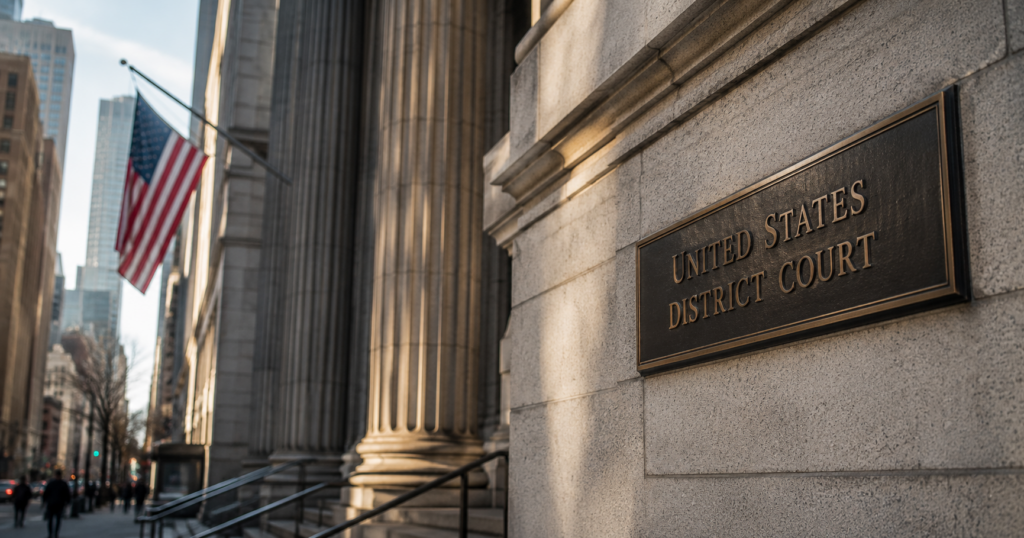







- ▸ The CFTC, alongside the DOJ, has sued Illinois, Arizona, and Connecticut, marking its first time filing lawsuits to block state enforcement actions against prediction market platforms.
- ▸ The CFTC maintains that event contracts are federally regulated “swaps,” not wagers, and that it holds exclusive jurisdiction over platforms like Kalshi and Polymarket.
- ▸ The lawsuits formalize a nationwide clash over control of prediction markets, with over a dozen states pursuing litigation or regulatory action.
The Trump Administration is officially joining in on the fight between states and prediction markets, starting with Illinois, Arizona, and Connecticut. The CFTC announced its unprecedented action of suing three states in a press release, stating: “The Commodity Futures Trading Commission today filed lawsuits challenging the actions of Arizona, Connecticut, and Illinois against CFTC-registered designated contract markets.”
The lawsuits argue the CFTC preempts state gambling laws that state regulators are trying to enforce on prediction markets, like Kalshi and Polymarket. It seeks to prevent Illinois, Arizona, Connecticut and others from enforcing state-level sports betting laws on federally-regulated event contract platforms.
“The CFTC will continue to safeguard its exclusive regulatory authority over these markets and defend market participants against overzealous state regulators,” said CFTC Chairman Michael S. Selig. “This is not the first time states have tried to impose inconsistent and contrary obligations on market participants, but Congress specifically rejected such a fragmented patchwork of state regulations because it resulted in poorer consumer protection and increased risk of fraud and manipulation.”
Chairman Selig already warned that the regulator planned to intervene in the ongoing fights between states and prediction markets. It’s the first time the CFTC has filed lawsuits in response to state regulator action against prediction markets, after the CFTC previously submitted an amicus brief backing prediction markets in Nevada.
CFTC officially joins state vs. prediction markets fight in court
According to the Illinois filing, the CFTC and Department of Justice sued the State of Illinois, Gov. JB Pritzker, Attorney General Kwame Raoul and the Illinois Gaming Board (IGB). The federal agencies filed the suit in the US District Court for the Northern District of Illinois, Reuters first reported.
The lawsuit cites IGB cease-and-desist letters sent to Kalshi, Polymarket and Crypto.com. Robinhood also received a similar order. State regulators across the US, including in Illinois, believe the prediction markets, particularly sports contracts, are violating state gambling laws.
The CFTC argues the event contracts are “swaps” and not “wagers,” and that the federal agency has exclusive rights to regulate the platforms.
“The federal law designates the CFTC as the federal agency with ‘exclusive jurisdiction’ over the regulation of futures, options, and swaps traded on federally regulated exchanges,” the suit reads.
Plot twist! To my knowledge, this suit by the CFTC against Illinois and a parallel action against Connecticut to block those states from applying their gambling laws to prediction markets are unprecedented. "See you in court" indeed! @ChairmanSelig pic.twitter.com/3tZEYjXAY6
— Rob Schwartz (@FormerCFTCGC) April 2, 2026
Following the news of the Illinois lawsuit, the CFTC announced Thursday’s action also included Arizona and Connecticut. The defendents in Arizona are Gov. Katie Hobbs and Attorney General Kris Mayes. Arizona filed a lawsuit against Kalshi in March.
In Connecticut, the CFTC sued Gov. Ned Lamont and Attorney General William Tong. Connecticut regulators sent Kalshi a cease-and-desist order in December.
“The Trump Administration is recycling industry arguments that have been rejected in district courts across the country,” Tong said in a statement. “We will aggressively defend Connecticut’s commonsense consumer protection laws.”
Reactions and significance of CFTC legal actions
Legal experts following prediction market cases closely see the move by the CFTC as a strategic positioning that could have significant impact on ongoing cases.
“I think this is another example of the CFTC planting a flag, like they have in speeches and now proposed rulemaking,” law professor Melinda Roth told DeFi Rate. “And I believe it is significant, given the mounting litigation the DCMs are facing in numerous states. It could indeed be helpful (but not controlling) as this plays out in other places.”
Regarding the shift in intervention strategy, Roth said: “The choice of suing [states] as a priority action (instead of continuing to add amicus briefs in the ongoing other lawsuits) is the CFTC going on the offensive and an indication that this is a battle they are prepared to fight.”
Regarding the decision to sue these particular states, gaming lawyer Daniel Wallach has a theory involving the CFTC focusing on active cases where courts have yet to rule.
The CFTC seems to be targeting states that have not yet had court rulings (it make sense to avoid surefire losses in NV, OH, MD & MA) and where it perceives the oral arguments to have gone very well for the PMs (such as in the case of IL). pic.twitter.com/1Wi877OBgJ
— Daniel Wallach (@WALLACHLEGAL) April 2, 2026
Wallach called the Arizona suit “a hedge against the AZ federal judge in the Kalshi v. Arizona lawsuit refraining from exercising jurisdiction under either the Younger abstention doctrine or the Anti-Injunction Act. A direct federal lawsuit by the CFTC against Arizona counteracts that result.”
State action ongoing as CFTC goes on the offensive
There are more than a dozen state lawsuits still ongoing over who has jurisdiction over prediction markets, particularly ones relating to sports. Washington became the latest state to sue Kalshi last week. Kalshi was forced out of Nevada last month after a judge issued a temporary restraining order, with Coinbase also ordered to stop offering contracts in the state. Kalshi has a preliminary injunction hearing Friday.
Other states involved in litigation include:
- Massachusetts
- Maryland
- Michigan
- New Jersey
- New York
- Nevada
- Ohio
- Tennessee
Along with the regulator-led lawsuits, multiple state legislatures and US Congress members have introduced bills looking to limit prediction markets.
The CFTC is now intervening a more official capacity by taking direct legal action against states targeting event contract exchanges.
“Despite the CFTC’s clear and longstanding exclusive jurisdiction to regulate event contracts under the Commodity Exchange Act, various states have attempted to outlaw, regulate, or otherwise restrain the activities of DCMs that facilitate trading in lawful event contracts,” reads the press release. “Congress long ago decided that a national framework for commodity derivatives markets was preferable to a fragmented patchwork of state regulations.”
More on CFTC