




The Texas runoff didn’t just settle a brutal Republican intraparty fight, it also sharpened the entire 2026 Senate picture for prediction markets.
Once Ken Paxton crushed incumbent Sen. John Cornyn this week and locked in the GOP Senate nomination in Texas, the general Senate race immediately became more than a Texas story. It is now one of the clearest examples of how President Donald Trump’s primary power can create a bigger problem in the general election than the one it solves.
Prediction markets saw the win coming well before Tuesday, and now the rest of the political world continues to catch up. That matters because Texas is not some side quest in the Senate control map.
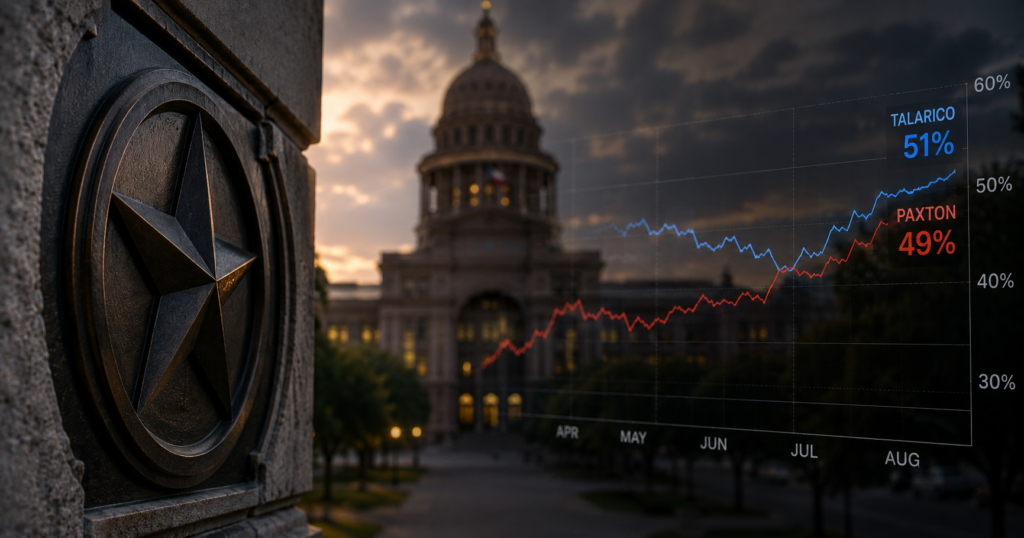
If the race tightens around Paxton as he looks to defeat Democratic upstart James Talarico, it becomes a real Democratic opportunity in a state Republicans are used to treating as a firewall. And as Texas moves from safely Republican to a real race, the battle for Senate control in the 2026 midterms gets more complicated for Republicans fast.
Texas is a warning sign
Paxton’s win is the perfect example of the Trump endorsement wave that’s been evident for the past month. The president backed a challenger against an incumbent who’s been a thorn in his side, and the markets surged to the point where Paxton was priced as the overwhelming favorite. That same pattern showed up in Kentucky with Rep. Thomas Massie and in Louisiana with Sen. Bill Cassidy.
The Texas difference is what comes next. The general election was already being framed more aggressively as competitive before Tuesday. Now, even sitting Republican Senators are worried about Texas, as Paxton is exactly the kind of nominee Democrats can make a statewide fight out of.
And media narratives have shifted quickly. The runoff didn’t just produce a winner, it produced a nominee who makes the seat harder to defend in November. Prediction markets agree.
What prediction markets say about Texas
Right now, Kalshi and Polymarket are still trading Texas as a Republican hold overall, but the runway to a competitive race is a lot shorter now. Democrats still aren’t favored in Texas, but Paxton turned a safe red state seat into a live pressure point. Market odds went from high-60s in January to practically a toss-up with odds for Paxton now floating low- to mid-50s.
The general election markets are starting to reflect a broader truth. Polling and media attention around Talarico are building a new narrative that Texas could end up one of the Democrats’ better opportunities to pick up a Senate seat.
That doesn’t mean Texas is the Democrats’ best path. It means it’s one of the seats the market now has to take seriously in the Senate control math. And when a deep-red state starts looking even faintly contestable, it changes how traders think about the entire board.
The Senate prediction markets control map gets weird
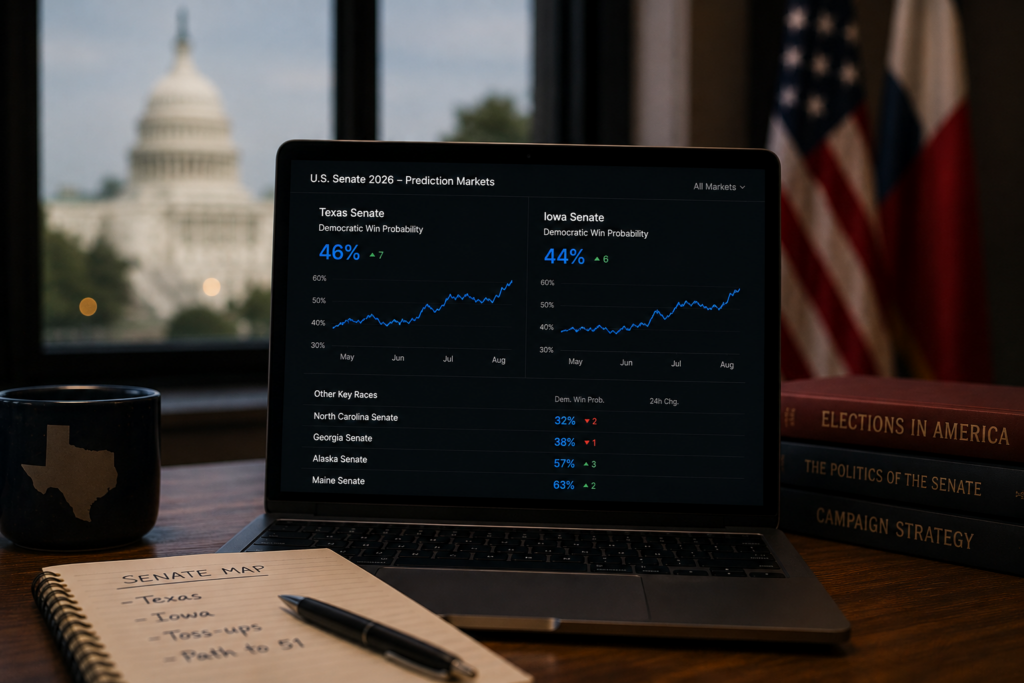
Here’s where the paradox comes in. The market is still slightly leaning toward Republicans keeping the Senate, but the path is not a clean one. And actually, Democrats are leading in enough individual battleground contracts that they will win if the markets are right like they have been in GOP primaries.
The market logic looks something like this:
- Democrats hold Michigan and Georgia.
- Democrats flip Alaska, Maine, North Carolina, and Ohio.
- Texas becomes a serious problem if Paxton turns the seat into a true toss-up.
The Democrats don’t have a comfortable road to 51, but if those all hold, even without Texas, the Senate will likely flip unless Democrats lose some unexpected seats. Senate control will be a narrow, state-by-state fight where candidate quality and general election fit matter in November.
That’s the part the Trump wave obscures. Winning the nomination fight is not the same as building a November strong hold. Trump can still pick a nominee, but he does not make the nominee more palatable to independents. And in a cycle where Trump remains unpopular with non-Republican voters, that matters a lot.