

- ▸ Kentucky lawmakers overrode Beshear’s veto in days, fast-tracking a law that forces sportsbooks into a high-stakes decision on prediction markets.
- ▸ DraftKings, FanDuel, and Fanatics may have to pick between keeping Kentucky sportsbook licenses or offering prediction markets.
- ▸ The law sets up a novel federal court fight over whether states can penalize activity that may be federally permitted.
The Kentucky legislature has overridden Gov. Andy Beshear’s veto of HB 904, which, among other things, threatens the gambling licenses of entities that provide both prediction markets and sports wagering to people in the state. The law is set to take effect in three months, putting licensees DraftKings, Fanatics, and FanDuel in position to make potentially undesirable choices.
Challenging the law in federal or state court and curtailing their offerings in Kentucky are the primary options. Should they opt to take the latter approach, it could be an interesting indicator of how the companies view the future of their products.
Kentucky legislature overrides Beshear’s veto of gaming reform bill
After Beshear vetoed the bill on Monday, it took officials just two days to come up with the additional votes needed to reach the supermajority threshold in both chambers of the Kentucky legislature to override that veto. HB 904, now engrossed, has multiple ramifications for gambling and prediction markets in the state.
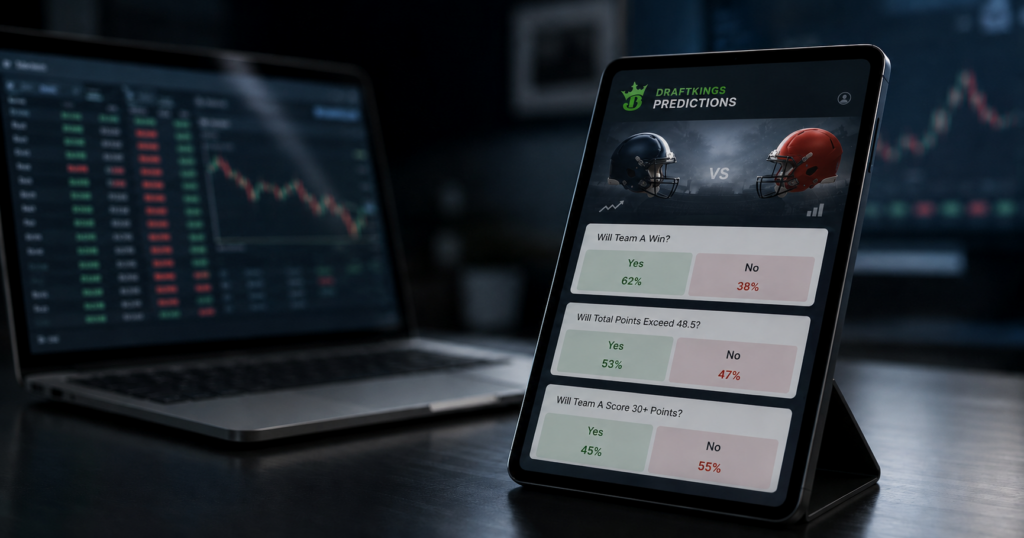
For prediction market exchanges, the pertinent tenet is that if they also hold gaming licenses in Kentucky, they risk losing those licenses should they persist in offering their event contracts to people in Kentucky as well. At this time, that would impact DraftKings, Fanatics, and FanDuel.
Prediction markets like Kalshi and Polymarket are unaffected by this statute because they do not possess Kentucky gaming licenses that they could potentially lose. Their exchanges will continue unaltered by this law even after it takes effect.
The trio of DraftKings, Fanatics, and FanDuel has about three months to determine its next steps. They could respond in kind or take individual routes to adjusting to Kentucky’s new statute.
One of those routes is trying to block enforcement of the law against them in the courts.
Court challenge to Kentucky’s new requirements for gambling licensees?
Any of the affected trio could front a legal challenge in federal district courts for the state, or in Kentucky state courts. Should multiple of DraftKings, Fanatics, and FanDuel file similar petitions in the same court, the cases could be consolidated.
Petitions to federal court for the Eastern or Western district of Kentucky will likely ask the court to enjoin the Kentucky Horse Racing Commission and Attorney General Russell Coleman from taking any enforcement action against the petitioners. The arguments behind that or those plea(s) will represent new territory for disputes between prediction markets and state governments because of the unique approach that Kentucky has taken to this change in gaming license requirements.
That’s also the reason why a challenge in state court is much less feasible for DraftKings, Fanatics, and FanDuel.
Kentucky’s novel attempt to restrict gaming companies’ activities
Other states like Ohio and Nevada have made their cases against prediction markets operating within their borders based on the argument that prediction market trading is in practice indistinguishable from sports gambling. Kentucky, on the other hand, is treating the two activities as separate.
Rather than trying to ban prediction market trading, Kentucky has technically altered its eligibility standards for gaming licensees to include not offering prediction markets to people in the state. For that reason, the arguments that DraftKings, Fanatics, and FanDuel could make to a federal court might look different than those that other exchanges like Kalshi have argued to other courts to prevent restrictions in other states.
The pertinent question will be whether Kentucky can penalize gaming licensees for activity that is legal under federal statutes and didn’t violate any Kentucky laws prior to the enactment of this new standard. Should the courts side with the state, DraftKings, Fanatics, and FanDuel will have to prioritize their offerings.
If DraftKings, Fanatics, or FanDuel foregoes any legal challenges or should those challenges fail, they will have three options to comply with the new law.
- Forfeit gambling license in the state
- Geofence Kentucky out of access to their prediction exchanges entirely
- Work with gaming regulators and law enforcement to see if there are any contracts they can offer to Kentuckians without compromising gaming licenses
All three companies may be forced to choose between their prediction markets and sportsbook products, at least within Kentucky. Many factors will play into that calculation.
Revenue that companies make from their exchange platforms is not subject to Kentucky’s 14.25% tax on sports wagering revenue. DraftKings, Fanatics, and/or FanDuel merely owe corporate income tax on that revenue at the federal and possibly state level where the companies are registered.
In the event that DraftKings, Fanatics, and FanDuel have to make a choice as to whether to continue offering sports prediction markets or conventional sports wagers in Kentucky, they may opt for the former. The trio is likely to at least probe their legal options prior to making that decision, though.