

Wisconsin State Rep. Francesca Hong is turning the Wisconsin governor primary into the clearest test yet of whether the progressive wave can travel from deep-blue primaries into a battleground state.
Hong is leading the polling and prediction markets heading into the August 11 Wisconsin Democratic primary, but Wisconsin is not New York or Colorado, where a slew of progressive candidates secured victories in their respective races.
That makes Hong’s rise more interesting, and potentially riskier, for Democrats trying to hold the governor’s office as Democratic Gov. Tony Evers retires in a state that President Donald Trump won by a point in 2024.
Hong leads the field
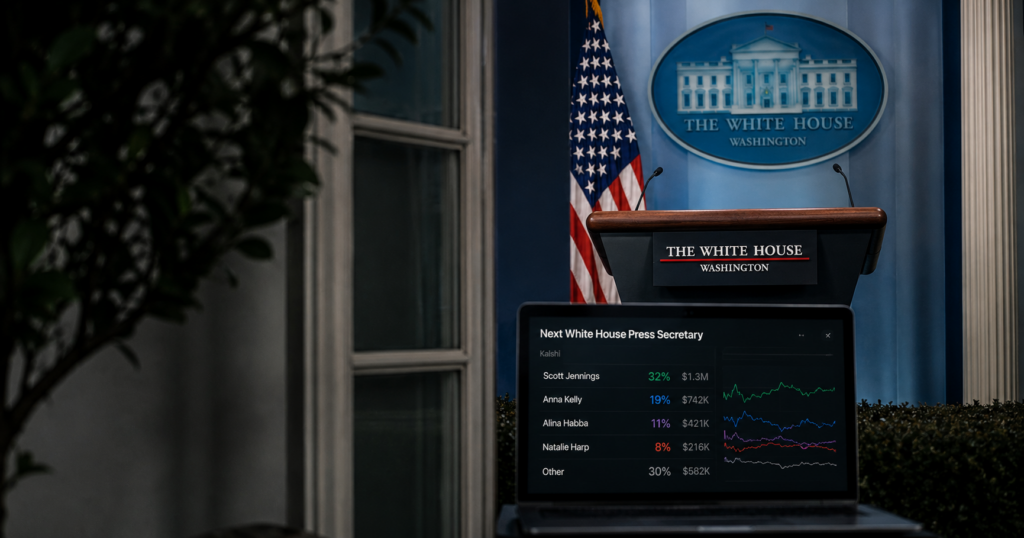
Prediction markets are straightforward: Kalshi has Hong at 49% on $629,000 in volume, ahead of Lt. Gov. Sara Rodriguez at 34% and former Lt. Gov. Mandela Barnes at 18%. Polymarket is in the same neighborhood despite a much thinner pool.
That’s a meaningful signal because it suggests traders think Hong’s populist pitch is not just viable but currently the most likely to win the nomination. Polling points in the same direction, with Hong showing enough strength to make her the candidate to beat as the field hardens before primary day.
That fits the broader pattern of the cycle. Democrats in a lot of primaries have rewarded candidates who sound less cautious, more ideological, and more willing to fight the party establishment, and Hong is clearly the Wisconsin version of that trend.
The question is whether that same energy that has worked in strong blue states can translate in a place where the general electorate is much tougher.
Why Wisconsin is different
That is the key difference between Wisconsin and places like New York and Colorado. Those states can absorb a progressive nominee and still remain safely Democratic in November, but Wisconsin is a red-leaning battleground where the general election math is tighter and the electorate is less forgiving.
A candidate who energizes the primary base might not be the cleanest fit for a statewide contest in a state that can still swing hard in the fall.
That is why Hong’s rise is being watched so closely. Her message about democratic socialism, working-class politics, and a broader progressive state agenda may be perfectly tuned for a Democratic primary, but it also gives Republicans an easy contrast if she becomes the nominee.
The race is not just about who wins the August 11 primary. It’s about whether Democrats are choosing a candidate who can hold up once the state shifts from activist politics to general election politics.
The Wisconsin governor field is getting rougher
The Democratic race has also turned nastier as the primary nears. Negative campaigning has already kicked in, with Barnes and Rodriguez trading accusations and the whole field looking less like a friendly ideological debate and more like a real fight for the party’s future direction.
That matters because messy primaries often sharpen the ideological contrasts that make general election narratives easier for the other side to exploit.
Still, Hong appears to be benefiting from the broader nationwide progressive current even as the race gets rougher. The political press has been treating her as part of the same wave that has lifted insurgent candidates elsewhere, and recent coverage from groups like the Democratic Socialists of America underscores how much outside activists are trying to make Wisconsin the next statewide breakthrough.
That doesn’t guarantee success, but it does show why she has become the race’s central figure.
General election still leans blue
The Republican side is comparatively quiet, with U.S. Rep. Tom Tiffany looking like the likely nominee and not facing the same level of internal drama.
Even so, the general election contracts on both Kalshi and Polymarket still favor Democrats in the 70s, however, the volume is tiny at the moment. That suggests traders think the race is still winnable for Democrats in November, even if the nominee emerges from a more ideologically oriented primary.
Hong may be riding the same antiestablishment wave that has reshaped other Democratic contests this cycle, but Wisconsin is where that wave has to prove it can survive outside the comfort zone of deep-blue states.
If it can, the party gets a stronger statewide identity. If it can’t, the progressive momentum may still be real, just not enough to win a red-leaning battleground in November.
More on Kalshi