







Gemini received a Derivatives Clearing Organization license from the Commodity Futures Trading Commission, ending the exchange’s reliance on third-party clearing for its prediction markets and giving it direct control over the derivatives stack.
Cameron Winklevoss announced the approval on X, calling the license a major building block for the company’s super app.
We are excited to announce that @Gemini has received a Derivatives Clearing Organization (DCO) license from the @CFTC. This license allows us to act as a clearinghouse for regulated derivatives trading, including prediction markets.
— Cameron Winklevoss (@cameron) April 30, 2026
This approval follows our approval last…
The CFTC registered Gemini’s affiliate, Gemini Olympus, LLC, as a DCO by Commission order. The license covers fully collateralized futures, options on futures, and swaps.
Olympus will now handle clearing, settlement, margining, collateral, and risk management in-house instead of routing trades through outside firms like QC Clearing LLC.
Combined with Gemini Titan’s DCM license, Gemini now operates as both the venue and the clearinghouse for its own derivatives products.
That puts Gemini in a small club. Bitnomial and Crypto.com are among the few crypto firms holding both DCM and DCO licenses in-house.
Payward, Kraken’s parent company, agreed earlier this month to acquire Bitnomial — the first crypto-native firm to hold the full CFTC stack as a DCM, DCO, and futures commission merchant. Coinbase is pursuing The Clearing Company to fill its own DCO gap.
Gemini said it is working toward a full suite of CFTC derivatives licenses, with FCM registration the remaining piece.
GEMI shares climbed about 6% to $4.40 in afternoon trading
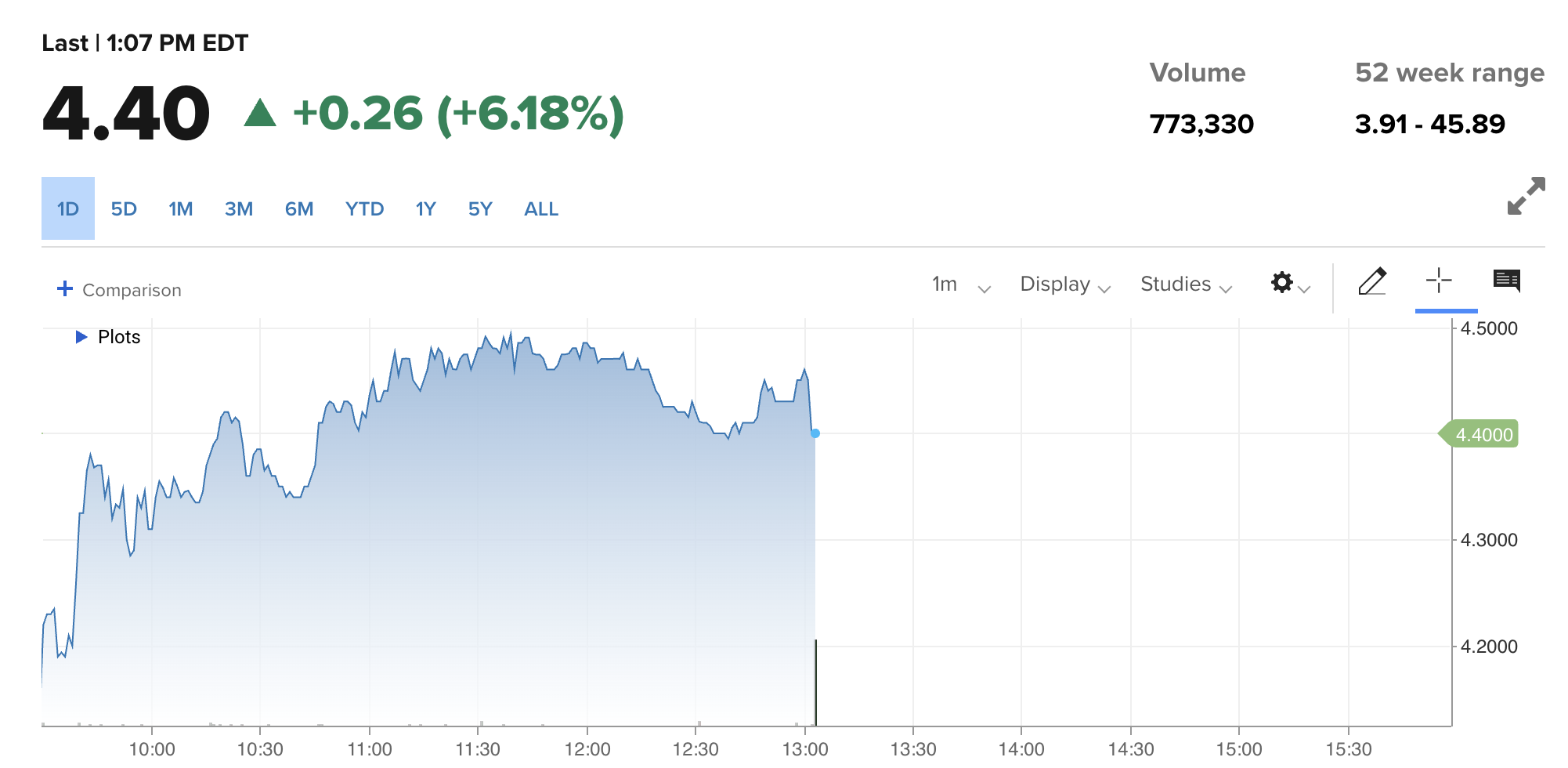
Gemini stock had fallen roughly 90% from its September IPO peak before today, weighed down by net losses near $600 million in 2025, the recent departure of three senior executives, and a class-action suit alleging the company misled investors about its pivot away from spot crypto.
Spot trading remains thin relative to peers, with 24-hour volume around $52 million, $5.5 billion in customer assets, and 13 million users against Coinbase’s 110 million.
Five years from application to in-house clearing
The approval lands roughly five months after Gemini Titan secured DCM status on December 10, 2025, ending a five-year application process that began in March 2020.
In February, the Winklevoss twins announced “Gemini 2.0,” exiting the UK, European Union, and Australia and cutting roughly 25% of staff to concentrate on US prediction markets.
As noted in our weekly coverage, liquidity has lagged Kalshi and Polymarket since launch. Our analysis found Super Bowl LX shares on Gemini priced 2.6% wider than the same contracts on Kalshi because of thinner volume.
Gemini’s vertical stack will let it design contracts, set fees, and capture clearing margin that previously went to outside firms. Whether that translates into the volume needed to challenge Kalshi and Polymarket is the open question Gemini has now staked its US strategy on.