

- ▸ Prediction markets priced Graham Platner as the clear favorite months before Janet Mills exited, while polls lagged behind.
- ▸ Traders focused on fundraising weakness and momentum shifts, signals that polls underweighted but markets quickly incorporated.
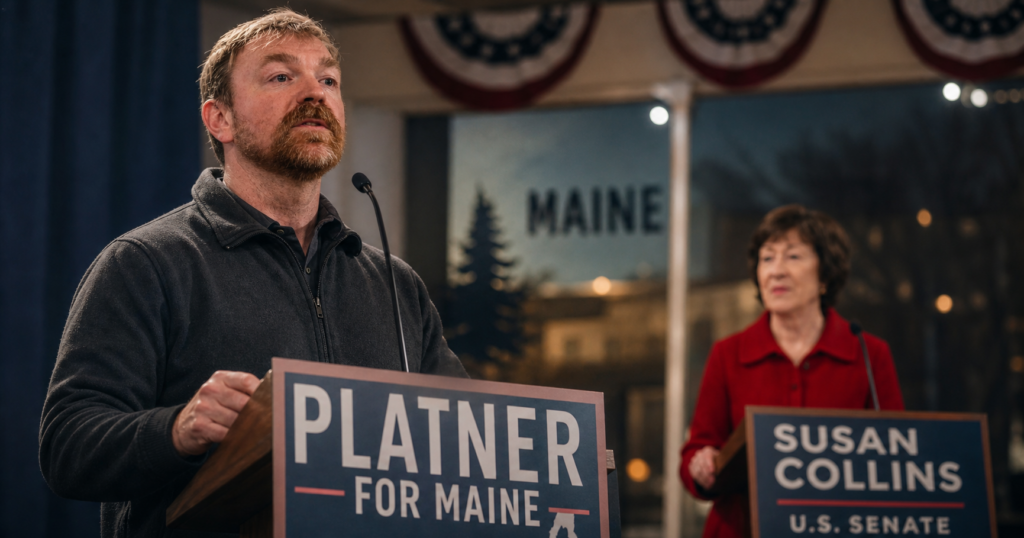
- ▸ Mills’ suspension confirmed a scenario traders had already priced in, with Susan Collins vs. Platner now the central 2026 battleground.
Maine Gov. Janet Mills’ suspension of her Senate campaign this week is one of the cleanest demonstrations that prediction markets can see around the corner pretty well.
Long before Mills’ abrupt exit, Kalshi and Polymarket were already pricing Graham Platner as the overwhelming favorite to win the Democratic Senate primary and the general election as a whole. At the same time, traditional polls stayed in closer‑race territory until more recently.
Traders have watched and poured money into the Maine race as Incumbent Republican Sen. Susan Collins appears to be one of the most vulnerable seats that could help the Democrats retake the Senate in 2026 midterm elections.
What happened on the ground
Mills, the two‑term governor and the Democratic establishment’s preferred pick to challenge Collins, cited insufficient financial resources as her reason for stepping aside, effectively clearing the path for progressive oyster farmer Platner.
The move turns a theoretically open primary into a virtual nomination, with Platner now poised to take on Collins in one of the most closely watched races on the 2026 calendar.
Polls in the run‑up had shown Mills and Platner much closer, with some outlets still framing the primary as competitive or even leaning in Mills’ favor just weeks before her exit. While more recent polls showed Platner safely ahead, some up by nearly 40%, the polling picture didn’t fully capture the collapse in her campaign’s viability on the money side and the softening of enthusiasm among key Democratic constituencies, both of which had already been priced in by prediction markets.
How the prediction markets priced it early
Kalshi’s Maine Democratic Senate nominee contract had Platner at roughly 80% since February, with more than $2.9 million volume, while Polymarket’s primary winner market was in the same low‑80s range on Platner with nearly $3 million traded.
That was a clear tilt well before the polls really broke, and it reflected the fact that traders were paying more attention to fundraising, enthusiasm, and momentum than to cross‑sectional averages.
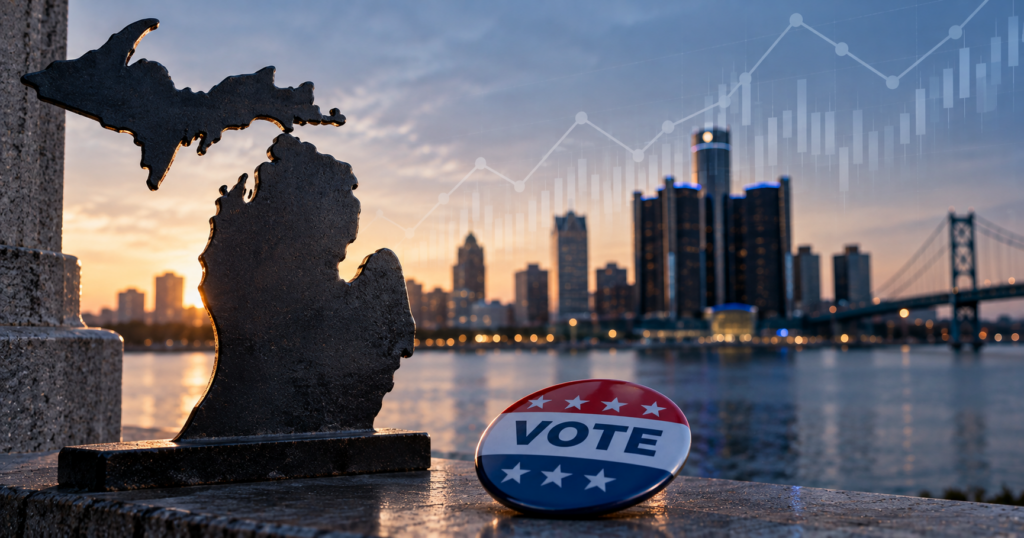
The market prediction of progressives over establishment candidates could also show its prowess in other states’ primary election odds, such as Michigan. In the Michigan Democratic Senate primary markets, progressive candidate Abdul El-Sayed holds a sizeable lead on Kalshi and Polymarket, despite trailing both State Sen. Mallory McMorrow and moderate US Rep. Haley Stevens in conventional polls.
What the markets are doing now
After Mills’ announcement Thursday, the dynamics on Kalshi and Polymarket shifted but did not flip. The Democratic primary market effectively locked in Platner as the de facto nominee, while the general election markets now treat Platner–Collins as the main axis.
Polymarket’s Maine Senate Election Winner contract still prices Democrat at 74% as of late April, with Republican at 26%, underscoring that traders continue to see this race as a stronger Democratic opportunity than a toss‑up.
Kalshi’s Maine senate suite reinforces that view, packaging the race into a recognizable Senate‑pathway contract and feeding into the broader Closest Senate race this year layer, which had already included Maine as a top contender before Mills’ collapse.
Markets vs. polls
Prediction markets saw the structural weakness in Mills’ candidacy, particularly around money and momentum, while some polls were still describing something that looked symmetric.
When Mills finally pulled the plug, the markets didn’t surge. They just stopped pricing in a scenario that traders had already decided was unlikely.
For a race this visible with such high stakes, the markets had already priced the Platner wave long before the polls made it obvious, and Mills’ suspension now looks less like a shock and more like a confirmation of what traders were betting on weeks ago.