




- ▸ Unanimous resolution immediately bans senators and staff from trading prediction markets, tightening ethics rules without waiting for broader regulation.
- ▸ Federal law (CEA) and platform rules already restrict insider trading, but enforcement gaps and recent incidents pushed Congress to formalize the ban internally.
- ▸ Both Kalshi and Polymarket support the restriction, framing it as trust-building and aligning with rules they already enforce.
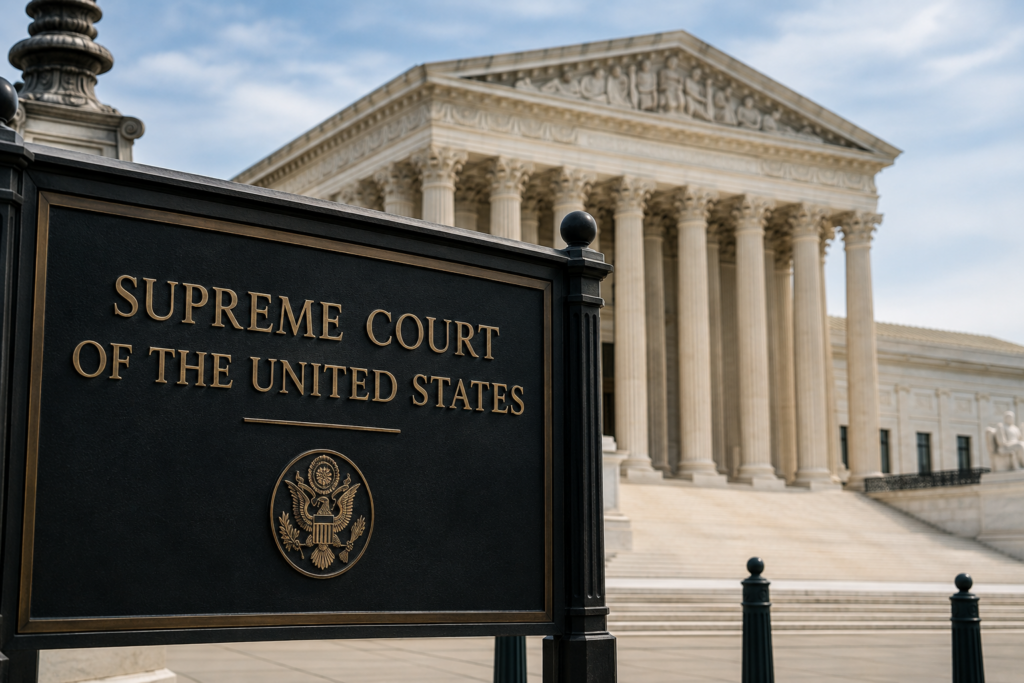
The Senate moved swiftly on Thursday to put its own house in order on prediction markets, passing a resolution by unanimous consent that bars sitting senators, officers, and staff from trading on platforms like Kalshi and Polymarket, effective immediately.
The measure was sponsored by Sen. Bernie Moreno (R-Ohio) and amended by Sen. Alex Padilla (D-Calif.) to extend the ban to Senate staff. Moreno’s resolution modifies Rule XXXVII of the Standing Rules of the Senate to prohibit senators from entering any financial deal where the outcome depends on whether a specific event does or does not happen. The full text of the resolution states: “No Member of the Senate may enter into, or offer to enter into, an agreement, contract, or transaction that provides for any purchase, sale, payment, or delivery that is dependent on the occurrence, nonoccurrence, or the extent of the occurrence of a specific event.”
“United States Senators have no business engaging in speculative activities like prediction markets while collecting a taxpayer-funded paycheck, period,” Moreno said in the release. “Serving in Congress should never be about finding new ways to profit; it should be about delivering results for the American people.”
On the floor, Moreno framed the resolution as a narrow, immediate step. “My issue is, let’s clean up Congress. If there are going to be guardrails in prediction markets, that’s a longer conversation that should have hearings,” he said. He also made clear what’s at stake for any senator who might be tempted to push back: “Engaging in any way in a prediction market…deteriorates the confidence our constituents have in us,” and “the last thing anybody here who’s serving wants to do is be referred to Ethics for an investigation that would be the end of their political career.”
What the statute already covers
The Senate resolution is a rules change, not a statute, meaning it governs the Senate chamber only. It’s worth noting what federal law already addresses. The Commodity Exchange Act (CEA), the statute giving the CFTC authority over prediction market platforms, already empowers the commission to prohibit certain types of event contracts deemed contrary to the public interest, a power added by the Dodd-Frank Act. Regulators have used that very statute to propose a wave of new legislation aimed at restricting specific market types, including ones tied to war, death, and gaming.
Several bills introduced this year have sought to go further, amending the CEA directly to bar contracts tied to terrorism, assassination, war, or the death of an individual, or to expressly prohibit insider event contract trading by government officials. Those proposals, including Sen. Adam Schiff’s DEATH BETS Act and the Merkley-Klobuchar End Prediction Market Corruption Act, remain in committee. The CEA-based insider trading prohibitions covering executive branch officials and political appointees also already exist, but critics have argued enforcement has been inconsistent, an issue that came up directly when lawmakers grilled CFTC Chair Michael Selig at a House Agriculture Committee hearing earlier this month.
A season of insider trading concerns
Thursday’s vote comes a week after a U.S. special forces soldier was charged with using classified information to bet on the January capture of Venezuela’s then-president, Nicolás Maduro. It also comes as lawmakers increasingly voice concerns about who might be making public wagers on the war with Iran. Earlier this month, the Associated Press reported that a group of new accounts on Polymarket made highly specific, well-timed bets on whether the United States and Iran would reach a ceasefire on April 7, resulting in hundreds of thousands of dollars in profits for the new customers. On the same day the AP published the report, the White House warned staff against using private information to trade on prediction markets.
Kalshi’s own enforcement actions have added fuel to the fire. On April 22, the exchange announced suspensions and fines for three political candidates caught trading on their own races. While the trade amounts in those cases were minuscule compared to the high-profile insider trading scandals, the examples do support a need for more clarity around political and governmental trading restrictions.
Kalshi and Polymarket both applaud the move
Notably, both Kalshi and Polymarket embraced the resolution, framing it as reinforcing policies they already enforce.
Kalshi CEO Tarek Mansour expressed approval of the resolution on X, noting that “Kalshi already proactively blocks members of congress and enforces against insider trading. This is a great step to increase trust in our markets by making it an industry standard. Now, let’s pass this in the House!”
I applaud the Senate for passing this resolution to ban Senators and their offices from trading on prediction markets.
— Tarek Mansour (@mansourtarek_) April 30, 2026
Kalshi already proactively blocks members of congress and enforces against insider trading. This is a great step to increase trust in our markets by making it… https://t.co/fELpqZH5Cf
Polymarket, in its own post on X, also offered its support, adding: “Our Rulebook & Terms of Service already prohibit such conduct, but codifying this into law is a step forward for the industry.”
We’re in full support of this.
— Polymarket (@Polymarket) April 30, 2026
Our Rulebook & Terms of Service already prohibit such conduct, but codifying this into law is a step forward for the industry.
Happy to help move this forward however we can. https://t.co/PDqGVgZJGd
Both platforms have faced legislative proposals this year targeting what contracts they can list and who can trade on them. Backing measures that codify rules restricting politicians or other traders with material non-public information, which are already prohibited by exchange rules, are a clear and easy win for these companies.
What comes next
The resolution applies only to the Senate. Senate Minority Leader Chuck Schumer called the move “a great thing” and urged House Speaker Mike Johnson to follow suit immediately, saying the House should “prohibit House members from playing around in prediction markets, as well.” Watch Sen. Moreno’s comments on resolution here:
Whether the House moves is an open question. The broader legislative landscape around prediction markets remains unsettled, with over a dozen bills in various stages of consideration and the CFTC operating with a single commissioner as it tries to finalize rules governing the sector. Thursday’s vote was genuinely bipartisan and took effect instantly, two things that almost never happen in this Congress at the same time. For the prediction market industry, it’s also win-win on both rule clarification and public optics.