




A new tool aims to make one of Wall Street’s oldest risk-management strategies more accessible to small businesses, using prediction market contracts to hedge risks ranging from bad weather and rising fuel costs to the outcome of a sports promotion.
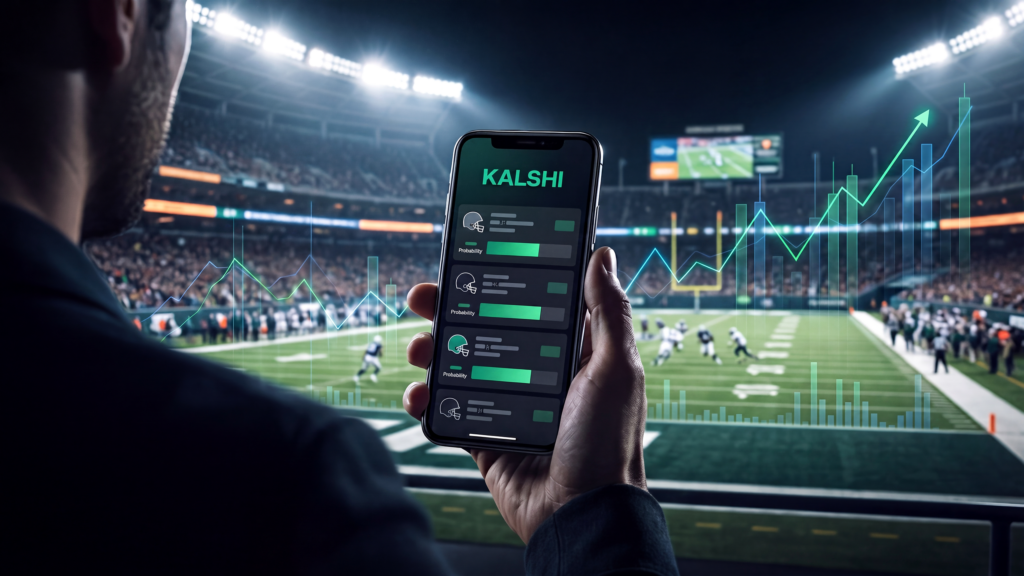
Blanket lets business owners describe an exposure in plain English, then searches live Kalshi markets for contracts that could potentially offset some of the financial impact. The tool can model how a proposed hedge might work, flag mismatches between a business risk and an available contract and tell users when it cannot find a suitable market. Blanket does not execute trades or handle customer funds; any trading takes place on Kalshi.
Fortune first reported on Blanket Friday, describing it as a new AI tool built around Kalshi’s prediction market exchange. The site was created and is owned by Lauris Zminsky, an independent financial economist who does not work for Kalshi, according to Fortune. But Zminsky has worked directly with members of the Kalshi team while developing the project, including through the exchange’s Builder’s Program.
From corporate risks to small-business hedging
Large companies have long used derivatives to manage exposure to risks such as interest rates, currencies and commodity prices. Prediction market contracts can potentially extend that concept to much narrower outcomes, including weather events, policy decisions and sports results. But matching one of those contracts to an actual business exposure can be complicated.
That problem has been a focus for Zminsky for months. In July, he argued that businesses should first identify the specific financial risk they want to offset, then look for an event contract that closely matches it, rather than starting with an available contract and working backward. “A hedge is not a product,” he wrote in an essay on X, saying that the relevant question is how closely an instrument offsets a company’s actual risk and what exposure remains after the trade.
Zminsky had already been exploring how the idea could apply to larger companies. Earlier this year, he built Hedgebook, a project designed to map Kalshi event contracts to companies in the S&P 500. Fortune reported that the project was developed with a Kalshi employee and was designed to identify event contracts that could correspond with risks disclosed by public companies.
Blanket grew out of a simpler experiment Zminsky launched in June. After seeing a New York bar use Kalshi contracts to offset the cost of a Knicks promotion, he built Bizhedge, a prototype that he said could “find live Kalshi markets you can use to cover a risk or run a promotion” based on a user’s description of their business. He called it “just a fun yet useful prototype,” adding, “Hedging is for everyone, not just hedge funds.”
Blanket takes shape with Kalshi support
In his July X essay, Zminsky said that he was working with members of the Kalshi team on a new demonstration of his approach through the platform’s Builder’s Program. The program supports outside developers building products around Kalshi and includes access to a pool of more than $2 million in grants, along with technical and other developer support. Kalshi says builders retain ownership of their projects. Zminsky has not said publicly whether he received funding through the program.
Earlier this week, Zminsky teased a “new build” designed to help small businesses discover event contracts with real economic uses and thanked three Kalshi team members for helping him with it.
Fortune reported Friday that Blanket had “quietly launched in stealth” and was going public this week. The site is now publicly accessible at tryblanket.app.
How Blanket works
Blanket starts with a simple question: “What could hurt your business?” A user can describe a financial risk or promotional promise in ordinary language, with dollar figures optional, and the tool searches current Kalshi markets for a contract that could provide at least a partial offset. Blanket then explains the relationship between the business risk and the market and can model the potential cost and payout under different outcomes.
One example on the site considers a small Denver trucking company that could lose $50,000 if diesel prices spike. Blanket identifies a Kalshi market tied to crude oil prices as the closest available option, while noting that the contract does not track the company’s actual diesel bill. The example models a $45,000 gross payout at a cost of $7,605 if the specified oil-price threshold is reached.
The tool is also designed to identify when the match is too weak. A separate Gaps page catalogs risks for which Blanket found no suitable existing contract, under the heading “Markets Kalshi should make.” The site currently lists potential gaps involving weather disruptions, financing rates, energy and material costs, currency exposure and promotional liabilities, among others. Users can indicate that they face one of the same risks, potentially providing a demand signal for Kalshi about new markets businesses may want.
Blanket also works in reverse through a feature called Scout. Users can submit an existing Kalshi market and the tool analyzes which types of businesses could be financially exposed to the outcome before searching for real companies that fit those characteristics. For example, its demonstration using a Kalshi contract tied to unusually cold temperatures in Texas identifies potential exposure for businesses like plumbers, nurseries and property managers.
The site says market data and settlement rules come from Kalshi’s public API, while business discovery for Scout is powered by Bright Data and its analysis runs through OpenRouter.
Small businesses are already experimenting with prediction market hedges
Blanket is arriving after several businesses have already experimented with using Kalshi contracts to offset risks that would rarely be associated with traditional corporate hedging.
• The Jeffrey: The New York City bar, whose Knicks promotion helped inspire Zminsky’s original Bizhedge prototype, used a $5,000 Kalshi position to help cover a promotion offering customers up to $100 off their tabs if the Knicks won Game 1 of the NBA Finals. The position could pay about $13,500 if New York won, helping offset the cost of the promotion.
• TallBoy: During the World Cup, the Washington, D.C., bar offered discounts based on the U.S. margin of victory, including free tabs for a win by three goals or more, and used Kalshi contracts to hedge the potential cost. When the U.S. beat Paraguay 4-1, the free-tab promotion was triggered.
• Forme: The sportswear company partnered with promotions platform PlayAbly on an offer promising customers a full refund if the U.S. reached the World Cup final. PlayAbly used Kalshi to cover the promotional exposure.
• EGOHOME: PlayAbly later used the same model for the mattress brand, which offered customers 100% cashback if Aniya and Carl won Love Island USA. The Kalshi position reportedly cost $2,500 and could return about $55,000 if the couple won.
• 28 Wishes Ice Cream Shop: The Los Angeles shop has reportedly used Kalshi weather contracts to offset slower sales during cold weather. Owner Jason Jiang said business falls about 20% when temperatures drop below 70 degrees and that the trades have generated about $1,500 a month.
Kalshi sees a broader business opportunity
Kalshi appears to see those individual examples as the beginning of a larger commercial use case. Nicolas Hull, who handles small-business hedging at the company, told Fortune that businesses are already using Kalshi to manage exposure to weather, major sports tournaments, freight and tariffs.
He called hedging by smaller companies and businesses a “massive growth segment” for the exchange.
Kalshi is also highlighting the use case on its own Kalshi for Industry site, which promotes event contracts as tools for managing operational risks. Its examples of “hedging in practice” include both The Jeffrey and 28 Wishes alongside larger institutional users, illustrating how the company is positioning its event-contract exchange for users ranging from neighborhood businesses to professional risk managers.
