
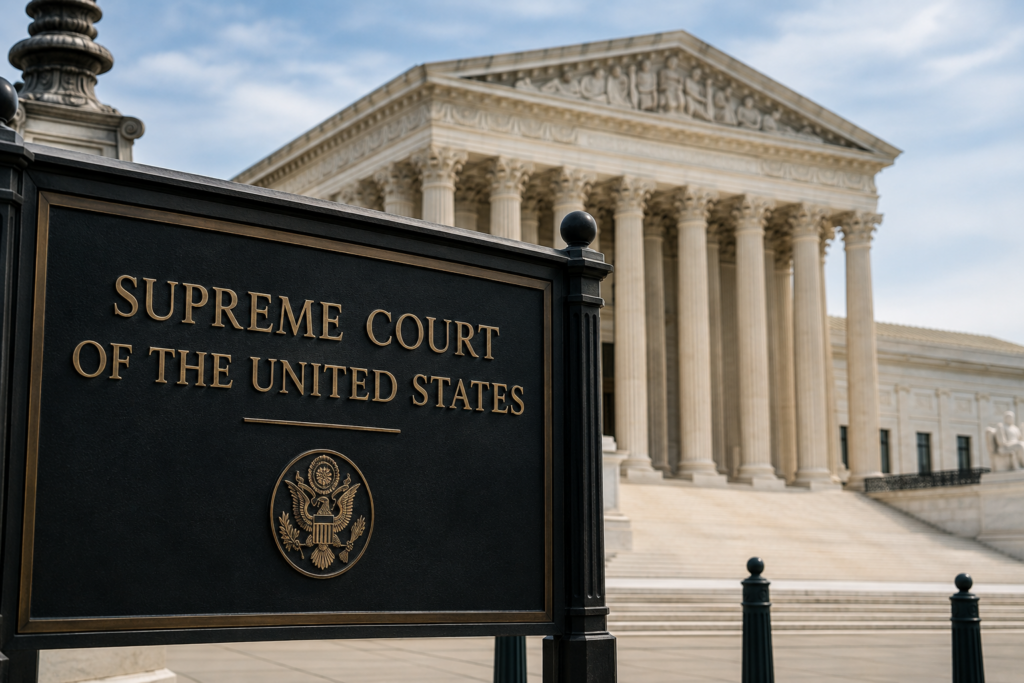







On Tuesday, the US Securities and Exchange Commission (SEC) announced its plan to “modernize” the rules and forms governing registered transfer agents.
The core framework for federal transfer agent regulation was established by the SEC during the late 1970s and early 1980s. The modernization would therefore facilitate new tech, including “blockchain technology in connection with securities offerings and the transfer of shares,” according to SEC Chair Paul Atkins.
Industry experts have called it “significant,” especially for real-world asset (RWA) tokenized securities and the broader migration of traditional finance onto the blockchain.
“The SEC is not directly changing how crypto-native secondary markets operate. Instead, the proposal explicitly updates the transfer-agent framework to reflect the use of electronic records and blockchain technology in securities issuance and share transfers. That gives regulated financial institutions a clearer path to using on-chain records within the existing securities infrastructure,” Bitunix analyst Dean Chen told DeFi Rate.

A time for change in century-old regulation
On the same day as the transfer agent announcement, the SEC also confirmed its agenda and panelists for a roundtable on preparations for 24-hour trading, scheduled for Sept. 17. An initiative that will bring the New York Stock Exchange, Nasdaq, Citadel Securities, Cboe, Samsung, and newer entrants like Robinhood to the table to discuss round-the-clock markets, including overnight surveillance and clearing mechanics for a continuous system.
In addition, the SEC also proposed Regulation Crypto Assets, also known as the Proposal, in mid-August, which establishes a tailored fundraising framework featuring two registration exemptions for certain crypto investment contracts. Prior to this, crypto issuers that raised capital by selling non-security crypto assets subject to an investment contract have had to comply with existing SEC rules, which were not designed with these assets in mind and many of which originated in the 1930s.
According to Joshua Kim, the CEO and founder of decentralized crowdfunding platform DonaFi, the SEC’s proposed Regulation Crypto Assets is a “pretty significant shift”.
“Crypto markets have spent years dealing with uncertainty over where securities rules begin and end, so clearer rules should encourage legitimate projects to build and raise money domestically.”
Legitimizing blockchain as market infrastructure
In addition to regulatory shifts, 21 major banks, including Goldman Sachs, Bank of America, Citi, Wells Fargo and more, announced they teamed up to launch a dollar-pegged stablecoin of their own.
In a written statement shared with DeFi Rate, Bernardo Brites, CEO and co-founder of Trace Finance, a banking and stablecoin infrastructure company that has processed over $10 billion between Brazil, LatAm, and the global financial system, said that the industry is moving away from stablecoins being “a crypto-native experiment and shifting toward core payments infrastructure that traditional finance wants to own a piece of.”
Brites added, however, that problems could arise once bank-issued stablecoins, tokenized deposits, and existing dollar tokens all have to settle against each other. A challenge that “only works if the rails connecting them are actually interoperable, not just fast in isolation.”
That interoperability question is not far from what the SEC’s transfer-agent proposal aims to solve on the securities side. A common standard so records held across different platforms and institutions can actually reconcile with each other.
Michael Terpin, CEO of Transform Ventures and author of Bitcoin Supercycle, sees the regulatory and institutional tracks converging.
“It’s encouraging that the SEC is including blockchain infrastructure (not just digital assets) in its fresh new look at regulatory guidance. Traditional financial institutions — and their clients — will benefit greatly from the more efficient, transparent infrastructure,” Terpin said.
The gap between the rule and the rally
According to Chen, the SEC’s bid to modernize transfer agent rules will be a boost for regulated infrastructure, but that does not mean it will directly impact public-chain tokens such as ETH (Ethereum) and SOL (Solana).
Chen pointed to three specific gaps between the rule as written and any meaningful spillover into permissionless crypto markets.
First, traditional institutions are likely to favor permissioned blockchains, controlled Layer 2s or appchains initially, meaning the value created could stay contained within closed institutional networks rather than reaching public chains.
Second, transfer agents solve recordkeeping and transfer, not liquidity. This means RWA liquidity will still depend on secondary-market infrastructure such as alternative trading systems (ATS), exchanges, and clearing systems, which this proposal does not address.
Third, tokenized securities will remain subject to know your customer (KYC), anti-money laundering (AML), whitelisting, and transfer restrictions, thereby maintaining a hard wall between regulated tokenization and permissionless decentralized finance (DeFi).
“Over the next three to five years, the more important development will be whether this creates a new model of ‘compliant decentralization’ that combines on-chain transparency, identity verification and regulatory controls, eventually allowing institutional capital and permissionless financial infrastructure to connect more directly,” he said.
What’s next?
The proposal’s impact will likely hinge on details still being worked out inside the 400-plus-page filing.
According to a statement published by SEC Commissioner Hester Peirce, one of the more consequential questions is whether transfer agents should keep collecting securityholders’ names and physical addresses, or whether the rule should allow other identifiers, such as email and digital wallet addresses, instead.
The proposal is open for public comment for 60 days following its publication in the Federal Register, giving transfer agents, exchanges, custodians and crypto platforms a window to shape the final language before it is adopted.
Securitize, the first operational transfer agent to leverage blockchain technology, stated in a statement that “modernization should raise standards, not lower them,” calling the SEC’s bid a “right move”.
The company vowed to submit comments during the public comment period.