






Fireplace, a professional trading terminal purpose-built for prediction markets, has raised $1.5 million in a pre-seed round led by Frachtis, with participation from White Star Capital and a mix of venture and angel investors via Legion and Echo syndicates.
The pitch is straightforward: prediction markets have scaled very fast, but their infrastructure remains fragmented and retail-grade.
“Prediction markets are one of the most powerful financial primitives, but the user experience hasn’t caught up,” said Sumer Malhotra, co-founder and CEO of Fireplace. “Trading feels slow and information-poor. Fireplace fixes that by giving traders the fastest, most intelligent terminal.”
Aggregation in a fragmenting market
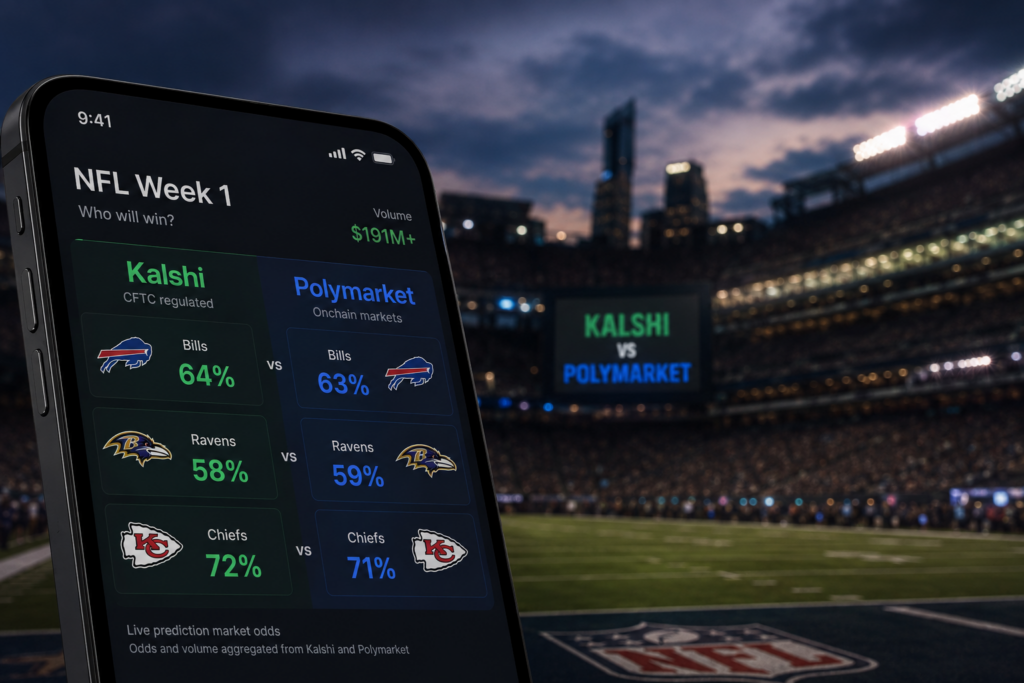
Prediction markets are spread across different platforms, regulatory regimes, and chains. Regulated US venues operate under Commodity Futures Trading Commission oversight. Crypto venues operate on-chain.
Fireplace is positioning itself as a unifying execution layer.
The terminal aggregates markets, liquidity, and execution across venues, offering real-time data, advanced charting, whale and wallet tracking, insider activity signals, and automated execution tools. Its wallet and automation stack are powered by its in-house Enclave Money infrastructure.
Fireplace is happy to announce that we’ve raised $1.5M to build the smartest trading terminal for prediction markets. 🧵 pic.twitter.com/S14f4eNjWv— fireplace (@fireplacegg) February 18, 2026
The most consequential feature is smart order routing. If the same market exists across multiple venues, Fireplace intends to automatically route orders to the best-priced and deepest liquidity pool.
In traditional finance, this is table stakes. Smart order routing and cross-venue aggregation underpin equities and options markets. In prediction markets, this layer barely exists.
As platforms multiply, including new entrants experimenting with derivatives-style primitives and attention markets, fragmentation becomes structural. Aggregators could become the connective tissue.
Capital is flowing beyond platforms
Fireplace’s raise fits into a pattern: investors are now funding the ecosystem.
In October 2025, Intercontinental Exchange, the parent of the New York Stock Exchange, agreed to invest up to $2 billion into Polymarket at a valuation of around $8 billion. The deal included ICE becoming a global distributor of event-driven data to institutional clients. This positioned prediction probabilities as sentiment indicators alongside traditional market feeds.
Shortly thereafter, Kalshi raised $1 billion in a Series E at an $11 billion valuation, led by Paradigm with participation from Sequoia, Andreessen Horowitz, Meritech Capital, IVP, ARK Invest, Anthos Capital, CapitalG, and Y Combinator. At the time, weekly trading volume had exceeded $1 billion, marking a huge acceleration year-over-year.
The funding wave is not limited to direct platform equity
Roundhill Investments has also filed with the SEC for six politically focused prediction market ETFs, including products such as the Roundhill Democratic President ETF and Roundhill Republican Senate ETF. If approved, these would mark the first exchange-traded funds tied directly to event contracts regulated under the Commodity Exchange Act, opening the sector to brokerage-based retail investors.
Meanwhile, Flutter Entertainment, parent of FanDuel, has announced plans to invest between $200 million and $300 million into its prediction market expansion in 2026. FanDuel Predict is being positioned as a way to operate nationally in states that restrict traditional sports betting.
Taken together, capital is flowing into three layers simultaneously: regulated exchanges, crypto venues, and now infrastructure tools.
Roundhill just filed for a bunch of ETFs that track prediction markets for political elections. Using event contracts. Potentially groundbreaking. If this goes through wow opens up huge door to all kinds of stuff. Ht @Todd_Sohn pic.twitter.com/qmltjlguqn— Eric Balchunas (@EricBalchunas) February 13, 2026
A structural inflection point
Prediction markets have crossed from niche crypto experiment to a multi-billion-dollar financial sector. Institutional investors are committing capital. Traditional financial players are entering, and regulatory frameworks are solidifying.
The next phase may be defined by infrastructure sophistication.
If venues continue to fragment across chains and jurisdictions, aggregation becomes essential. If liquidity deepens, professional tools gain leverage. If ETFs launch and institutional hedging grows, demand for execution quality compounds.
Fireplace’s $1.5 million pre-seed round may be small compared to billion-dollar platform raises. But strategically, it reflects a broader shift: the ecosystem is building the plumbing.