


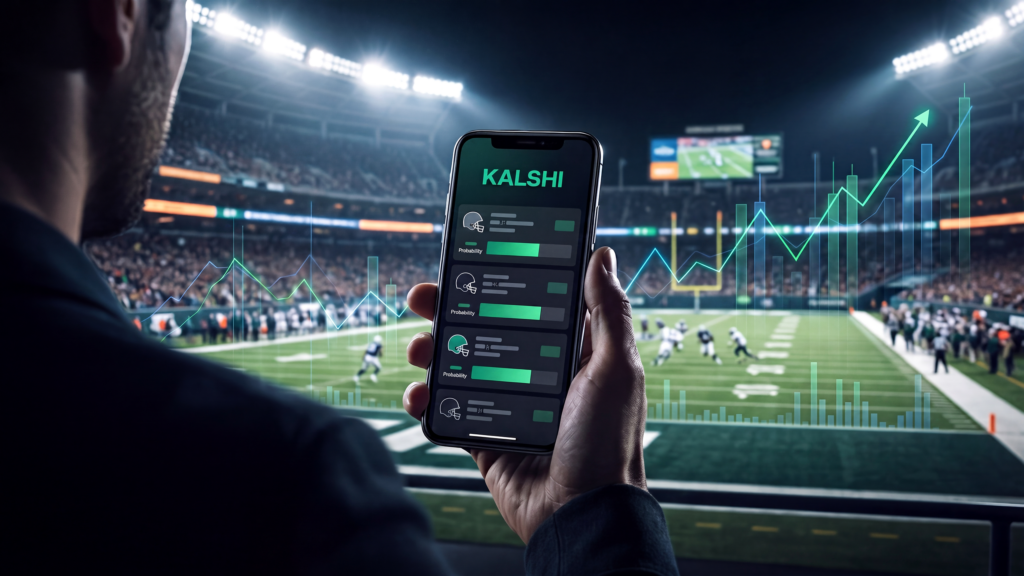

Kalshi is adding Nasdaq’s market surveillance technology to its exchange, the latest step in a broader push this year to strengthen its systems for detecting insider trading, market manipulation and other potentially abusive activity.
Under a multi-year partnership announced Monday, Kalshi will integrate Nasdaq Market Surveillance into its trading infrastructure in phases, covering both its prediction markets and perpetual futures. The system provides real-time monitoring as well as cross-market and cross-asset surveillance, and will also support the delivery of Kalshi trade data to the Commodity Futures Trading Commission (CFTC) in the format required by the regulator.
Nasdaq says its surveillance platform is used by more than 50 exchanges and 20 regulators globally. Kalshi described the technology as one part of its existing market-oversight framework rather than a replacement for its current systems, an important distinction as the company has continued adding new surveillance and compliance tools throughout 2026.
“This deal reinforces Kalshi’s commitment to market integrity,” Max Crowley, Kalshi’s vice president of business development, said in Monday’s announcement. “Implementing Nasdaq Market Surveillance gives our markets the same surveillance data used by the world’s largest exchanges, and it’s built to scale with us as we grow.”

Kalshi keeps adding surveillance tools
The Nasdaq agreement comes just a week after Kalshi expanded its relationship with another trade-surveillance provider. On Aug. 3, Kinetic Markets, Kalshi’s affiliated futures commission merchant (FCM), selected Solidus Labs to monitor trading activity as it prepares to serve institutional customers. Solidus has separately provided surveillance technology for KalshiEX’s event contracts since February.
Kalshi brought in Solidus to augment surveillance systems it had developed internally, using the firm’s technology to detect and investigate potential market abuse across thousands of Kalshi markets. At the same time, Kalshi created an independent Surveillance Advisory Committee, appointed Robert DeNault as head of enforcement, and brought in outside experts to advise on insider trading and manipulation risks.
The expansion to Kinetic extends Solidus monitoring beyond the exchange itself as Kalshi builds out infrastructure aimed at institutional participants. Kinetic Chief Compliance Officer James Hill said the company needed its compliance systems to grow alongside those capabilities.
“Extending their relationship with Kalshi to Kinetic Markets was the fastest, most credible path to surveillance that can stand up to CFTC scrutiny from day one,” Hill said in the Aug. 3 announcement.
What Nasdaq adds to Kalshi’s surveillance stack
There is some overlap between Nasdaq and Solidus, but the Nasdaq agreement also explicitly extends surveillance to a part of Kalshi’s business that did not exist when it hired Solidus in February: perpetual futures. Kalshi’s earlier Solidus announcement focused on surveillance across its event contract markets, while Monday’s Nasdaq deal specifically covers both prediction markets and perps.
That distinction has become more important as perps have quickly grown into a significant source of trading activity for Kalshi. The company launched U.S. crypto perpetual futures in late May. By July 9, cumulative perp volume had reportedly reached $16.1 billion. Kalshi has since moved to expand perps beyond crypto, filing in July for CFTC approval to offer a perpetual future tied to gold, while also considering additional products tied to other metals, currencies and energy.
Nasdaq also brings broader cross-market and cross-asset surveillance capabilities as Kalshi expands beyond event contracts. Its platform can monitor order-book activity, generate automated alerts and support investigations across different products and trading venues. Kalshi has not detailed exactly how those functions will be divided between Nasdaq and Solidus, saying only in Monday’s announcement that Nasdaq will complement its existing surveillance framework.
DeNault, Kalshi’s head of enforcement, emphasized Nasdaq’s institutional-market pedigree in a series of posts on X late Monday morning.
“Why Nasdaq? Decades of experience running surveillance for the world’s biggest exchanges. Firms like JPMorgan and Bank of America trust them with their compliance programs,” DeNault wrote. “And it’s proof of something simple: Nasdaq’s tools are applied to exchanges.”
DeNault also tied the partnership to Kalshi’s push into products beyond event contracts. “As Kalshi keeps building out our exchange beyond prediction markets, Nasdaq will be an important partner in that next chapter,” he wrote.
The CFTC is also a Nasdaq surveillance customer. The regulator adopted Nasdaq Market Surveillance in August 2025, replacing an older system with technology designed to provide automated alerts, cross-market analytics and more detailed order-book analysis.
Nasdaq surveillance is not entirely new to CFTC-regulated event contracts. Nadex, which was acquired by Crypto.com in 2022, disclosed in a 2020 filing that it used Nasdaq’s SMARTS platform to monitor trading activity in real time. Nadex had offered binary event contracts for years before the acquisition.
Kalshi also adds tools for employee trading oversight
Kalshi has also been building connections to compliance systems used by financial institutions to monitor their own employees. On Aug. 4, Comply announced an integration that allows firms to bring employees’ Kalshi contract activity into the same platform used to oversee trading in securities, futures and digital assets. Compliance teams can set preclearance requirements, analyze trading patterns and investigate potential violations involving material nonpublic information.
That followed a June partnership with StarCompliance that similarly lets financial firms monitor employee activity on Kalshi. Those integrations serve a different function from Solidus and Nasdaq: rather than policing activity across Kalshi’s exchange, they give employers tools to identify potentially problematic prediction market trading by their own personnel.
Recent cases put surveillance in focus
Kalshi’s surveillance buildout comes as prediction market platforms continue to face scrutiny over insider trading and manipulation, including several recent cases involving activity on its own exchange that drew national headlines.
On July 31, the CFTC ordered former U.S. Rep. George Santos to pay $35,000 over manipulative trading in a Kalshi contract tied to whether he would attend the 2026 State of the Union. The regulator said Santos made misleading public statements about his plans while trading the market, ultimately earning more than $17,500. Kalshi had detected the activity and referred it to regulators.
A separate case surfaced in July involving Gabriel Perez, President Donald Trump’s longtime teleprompter operator, who is under CFTC investigation for potential insider trading in Kalshi markets tied to words and phrases used during public appearances. Kalshi identified the activity through its surveillance and customer-onboarding systems and referred the matter to the agency.
“Our surveillance team promptly flagged and referred these trades to the CFTC after an exchange investigation,” DeNault told Reuters in July. “We have been assisting regulators on this matter and provided evidence we collected, as we do in any referral.”
With Nasdaq’s surveillance technology, Kalshi is adding another tool to identify the kind of suspicious trading activity that has already prompted referrals to the CFTC, while extending that oversight to its growing perpetual futures business.
This story has been updated to add Robert DeNault’s comments about Kalshi’s Nasdaq deal.