








A major US crypto regulation bill cleared an important hurdle on Thursday, but how it passed made one thing clear: The CLARITY Act is turning into a partisan bill as political stakes around crypto are rising. The Senate Agriculture Committee advanced its portion of a long-debated crypto market structure bill on January 30, approving it 12–11 along party lines. All Republicans voted in favor, while all Democrats voted against.
Prediction markets are reflecting the current uncertainty, putting the odds of crypto market structure legislation becoming law this year at around 53% at time of writing.
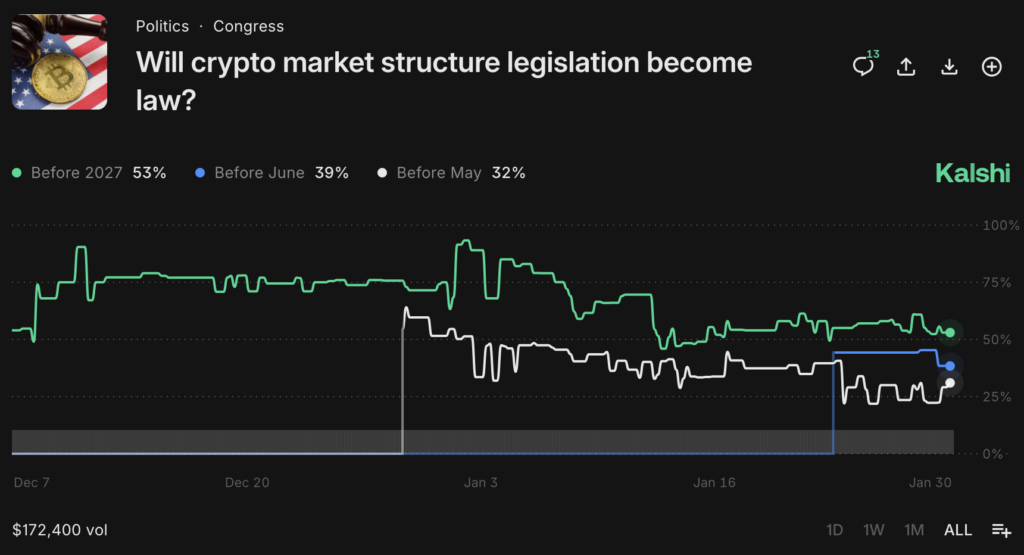
That vote allows the bill to move forward in the approval process, though it still awaits the Banking Committee’s portion of the bill, addressing matters that fall under SEC jurisdiction. Thursday’s vote also highlights ongoing division among lawmakers over how crypto should be regulated – as well as who should be subject to those rules.
Crypto groups signal political consequences
Shortly after the vote, Stand With Crypto, a Coinbase-linked advocacy group, said it would score the party-line Senate Agriculture Committee vote on market structure.
The announcement stood out because several Democrats who voted against the bill – including Sen. Elissa Slotkin (D-Mich.) – have previously received support from crypto-aligned groups.
Slotkin’s 2024 campaign benefited from backing tied to Fairshake, a crypto-focused super PAC that announced a $193 million midterm election war chest just a day earlier. The message from the industry was clear: votes on crypto legislation are being tracked and could carry political consequences. Slotkin said her vote was driven by process and ethics, not opposition to crypto regulation itself.
“I’m just disappointed that we’re here where we are,” Slotkin said. “It feels like the White House came in and turned what could have been bipartisan work into a partisan issue.”
Ethics concerns related primarily to the Trump family’s personal crypto ventures remain a major sticking point for democrats, even ones who generally support a crypto market structure bill.
Progress, but not a finished deal
Inside the committee room, lawmakers framed the vote as an incomplete step.
Committee Chair Sen. John Boozman (R-Ark.) acknowledged there are still “fundamental policy disagreements,” while saying the committee had made “significant progress” toward a bipartisan bill.
Democrats mostly agreed progress had been made, but argued the work wasn’t finished.
Sen. Amy Klobuchar (D-Minn.), the committee’s top Democrat, said lawmakers were “not quite done yet,” pointing to unresolved ethics issues and concerns about whether the Commodity Futures Trading Commission (CFTC) has the capacity to oversee crypto markets effectively.
Democrats say bipartisan talks broke down
Sen. Cory Booker (D-NJ), who has led Democratic negotiations on crypto legislation, said Republicans walked away from bipartisan talks after months of work on a joint draft in 2025.
“The product before us today is not the bipartisan draft we’ve been working on,” Booker said.
Booker said talks continued until the night before the vote, but none of that progress appeared in the bill brought to markup. Moving ahead with a GOP-only draft, he warned, could make it harder for the bill to pass the full Senate. Democrats said they weren’t voting against crypto regulation itself, but against moving the bill forward without ethics rules.
Republicans responded that Democrats will still have chances to propose changes, with Boozman affirming he wants a final bill supported by both parties. Confidence in a bill passing before year’s end is waning, but prediction markets still put the odds at a little above chance. The fact that President Trump wants the legislation to move forward could help tip the scales as we’ve seen it do many times before, but steep political and procedural obstacles remain in the bill’s path.