Kalshi’s New Market Integrity Protocols are a Good Start But Fraud Expert Shares Concerns About Sufficiency and Transparency
Fraud expert Dr. Tasha Mac says Kalshi's new market integrity measures point the right way, but confidence depends on transparency about who oversees them and how.
Disputes over the legality of prediction market trading, especially as it pertains to contracts tied to sporting events, get most of the attention. However, there are other concerns around the activity, notably whether the markets are trustworthy and free of manipulation.
Kalshi is the most popular prediction market exchange in the United States and has thus been the subject of considerable scrutiny from multiple sources, including government officials. Kalshi recently responded to some of that scrutiny by announcing new integrity measures that it will implement.
Dr. Tasha Mac, who has trained over 4,100 auditors, investigators, and other professionals globally and worked for the US Central Intelligence Agency and the Department of Defense, has reviewed Kalshi’s announcement. While she has some praise for Kalshi’s initiative, Mac also sees several areas where the announcement falls short of shoring up confidence in the integrity of its contracts.
Kalshi announces new market integrity measures following audit report
On June 9, Kalshi announced changes to its operations that it would be undertaking following the review of an independent surveillance committee audit report. Those actions are threefold.
- Risk scoring: We (Kalshi) have developed a specific risk score assigned to markets with heightened insider trading or manipulation risk.
- Employment Verification: For markets with certain scores, we will collect employment and put in measures to screen potential insiders.
- Enhanced whistleblower features: New features allow users to directly report abusive trading activity on every market, and a dedicated intake system for whistleblower reports.
Kalshi announced the audit in February in partnership with Daniel Taylor, the Director of the Wharton Forensic Analytics Lab, and Solidus Labs, which “provides trade surveillance technology to detect, investigate, and address market abuse.” This is the first of what Kalshi says will be quarterly audit reports moving forward.
The audit report states that Kalshi conducted over 150 investigations into suspicious trading during the audit period and took five disciplinary actions as a result of those inquiries. The investigations also resulted in 20 referrals to law enforcement.
Kalshi’s announcement from the audit also provides some insight into how its new integrity measures will work. For example, Kalshi has added whistleblowing dialogue functions on every available market that any user can avail themselves of if they have concerns.
Mac says that Kalshi’s announcements along these lines are “a positive step.”
“Risk scoring, employment verification, whistleblower reporting, and national security reviews all point in the right direction,” Mac stated. “However, in any regulated market, especially one where users are trading on real-world events, trust depends on more than having controls written down.”
Mac emphasizes that it’s important to distinguish between “Kalshi’s commitment to market integrity and the independent verification of whether those controls are working.”
Disclosure about people and processes would strengthen confidence
The broad and limited details Kalshi has provided about its audit committee and the processes it is now undertaking to augment integrity in trading provide some insight into why Kalshi’s markets are trustworthy. However, it’s still Kalshi telling everyone else that the markets are trustworthy rather than independent auditors explaining why Kalshi is trustworthy.
“Transparency helps build public confidence,” Mac explained. “If Kalshi wants users and regulators to trust the process, it would benefit from providing more information about the committee’s qualifications, independence, responsibilities, and how recommendations are evaluated and implemented. People are more likely to trust a process when they understand who is providing oversight and how decisions are being made.”
Furthermore, transparency could provide greater assurance that audit committee members are truly independent and have adequate access to conduct honest audits.
“There needs to be clear separation of duties, independent review, and checks and balances between the people designing the controls, the people enforcing them, and the people evaluating whether they are effective,” Mac added.
The lack of details about these operations should not be construed as a sign that Kalshi is hiding anything, though.
“That does not mean Kalshi is doing anything wrong,” Mac elaborated. “It simply means that strong governance requires more than internal confidence. It requires a structure that allows the public, regulators, and market participants to trust that risks are being identified, monitored, and addressed before they damage market integrity.”
The installation of these new protocols and the solicitation of regular audits also do not mean that Kalshi had no internal review systems or that Kalshi does not employ compliance staff. There are still questions about how Kalshi is building on its existing protocols, though.
Kalshi’s threat management can improve over time with new information
With 20 referrals to law enforcement and five disciplinary actions taken against users, Kalshi has had a system in place that has demonstrated capability of flagging suspicious transactions. What regulators and users want to know is whether that system is capable of doing that reliably.
“Most regulated financial exchanges already have some form of surveillance, compliance monitoring, customer verification, and risk management processes in place,” Mac said. “The challenge is whether those controls are designed for the unique risks associated with prediction markets. Kalshi can likely enhance existing systems rather than build entirely new ones. They could also use specialized third-party firms that focus on identity verification, market surveillance, insider risk detection, and compliance monitoring. The bigger issue is whether the systems work together well enough to identify unusual activity before it affects market integrity.”
Internal audits, like the quarterly reports Kalshi expects, can work toward that end.
“Independent audits are common in highly regulated industries because they provide an outside perspective and help identify risks that internal teams may overlook,” Mac commented. “In many cases, independent reviews actually strengthen confidence because they demonstrate a willingness to test and improve existing controls. The concern would arise only if stakeholders believed external audits were replacing strong internal monitoring rather than supplementing it. Strong organizations typically rely on both.”
Kalshi has already identified one important area of emphasis for integrity monitoring in its release: risk scoring. Devoting greater resources to markets that have the highest risk is another positive step that Kalshi is taking.
Risk scoring enables trading with confidence
For traders and other stakeholders, the markets that have the most relevance may also provide the greatest hesitation. For example, traders may shy away from markets connected to a single at-bat in Major League Baseball because small actions by one person could influence the outcome.
“Some markets will naturally carry higher risk than others,” said Mac. “Markets involving elections, government actions, national security matters, or events influenced by a small number of decision makers create greater opportunities for individuals with nonpublic information to gain an unfair advantage. That does not mean those markets should automatically be prohibited. It means they require stronger monitoring, enhanced review procedures, and clear standards for determining whether the risk can be managed appropriately. The higher the potential for insider information, the higher the level of oversight should be.”
Even if Kalshi provides a higher level of oversight as it claims and Mac recommends, that does not mean that there is zero risk in a market.
“The existence of controls should never be confused with the elimination of risk,” Mac stated. “In any market where money is tied to future outcomes, the goal is not to eliminate risk entirely. The goal is to identify potential threats early, monitor them continuously, and respond before public trust is compromised.”
A loss of public trust could lead traders to abandon Kalshi for competitors, as well as to disciplinary measures by entities like the Commodity Futures Trading Commission. The integration of these protocols is an attempt to avoid those undesirable outcomes, but wise traders will still be vigilant.
“The announcement is a positive step, but the effectiveness of these measures will depend on implementation,” Mac elaborated. “Risk scoring can help identify higher-risk markets, but risk models must be updated continuously as threats evolve. Employment verification may help identify obvious insider risks, but it may not capture personal relationships, indirect access to information, or individuals who obtain sensitive information through unofficial channels.
“Whistleblower programs can be valuable, but they only work when people believe concerns will be reviewed fairly and acted upon appropriately. No single control prevents manipulation or insider trading. Market integrity depends on multiple layers of oversight working together consistently over time.”
 Sherrod Brown Edges Ahead in Ohio Senate Markets as Husted Fights to Define the Race
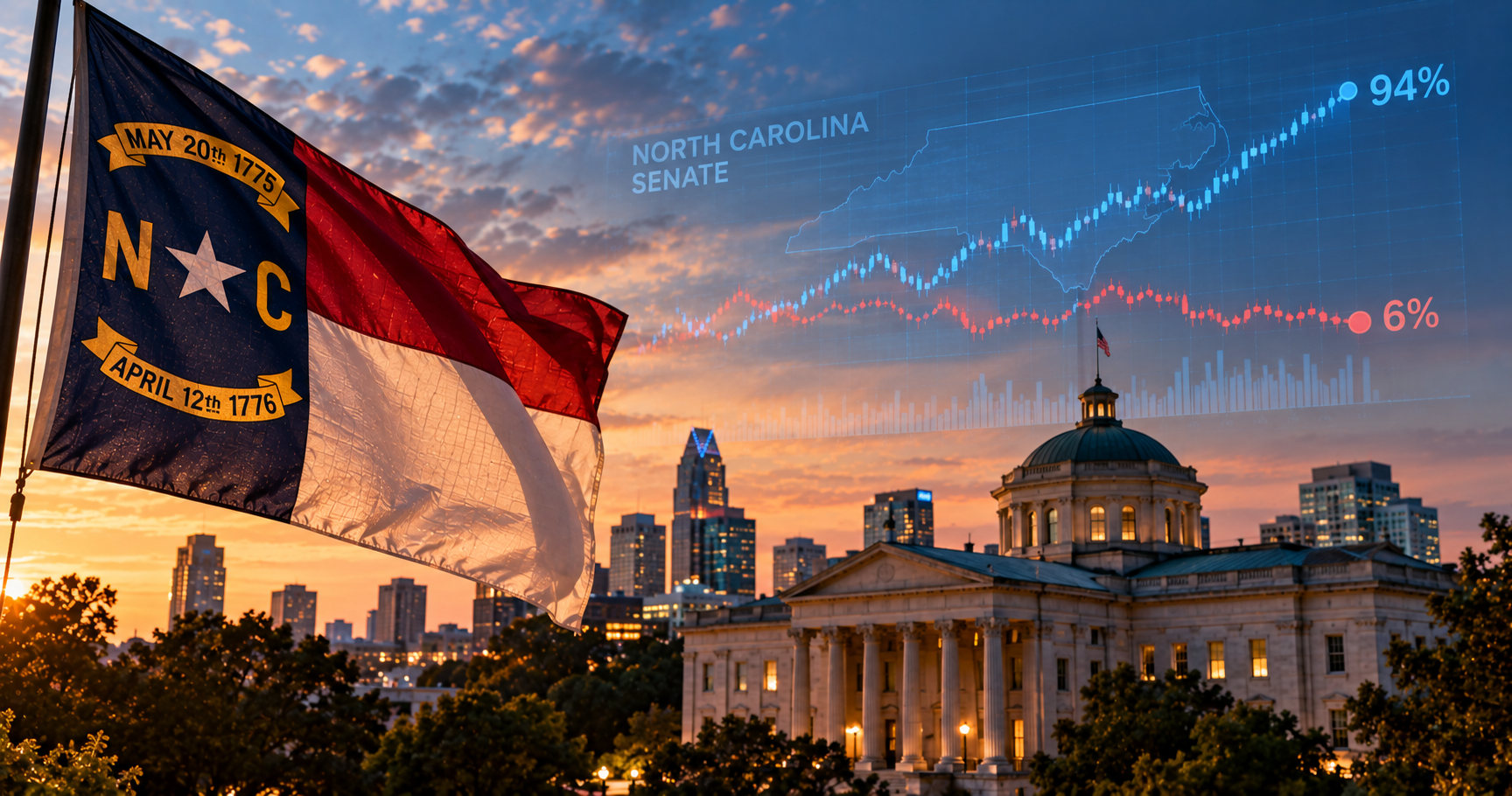 Cooper Hits 94.5% on Kalshi as North Carolina Moves Toward a Democratic Senate Pickup
 Polymarket Promo Code RATE for Eagles vs. Bears MNF $50 Bonus
 Ravens vs. Cowboys Prediction Markets: NFL Predictions with Polymarket Promo Code RATE