
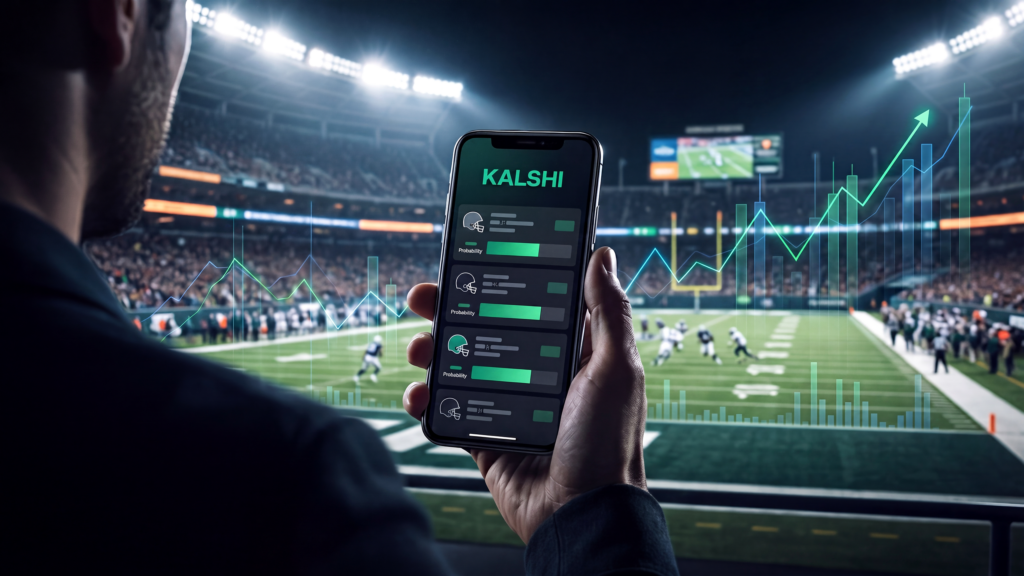
Allegations of large-scale insider trading have erupted across prediction markets tied to the Super Bowl halftime show. This has increased scrutiny of how event-based contracts are monitored and enforced as the sector grows.
The controversy was created by an X post from Nate Meininger, who alleged that insiders profited heavily from advance knowledge that Lady Gaga and Ricky Martin would appear during the halftime show.
Meininger described the activity as “the most egregious and largest-scale insider trading in prediction markets ever.” He claimed insiders may have made hundreds of thousands of dollars, and potentially as much as $2–3 million, across multiple platforms.
Sudden odds swings raise red flags on Super Bowl halftime market
According to Meininger, unusually large buy orders flooded halftime-related markets well before any public confirmation of performers. This pushed odds for certain appearances above 90%.
He said the activity began on Kalshi, with similar trading patterns later appearing on Polymarket after those markets were listed.
In another X post on the Friday before the Big Game, a trader using the handle “Esoteric Catboy” noted that a single participant placed roughly $500,000 on Lady Gaga appearing, shortly after other traders had taken the opposite side.
“Someone is so confident that Lady Gaga is going to perform that they decided to slam $500,000 on it,” the trader wrote, posting a screenshot of their resulting loss in contract value.
Wallet analysis leads to insider claims
Other traders and onchain analysts quickly began tracking suspicious wallets. An X user known as “haeju.eth” highlighted a newly created wallet that was exclusively trading Super Bowl halftime markets. It had deployed about $47,000 and had accumulated the largest single position in the Lady Gaga market without selling any contracts.
In follow-up posts, haeju.eth claimed the wallet was correctly positioned for nearly every halftime outcome, missing only one interpretation-based market before adjusting and returning to profit.
“He assumed Cardi B dancing wouldn’t count as performing (she didn’t sing). He knew she wouldn’t sing, he just misunderstood the rules,” the trader wrote.
Another account, “PolymarketHistory,” alleged they had identified a separate wallet that appeared to know Bad Bunny’s halftime setlist in advance, placing targeted bets on individual songs shortly before they were performed. The account said the wallet was created less than 24 hours earlier and traded only halftime-related props.
I found another possible insider who knew Bad Bunny’s halftime setlist
— PolymarketHistory (@PolymarketStory) February 9, 2026
They dropped $32,000 on the first song
then hit almost the entire tracklist.
Account created <24h ago
and every bet was halftime props only
Too many people came to the halftime show… to farm Polymarket https://t.co/efgtPWWJgm pic.twitter.com/DBROtDZ41T
Calls for platform transparency and enforcement
Meininger and others have publicly called on Kalshi and Polymarket to disclose how they are handling the situation, including how many accounts have been suspended and whether referrals have been made to regulators or prosecutors.
In his post, Meininger tagged officials at the Commodity Futures Trading Commission, including new CFTC chair Michael Selig, urging enforcement action.
He argued that the lack of visible consequences has allowed insider trading to persist in prediction markets. Meininger specifically mentioned entertainment and sports-related events where advance knowledge may be widely distributed behind the scenes.
“Prosecutions must be made,” Meininger wrote. “It’s the only way to stop insider trading from ever happening before it begins.”
A stress test for prediction markets
The episode lands at a sensitive moment for prediction markets, which are attracting growing mainstream participation and regulatory attention.
Platforms have increasingly placed event contracts as information markets rather than betting products, arguing that prices reflect collective expectations. Allegations of insider trading cut directly against that narrative.
Prediction markets face additional challenges, while traditional financial markets have long grappled with insider trading enforcement. Amid calls for federal insider trading bans in prediction markets, Kalshi recently ramped up its own internal integrity monitoring team and infrastructure to enforce platform-level prohibitions on insiders trading.
Many events, such as halftime performances, are known in advance to dozens or even hundreds of people across production, marketing, and talent teams. So, this creates gray areas around what constitutes material non-public information and who qualifies as an insider.
What comes next
As of publication, neither Kalshi nor Polymarket had issued a public statement addressing the specific halftime allegations.
Whether regulators step in and how platforms respond may decide how aggressively prediction markets expand into entertainment and cultural events.
For now, the Super Bowl controversy has become part of a bigger debate. Can prediction markets scale into the mainstream without stronger surveillance, disclosure, and enforcement?
Or will repeated insider trading episodes reduce confidence in the category just as it reaches more users?